Blogs
Exercises After a Stroke: Rebuilding Strength and Mobility in 2026
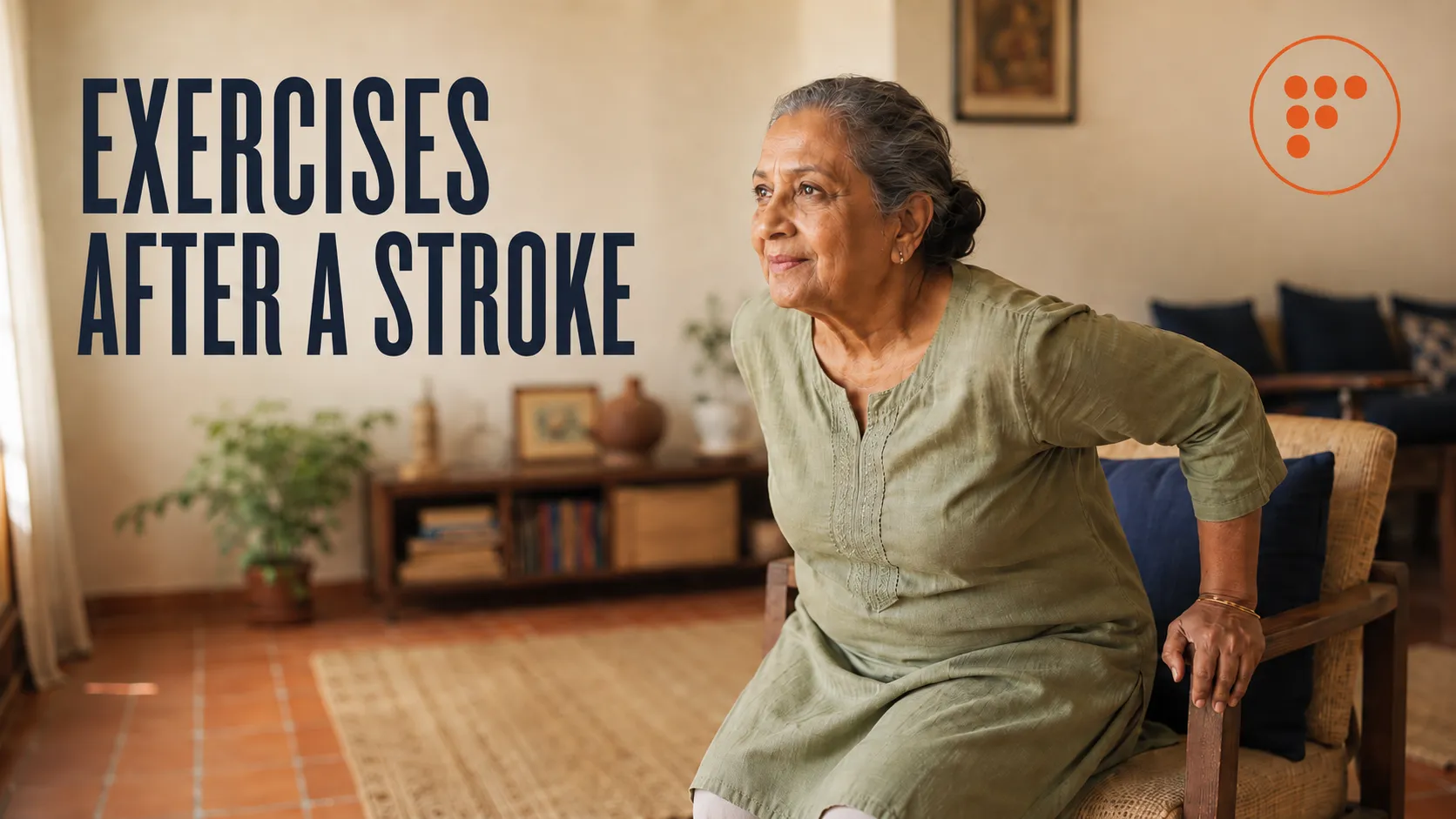
Have you noticed that even the stronger side of your body feels weaker since the stroke?
That is not unusual.
Muscle fades fast whenever movement drops, whatever the reason:
- Days resting in a hospital bed
- Weeks of limited activity while healing at home
- Relying on others for tasks you once did yourself
Exercises after a stroke are not only about the affected limb. They rebuild the whole body’s strength, so everyday movement, from standing up to holding a cup, feels steady again. This piece looks at why strength drops so fast, what usually gets missed once
Why the Body Loses Strength So Fast After a Stroke
A stroke affects specific muscle groups directly, but the bigger drop in overall strength often comes from something simpler: inactivity.
A resting muscle can lose up to 15% of its strength in a single week, which is why prolonged reduced movement during recovery weakens muscle across the whole body, not only the areas the stroke affected.
- Muscle mass declines quickly with reduced use, even over a matter of days
- The stronger side often weakens too, from relying on assistance and limited daily movement
- Balance and coordination decline alongside strength, making everyday tasks feel less steady
This combination of direct impairment and general deconditioning is why recovery plans usually address the whole body, not just one limb. Understanding this is the first step toward rebuilding strength in a way that actually holds up over time.
What Slows Down Progress After the Rehab Program Ends
Formal physiotherapy plays a defined role in early recovery, but strength does not finish rebuilding itself the day that the program ends. Many people plateau here, not because their body has stopped responding, but because structured movement stops too soon.
- A natural fear of falling or re-injury keeps many people under-active once supervision ends
- Progress can feel slow and uneven, which discourages consistent effort
- Without a simple routine to follow, strength work often gets skipped altogether
Recovery rarely follows a straight line, and the gap after formal rehab is exactly where consistent, low-risk strength work matters most. A gentle starting point, like these simple home exercises for seniors, keeps movement going without overcomplicating it once the structured phase of rehab winds down.
Rebuilding Strength the Safe Way, With Medical Oversight
Any strength work after a stroke should begin with clearance from a doctor or physiotherapist. Once cleared, the safest approach favours controlled, supported movement over unsupervised free weights or high-impact routines.
- Seated, supported positions reduce the risk of falls during exercise
- Functional movements, such as practicing sit-to-stand or gentle reaching, translate directly to daily tasks
- Controlled resistance that avoids sudden loading is safer than free weights, which can jerk or slip if the grip is still recovering
This is also where equipment matters. Traditional gym machines load the body on both the lifting and lowering phases of a movement, raising injury risk if a limb suddenly weakens mid-rep. The same principle behind preventing muscle loss after prolonged inactivity applies here: safe, supported resistance rebuilds strength faster than unsupervised effort, with a physiotherapist setting the right starting point.
Why Consistency Matters More Than Intensity in Long-Term Recovery
Strength and coordination after a stroke rebuild gradually, through repetition, not occasional intense effort. Short, regular sessions reinforce the connection between the brain and the muscle far more reliably than infrequent, harder ones.
- Small daily movement reinforces motor patterns that support long-term recovery
- Consistency also builds confidence, which reduces the fear of movement that often holds people back
- Progress may plateau at times, and that is a normal part of the process, not a sign of failure
Caregivers looking to help a parent stay consistent may find these beginner strength training approaches a useful starting structure, alongside these tips for helping parents stay strong through the process.
Building strength after a stroke is less about pushing hard on any single day and more about showing up for the body, safely and repeatedly, over months.
Strength Training Equipment for Seniors Recovering from a Stroke
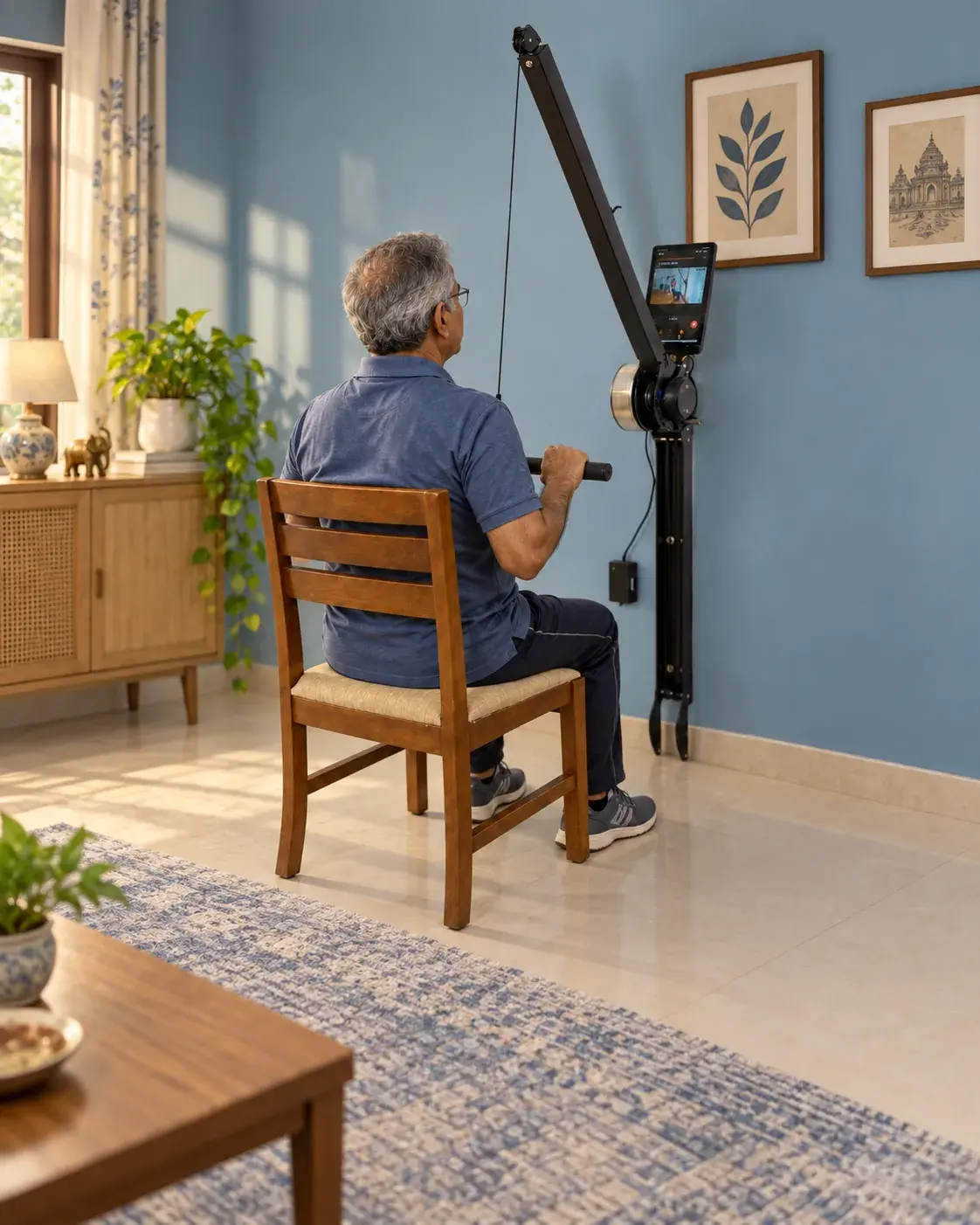
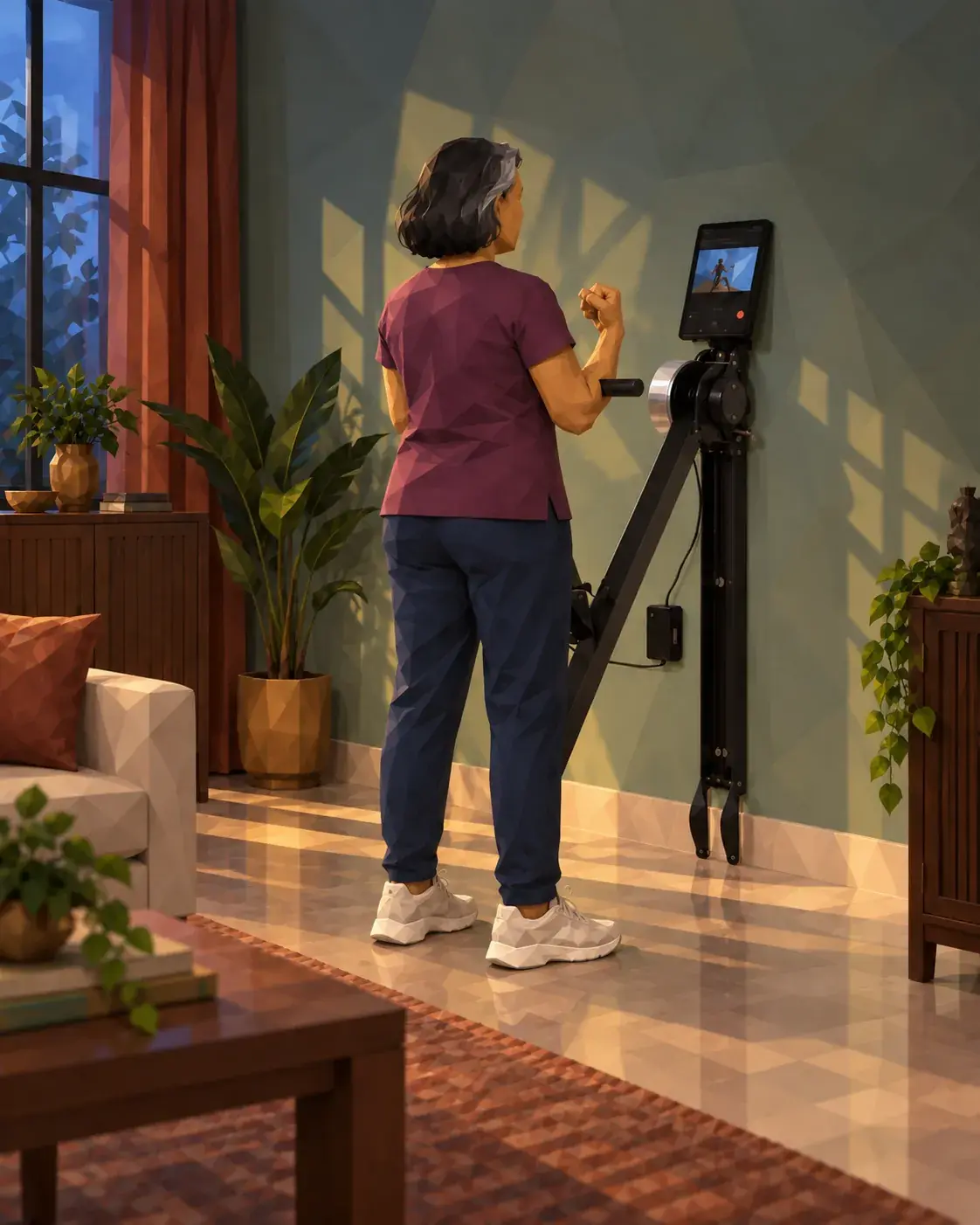
Doctor-cleared movement still needs a safe way to happen at home, especially once physiotherapy sessions become less frequent. Free weights and traditional machines were not built with recovering muscles, uneven grip, or fall risk in mind. This is the gap an all-in-one home gym machine like Ferra is built to close, through a few specific design choices:
- Concentric-only resistance: the machine resists the push but never loads the body on the way down, like pushing a car that stops applying force the moment you stop
- Digitally controlled resistance, calibrated to what the user can safely manage
- Fully seated exercises, which reduce balance-related risk
This keeps strength-building at home safe, without the risks unsupervised free weights carry.
Conclusion
Rebuilding strength after a stroke is rarely fast, and it is rarely a straight line. What matters more than any single session is showing up consistently, with the right medical guidance behind each step. Muscle responds to steady, repeated effort at any stage of recovery, and small gains made this month build directly into the strength needed for daily independence next year. A few months from now, tasks that feel difficult today, like standing up unaided or carrying a bag, will start to feel ordinary again.
Frequently Asked Questions About Exercises After a Stroke
1. Is it safe to exercise if I have weakness on one side of my body?
Yes, with guidance from a doctor or physiotherapist. Exercises can usually be adapted to support the weaker side while still engaging both sides of the body. A professional assessment helps determine which movements are appropriate at each stage of recovery.
2. How soon after a stroke can strength training begin?
This depends entirely on the individual and must be confirmed by a treating doctor or physiotherapist. Some people begin gentle strength work within weeks of a stroke, while others need a longer recovery period first. There is no universal timeline that applies safely to everyone.
3. Can strength training replace physiotherapy after a stroke?
No. General strength training is a helpful addition once a doctor or physiotherapist has cleared it, but it does not replace clinical rehabilitation. Machines like Ferra, which use concentric-only resistance, are designed for safe general strength maintenance, not as a substitute for prescribed physiotherapy.
4. How long does it take to notice strength improvements after a stroke?
Timelines vary widely depending on the severity of the stroke and overall health. Many people notice small improvements in daily tasks, such as easier standing or steadier walking, within a few months of consistent, supported effort.
5. What should I do if I feel pain or dizziness while exercising?
Stop the activity immediately and rest. Persistent pain, dizziness, or unusual symptoms during exercise should always be reported to a doctor before continuing any routine, since they may indicate the current exercise level needs adjustment.
Build everyday strength — at your pace
Explore Ferra to see how strength training fits into life after 50 — it’s not about building muscle for its own sake, but moving with confidence.

Anurag Dani is the Co-Founder of Ferra, a company dedicated to redefining healthy ageing through strength training. Drawing from his experience building fitness and healthy ageing solutions for adults, he writes about healthy ageing to help readers stay strong and independent as they age.