Before the fracture, you never thought about your ankle. Now you think about it with every step.
That’s the strange part of this stage of recovery.
The X-ray shows the bone has healed, but the ankle itself hasn’t caught up:
- It still feels stiff after weeks in a cast or boot
- It feels weak, even on flat ground
- It doesn’t feel steady enough to trust with your full weight
For seniors, this gap carries extra worry. A wobble now can mean another fall, and another fall can mean another fracture. Doing the right exercises after an ankle fracture, in the right order, is what turns that hesitation back into confidence.
What Happens to Your Ankle After a Fracture Heals
Bone healing and ankle readiness run on two different timelines, and mixing them up is a common mistake.
- The bone itself can knit together in 6 to 8 weeks
- The muscles around the ankle, especially the calf, weaken significantly from disuse
- Joint stiffness builds up because the ankle has not moved through its normal range for weeks
- Balance and coordination in that foot fade quietly
A healed bone does not automatically mean a strong or steady ankle. The muscles and balance reflexes around the joint need their own rebuilding process.
When It’s Safe to Start Exercises After an Ankle Fracture
Your surgeon or physiotherapist’s weight-bearing instructions always come first, and no exercise list should override that. Recovery generally follows a staged path:
- Gentle motion first, while weight-bearing is still restricted
- Lightweight-bearing, once cleared, using support like a railing or counter
- Strengthening work, added gradually as confidence returns
- Balance and proprioception exercises, introduced last, once full weight-bearing feels comfortable
According to Kaiser Permanente’s rehabilitation guidance, exercises should start slowly, easing off if pain appears. Rushing weight-bearing before clearance is one of the most common causes of setbacks. Once movement is comfortable and cleared, the safest way to build lasting strength is through proper strength training for seniors, adapted to a healing joint.
5 Safe Exercises to Rebuild Strength & Balance After Ankle Fracture
Once cleared by your doctor, these exercises after ankle fracture follow the natural order of recovery, from gentle motion to full strengthening.
1. Ankle Pumps
Sit with your leg propped up straight. Point your toes down and away, then pull them up toward your shin. Repeat 10 to 15 times, several times a day. This keeps blood flowing and stops early stiffness from settling in while movement is still limited.

2. Ankle Circles
Sit with your leg extended, heel resting on a low stool. Slowly rotate your foot in a full circle, clockwise, then counterclockwise. Do 10 circles each way, once or twice daily. This restores the small rotational movement your ankle needs for uneven ground.

3. Seated Towel Calf Stretch
Sit with your leg straight out. Loop a towel around the ball of your foot and gently pull the ends toward you until you feel a stretch in the calf. Hold 15 to 20 seconds, repeat 3 times. This loosens the calf muscle that tightens after weeks in a cast.

4. Seated Resistance Band Plantarflexion
Sit with your leg straight, loop a light resistance band around the ball of your foot, and hold the ends firmly in your hands. Gently press your foot downward against the band, as if pressing a gas pedal, then slowly return to the start. Repeat 10 times for 2 sets. This rebuilds calf and ankle strength safely without loading the joint with body weight.

5. Supported Heel Raises
Stand facing a wall or counter, hands resting on it for support. Rise slowly onto your toes, then lower with control. Repeat 10 times for 1 to 2 sets, only once cleared for full weight-bearing. This rebuilds calf strength and the balance reflexes steady walking relies on.

These five exercises after ankle fracture move in order, from gentle motion to real weight-bearing strength, which is exactly the sequence a healing ankle needs to trust itself again.
Recommended Reading:
For a broader routine once the ankle feels steadier, exercises for seniors at home are a practical next step, covering motion, flexibility, and early strength together.
Warning Signs Your Ankle Isn’t Ready for More
Recovery is rarely a straight line, and your body will usually signal clearly when something needs to slow down.
- Swelling that increases instead of settling after activity
- Sharp or sudden pain, rather than mild soreness
- A feeling of the ankle giving way or feeling unstable
- Bruising or warmth that appears without an obvious cause
If any of these show up, ease back and check in with your doctor. Managing these signals well often separates a smooth recovery from a repeated setback.
Exercises After Ankle Fracture Need a Strength Foundation That Lasts
These exercises rebuild motion, flexibility, and early strength, but they have a limited ceiling on their own. Once the ankle moves well again, the muscles around it need consistent strengthening to actually protect the joint from a repeat injury.
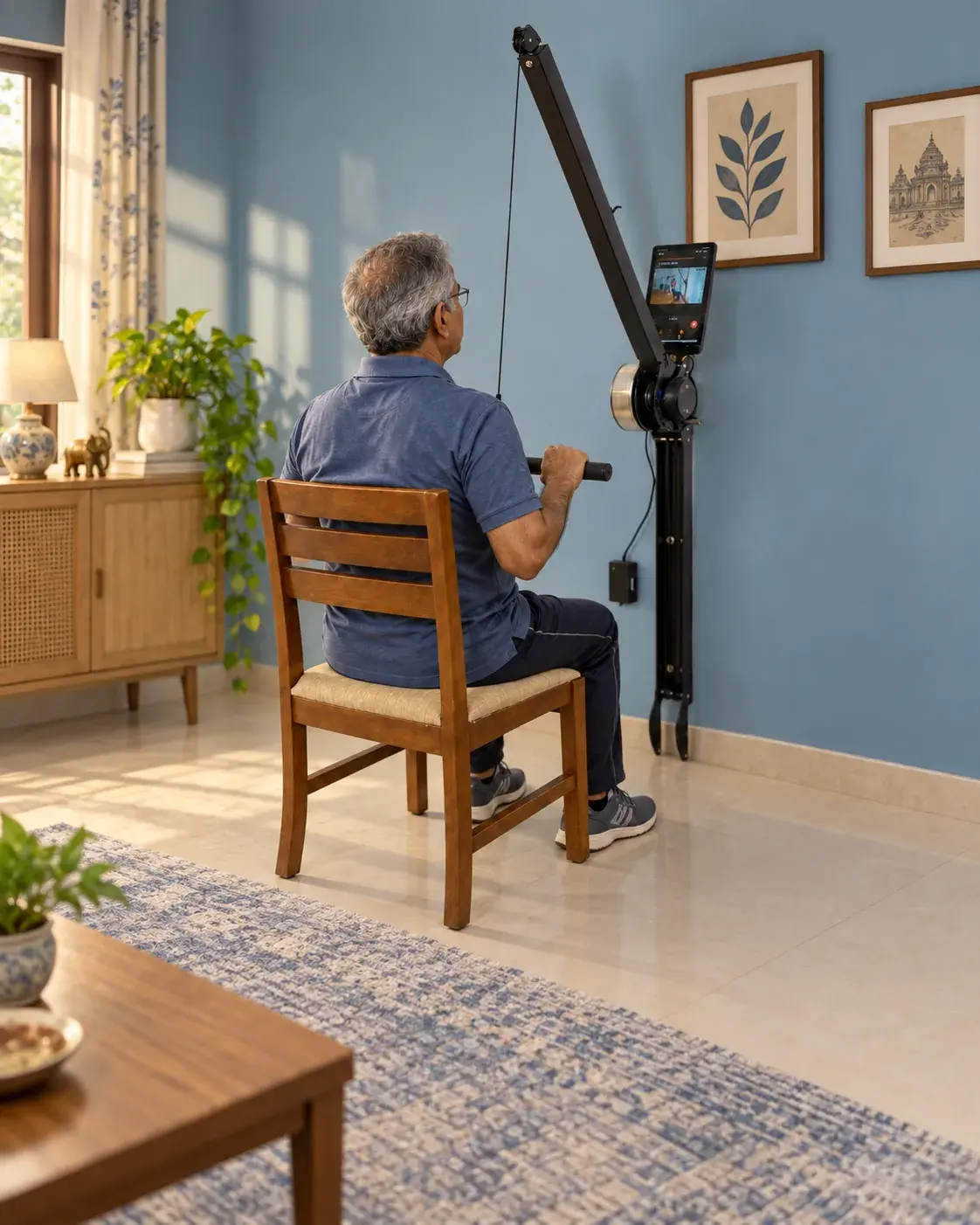
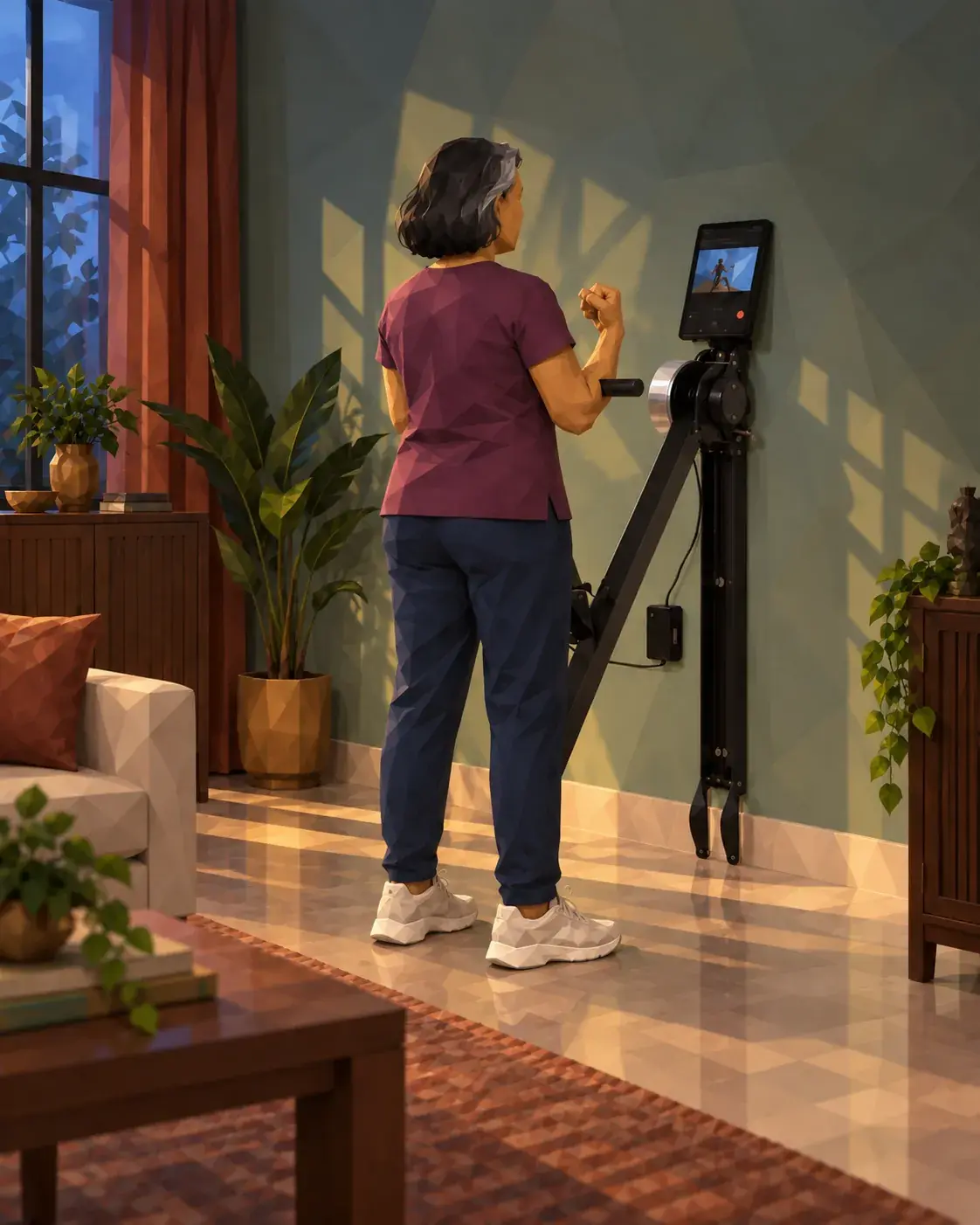
That ongoing strength foundation is what Ferra, an all-in-one home gym machine for seniors, is built to support:
- Fully seated, so a healing ankle carries no load during the exercise
- Concentric-only resistance, so no joint is strained on the way down
- Guided leg strengthening that supports the ankle without asking it to bear weight
Check out Ferra and build the leg strength that helps protect your ankle against another fall.
Conclusion
Recovery from an ankle fracture is gradual, and that is exactly how it should be. The stiffness and hesitation you feel today are not permanent. With the right sequence of motion, strength, and balance work, most people walk confidently again, often forgetting how uncertain that first step back once felt.
Exercises After Ankle Fracture: Frequently Asked Questions
1/ How long after an ankle fracture can you start exercising?
This depends entirely on your doctor’s weight-bearing clearance, which typically comes 6 to 8 weeks after injury for stable fractures. Gentle range-of-motion exercises can often begin earlier, even while still in a boot, if approved. Always confirm your specific timeline with your treating physician.
2/ Is walking without support safe right after cast removal?
No, not immediately. Muscles around the ankle are weaker after weeks of immobilisation, so support, such as a railing, a cane, or countertop, is recommended until strength and balance improve. Progressing too quickly without support raises the risk of a fall.
3/ Can balance problems from an ankle fracture affect the hips too?
Yes, often. An unsteady ankle changes how weight shifts through the leg, which can strain the hip and lower back over time. Working on ankle stability alongside broader mobility, such as these hip mobility exercises for seniors, can help address both.
4/ Should you ice or heat your ankle during recovery exercises?
Ice is generally preferred after exercise sessions if swelling appears, while heat suits loosening stiff tissue beforehand. Neither should replace medical advice if swelling or pain persists beyond a day or two. Consult your doctor if unsure which applies to your stage of healing.
5/ Do you need special equipment to do these exercises at home?
No, most of these exercises only need a towel, a light resistance band, and a stable chair or wall for support. Machines like Ferra, which use concentric-only resistance, can be a useful next step once you are ready to build strength consistently without risking overload.
Build everyday strength — at your pace
Explore Ferra to see how strength training fits into life after 50 — it’s not about building muscle for its own sake, but moving with confidence.

Anurag Dani is the Co-Founder of Ferra, a company dedicated to redefining healthy ageing through strength training. Drawing from his experience building fitness and healthy ageing solutions for adults, he writes about healthy ageing to help readers stay strong and independent as they age.