Just had your cast or brace removed and wondering why your elbow still feels stiff and weak?
Is it normal for simple things like turning a doorknob or lifting a cup to feel harder than before?
For older adults, these questions matter more, because healing takes longer and the fear of re-injury can make people move less than they should.
The truth is, the fracture healing on an X-ray is only half the recovery. The muscles and joint around the elbow need their own path back to normal function, and that path looks different for someone in their 60s or 70s than it does for someone in their 20s.
Why the Elbow Feels Weak and Stiff After a Fracture
When an arm is immobilized in a cast or brace for weeks, the muscles around the elbow lose strength quickly, and the joint itself tightens up from lack of movement. This is a normal part of the healing process, but it does not reverse on its own once the cast comes off.
For older adults, this stiffness tends to linger longer. Joint tissue is naturally less elastic with age, and muscle that was already declining before the fracture takes more time and effort to rebuild.
- Reduced elbow bend and straighten range
- Weak grip and forearm rotation
- General fatigue when using the arm for daily tasks
Getting the elbow moving again, gently and under guidance, is what prevents this stiffness from becoming permanent.
Before You Start Moving Again: What to Check First
Before any exercise begins, confirm that a doctor or physiotherapist has actually cleared movement. Fracture types vary widely, and some need longer immobilization than others.
A few signs mean it is time to stop and check in with a professional, not push through:
- Sharp or sudden pain during movement
- New swelling, redness, or warmth around the elbow
- Numbness or tingling in the forearm or hand
- A grinding or catching feeling in the joint
Once cleared, movement should start light and pain-free, well before any resistance or weight comes into the picture. That early, cautious phase is what makes every step of strength-building after it safer and more effective.
4 Safe Exercises to Restore Elbow Movement After a Fracture
These exercises focus on gently restoring motion first. They should only begin once a doctor or physiotherapist has approved movement, and any sharp pain means stopping immediately.
1. Elbow Bend and Straighten
Sit with your arm resting on a table, palm facing up. Slowly bend your elbow, bringing your hand toward your shoulder, then straighten it back out. Repeat 10 times, moving only as far as feels comfortable. This restores the basic bending motion the joint needs for everyday tasks like eating and dressing.

2. Forearm Turn
Keep your elbow bent at your side and hold a pencil or light object in your hand. Slowly rotate your forearm so your palm faces up, then down. Hold each position for a few seconds and repeat 8 to 10 times. This works the rotation that lets you turn a key or open a jar.

3. Wrist and Grip Stretch
Extend your arm in front of you, palm up. Use your other hand to gently pull your fingers back toward you, holding for 20 to 30 seconds. This eases tightness in the forearm muscles that often stiffen alongside the elbow.

4. Gentle Isometric Hold
With your elbow bent at 90 degrees, press your hand lightly against your other palm without moving the joint. Hold for 5 seconds and release. This reintroduces light muscle activity without stressing the healing bone.

Related recovery routines can also help build a fuller picture of what safe post-injury movement looks like. If you’re also managing stiffness elsewhere, these wrist fracture exercises follow a similarly gentle, staged approach.
Elbow Fracture Exercises Need Strength That Was Never There Before
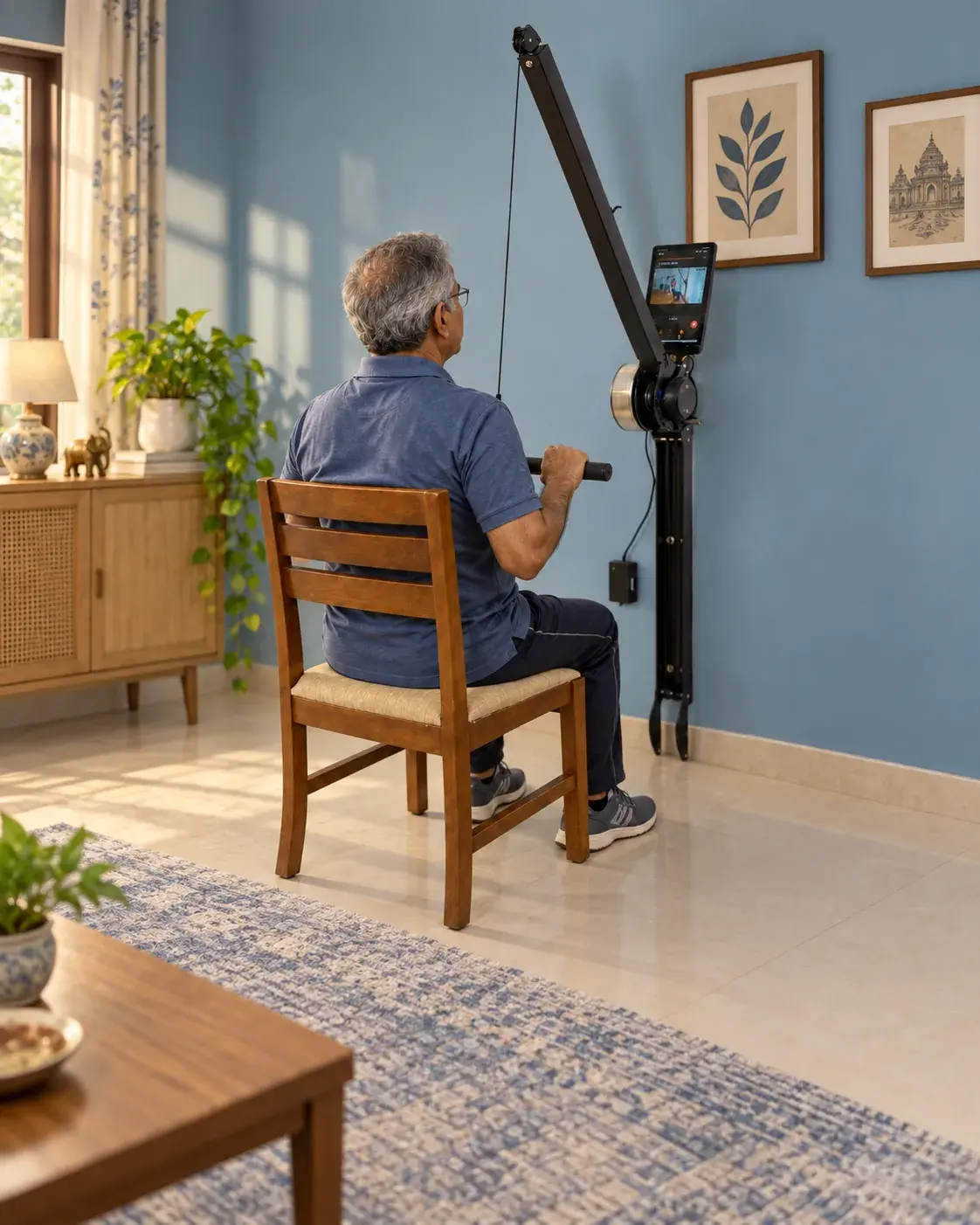
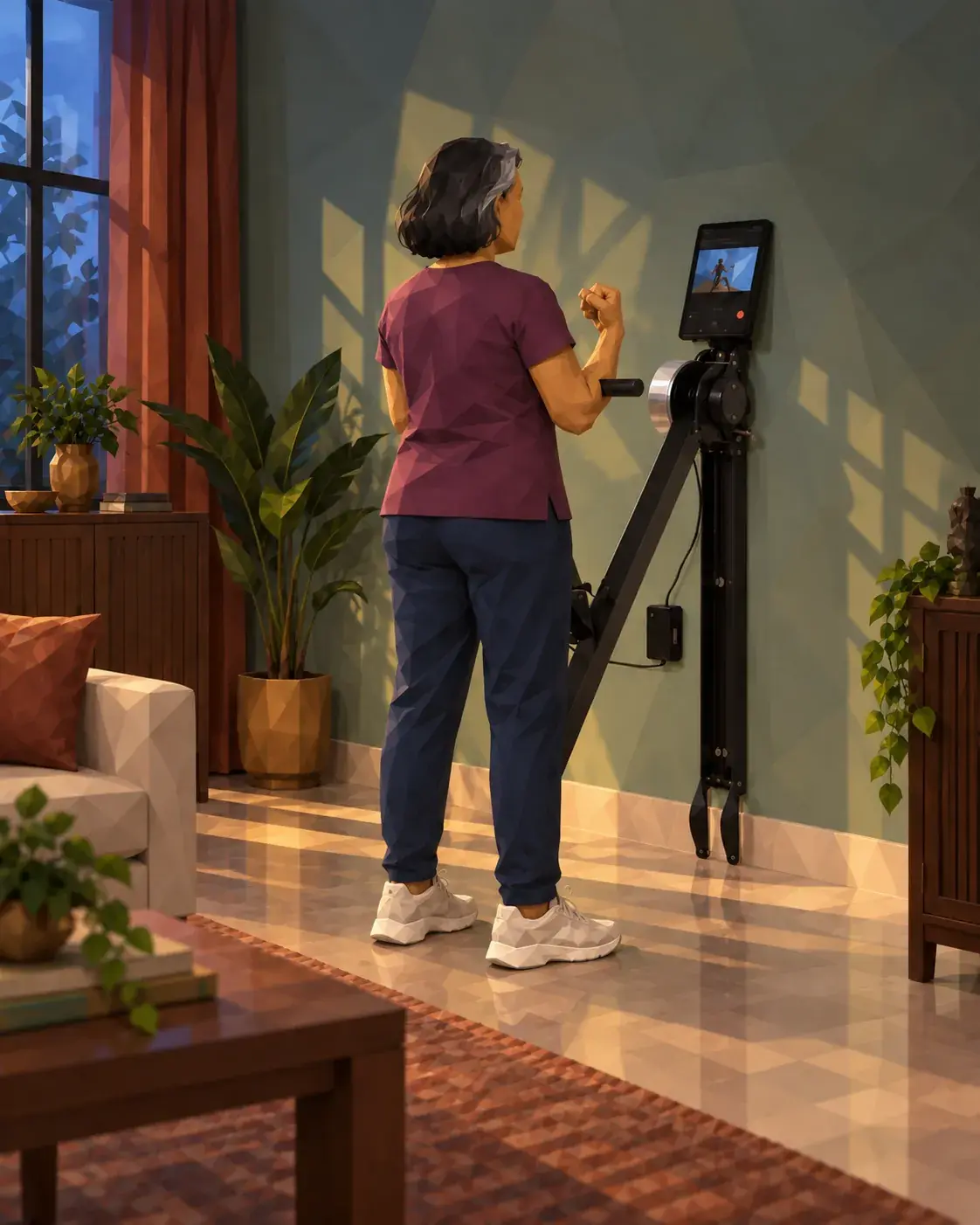
The exercises above restore movement, but the strength lost during immobilisation does not come back on its own. Once a doctor confirms the bone has healed enough to handle light resistance, rebuilding that strength safely becomes the next priority, and the exercise itself has to feel safe enough to actually stick with. Someone still cautious about the joint is unlikely to persist with a workout that feels unpredictable, no matter how well-designed the routine is on paper. This is exactly the gap that an all-in-one home gym machine like Ferra is built to close.
Ferra addresses this in a few specific ways:
- Concentric-only resistance means the machine resists the push but never loads the joint on the way down, so there is no moment where the arm feels pinned under weight
- Resistance adjusts automatically to what the joint can currently manage, removing the guesswork of picking the wrong weight during recovery
- The seated, guided setup keeps the movement controlled and steady, which matters most while the elbow is still relearning to bear load
Once the exercise itself feels safe, rebuilding real strength becomes far easier. Check out Ferra and build the strength that helps your elbow move through daily tasks with confidence again.
Conclusion
Recovering from an elbow fracture takes patience, and the process rarely moves in a straight line. Some days the joint will feel looser, others it will feel tight again, and that is a normal part of healing rather than a setback.
What matters most is staying consistent with the exercises a doctor or physiotherapist has approved, and resisting the urge to rush back to full activity before the muscles are ready. A few months from now, reaching for a cup or turning a key will feel automatic again, and you will barely remember how much effort it once took.
Frequently Asked Questions About Elbow Fracture Exercises
1/ How long does it take to regain full strength after an elbow fracture?
Most people see noticeable improvement within 6 to 12 weeks of starting supervised exercises, though full strength can take several months depending on the severity of the fracture. Older adults may need a longer timeline, particularly if the fracture required surgery. Consistency with prescribed exercises has more impact on the final outcome than the exact number of weeks it takes.
2/ Is some swelling normal after starting elbow exercises?
Yes, mild swelling after exercise is common as the joint adjusts to movement again. It should ease within a day and respond well to rest and elevation. Swelling that increases, persists beyond 48 hours, or comes with sharp pain should be checked by a doctor.
3/ Can older adults fully regain elbow function after a fracture?
Yes, in most cases. Age can slow the pace of recovery, but with consistent, guided exercise, older adults commonly regain enough range of motion and strength to return to normal daily activities. Machines like Ferra, which use concentric-only resistance, are often used at this stage to rebuild strength without the unpredictability of free weights.
4/ Do exercises differ between a simple fracture and one requiring surgery?
Yes. Surgical repairs typically involve a longer immobilization period and a more cautious early phase, since hardware and soft tissue need extra time to stabilize. A physiotherapist will usually adjust the exercise timeline based on the type of fracture and whether surgery was involved.
5/ What if the elbow still feels stiff months after the fracture healed?
Persistent stiffness beyond a few months is worth discussing with a doctor or physiotherapist, as it may need targeted manual therapy or a modified exercise plan. It does not always mean permanent limitation, but it usually needs a closer look rather than more time alone.
Build everyday strength — at your pace
Explore Ferra to see how strength training fits into life after 50 — it’s not about building muscle for its own sake, but moving with confidence.

Anurag Dani is the Co-Founder of Ferra, a company dedicated to redefining healthy ageing through strength training. Drawing from his experience building fitness and healthy ageing solutions for adults, he writes about healthy ageing to help readers stay strong and independent as they age.