Blogs
Exercises After Knee Replacement Surgery: A Safe Recovery Guide 2026
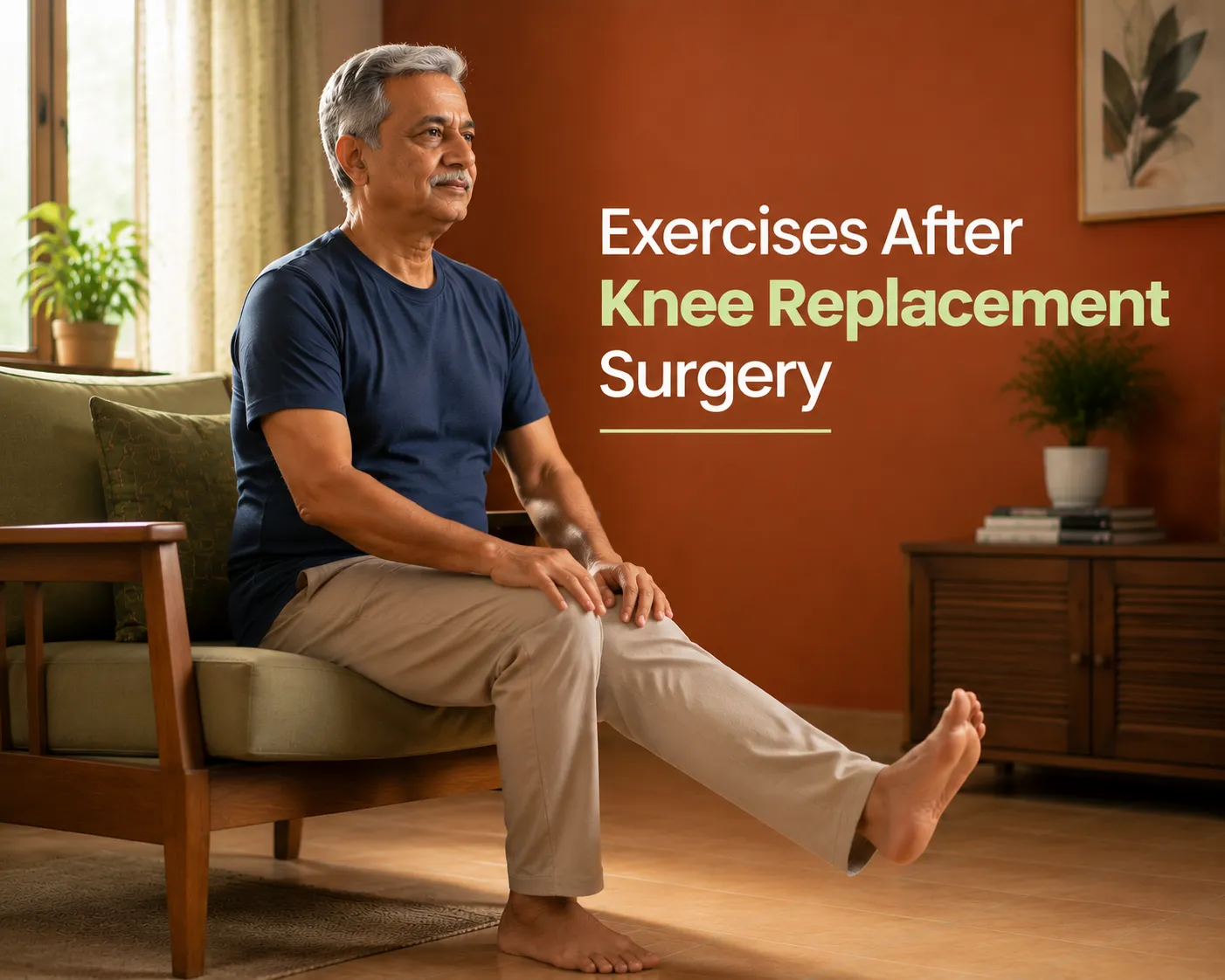
Is it safe to move your knee so soon after surgery?
That question crosses almost every patient’s mind in the first week after a knee replacement. The knee feels tight, swollen, and unfamiliar. Bending it on purpose can feel risky instead of helpful.
But controlled movement is exactly what surgeons and physical therapists ask for from day one, because it drives the healing.
In this article, we’ll cover the exercises after knee replacement surgery that rebuild strength safely, and when to slow down. Always confirm your specific plan with your doctor or physical therapist first.
What Your Knee Needs in the First Few Weeks
The first two to three weeks of recovery are about protecting the joint and waking up the muscles around it. Your quadriceps, the thigh muscle at the front of the knee, are usually already weak by the time of surgery, since knee pain limits movement long before the operation.
- Gentle movement typically starts within a day of surgery, guided by hospital staff
- Some swelling and stiffness at this stage is expected, not a sign of a problem
- Short walks with a walker or crutches rebuild circulation before strength work begins
These early weeks are less about visible progress and more about consistently showing up for small movements, which is what makes the right exercises after knee replacement surgery effective once structured strengthening begins.
Recommended Reading:
For more gentle movement ideas for your daily routine, these exercises for seniors at home follow a similarly gradual approach.
4 Exercises That Rebuild Strength and Motion After Knee Replacement
1. Quad Sets
Sit or lie with your operated leg straight out. Tighten the muscle at the front of your thigh, pressing the back of your knee gently down. Hold 5 to 10 seconds, repeat 10 times, several times a day. This rebuilds the quadriceps muscle that weakens most after surgery.#

2. Straight Leg Raises
Lie on your back, with your operated leg straight, the other knee bent. Tighten your thigh, then lift the straight leg a few inches. Hold briefly, lower slowly, repeat 10 times. This builds hip and thigh strength without bending the new joint.

3. Seated Heel Slides
Sit in a sturdy chair, feet flat on the floor. Slide the operated foot backward under the chair, bending the knee as far as comfortable, then slide it forward again. Repeat 10 to 15 times. This restores the bending motion needed for stairs and low seats.

4. Sit-to-Stand Practice
Sit toward the front of a stable chair, feet hip-width apart. Push through both feet to stand slowly, then lower back down with control. Repeat 8 to 10 times. This trains the exact pattern used every time you rise from a chair, bed, or toilet.

Together, these exercises after knee replacement surgery cover what a recovering knee needs most: strength in the muscles that support it and confidence in everyday transitions like standing and sitting.
Recommended Reading:
If knee stiffness is affecting how you move elsewhere in the body too, these hip pain exercises for seniors follow a similar gentle, joint-friendly approach.
Signs Your Knee Replacement Recovery Needs a Doctor’s Check
Some discomfort is normal, but certain signals mean it is time to pause and check in with your care team instead of pushing through.
- Sharp or shooting pain during an exercise, rather than soreness afterwards
- Swelling that keeps increasing instead of gradually easing
- Redness, warmth, or drainage at the incision site
- New calf pain or swelling, which can signal a blood clot
None of these signs means permanent damage has been done, but they do mean the next step should come from your doctor, not from guessing at home.
Exercises After Knee Replacement Surgery Need Consistency Beyond Rehab
The exercises in this article all share something. Quad sets, straight leg raises, seated heel slides, and sit-to-stand all use your own bodyweight and controlled effort, with nothing pushing back against the joint.
That’s what makes them safe this early, but bodyweight alone eventually stops being enough:
- Muscles need more resistance to keep improving once bodyweight feels easy
- A typical weight machine reintroduces the exact risk these exercises avoid, weight pushing back down on the joint
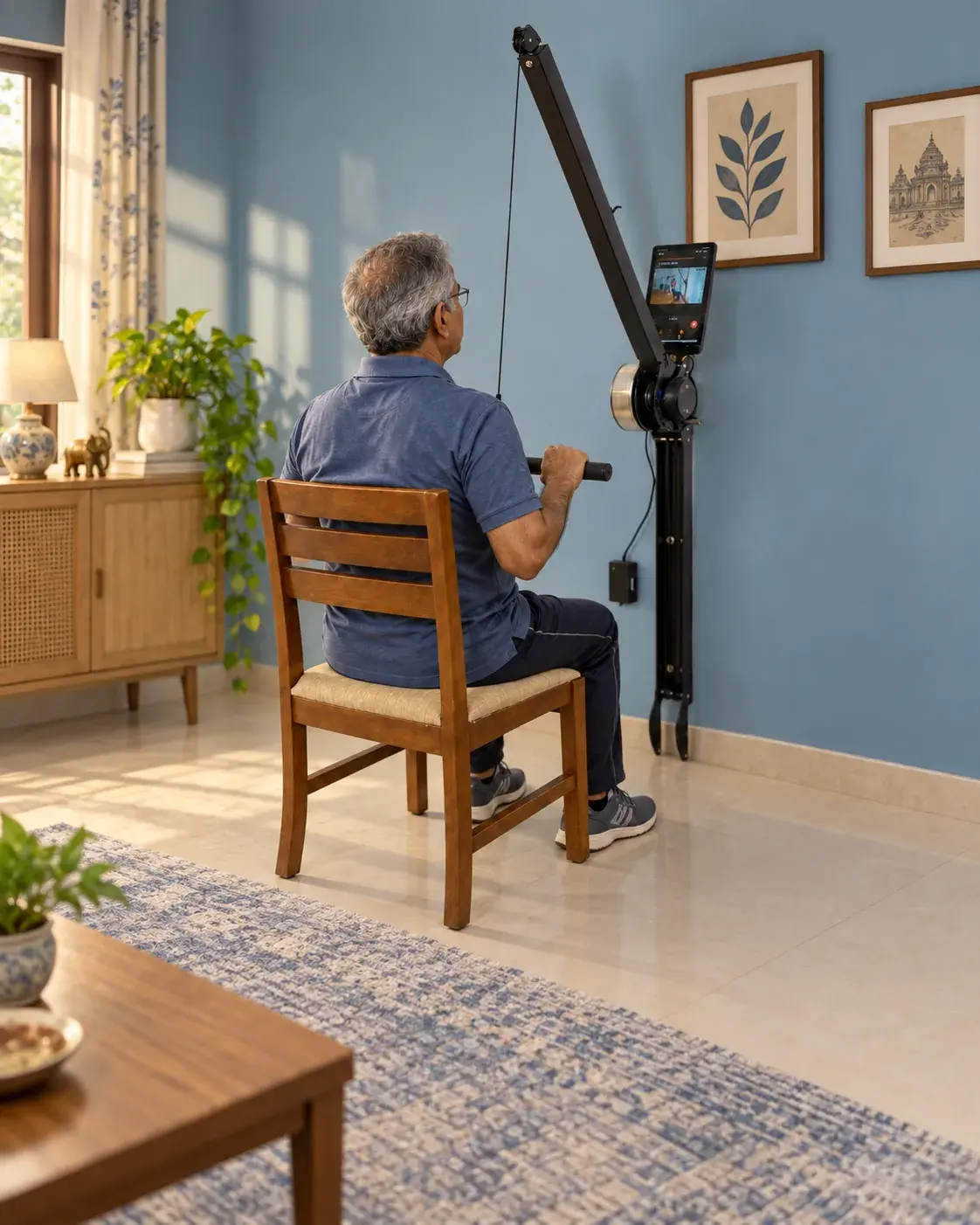
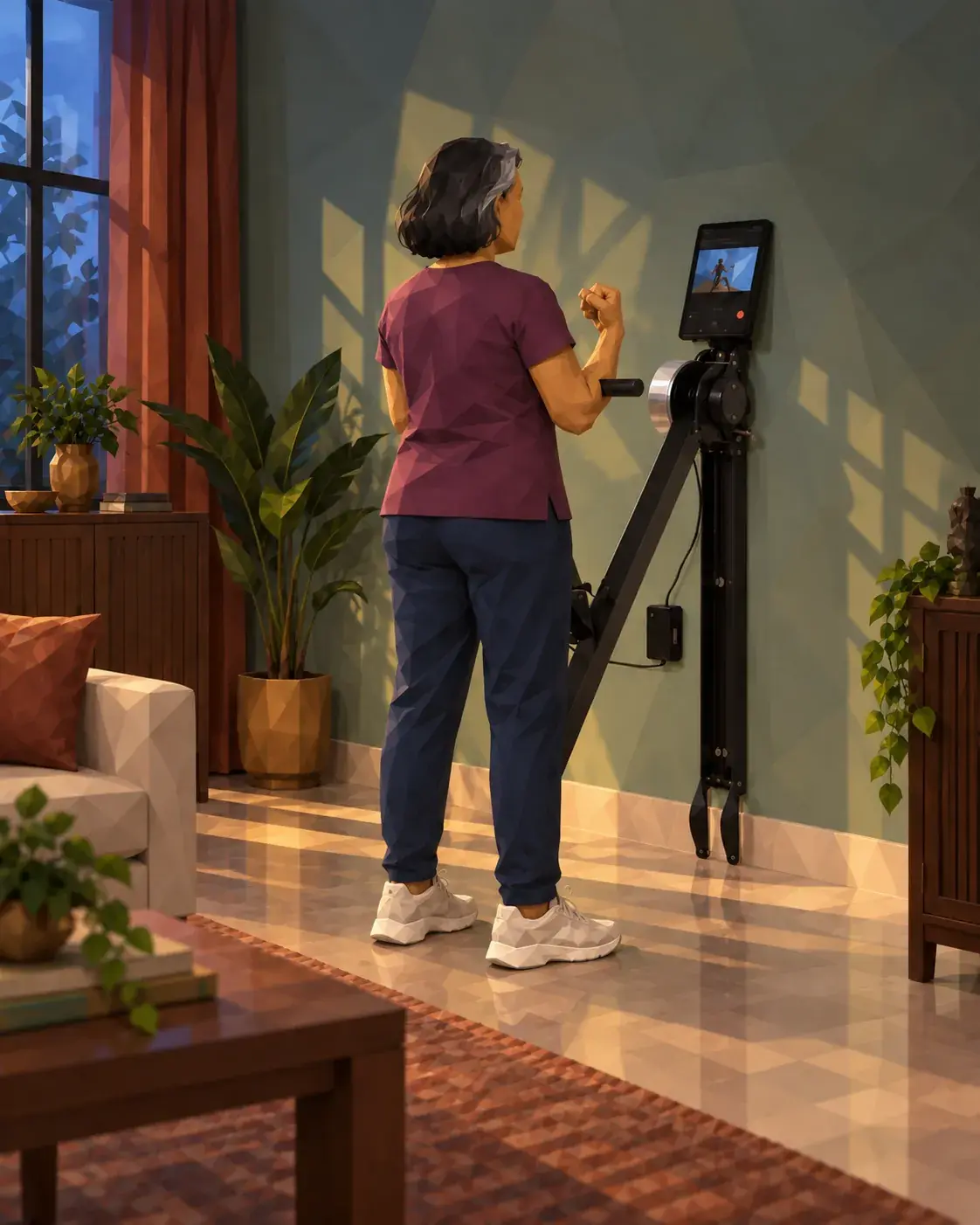
A smart home gym machine like Ferra is built around avoiding that same risk, with resistance added. It’s concentric-only, resisting your effort but never pushing weight back down, the same pattern as sit-to-stand, just with adjustable load. Resistance adjusts automatically, so there’s no risk of jumping to a level your knee isn’t ready for. Check out Ferra and keep building the leg strength your knee replacement recovery depends on.
Conclusion
Recovering from a knee replacement is rarely a straight line. Progress usually looks like small, repeated wins rather than one dramatic milestone. That’s why the exercises after knee replacement surgery covered in this article matter less as a one-time routine and more as a habit built through staying consistent after formal sessions wind down and paying attention to what your knee is telling you along the way.
A few months from now, climbing stairs, standing up from a low chair, or walking to the mailbox will likely feel like something you do without thinking about your knee at all.
Exercises After Knee Replacement Surgery: Frequently Asked Questions
1. How soon after knee replacement surgery can you start exercising?
Most patients begin gentle movement within a day of surgery, guided by hospital staff before discharge. This usually includes ankle pumps and light knee bends rather than the fuller exercise routine, which is introduced gradually over the following weeks under your physical therapist’s guidance.
2. Is it normal for these exercises to hurt?
Yes, mild soreness during and shortly after exercise is common, especially in the first month. It should ease with rest and should not be confused with sharp, sudden pain, which is a signal to stop and check with your doctor rather than push through.
3. Can you do these exercises without a physical therapist watching me?
Yes, once your care team has cleared you and shown you the correct form. Many of the exercises in this article are designed to continue independently at home, though any new exercise should first be confirmed with your doctor or physical therapist.
4. How long does full recovery from knee replacement usually take?
Most people regain functional strength and comfortable movement within three to six months, though muscle strength around the joint can continue improving for up to a year. Consistency during this longer window matters more than speed.
5. What if you have never followed a structured exercise routine before?
That is common, and it does not put you at a disadvantage for recovery. Machines like Ferra, which use concentric-only resistance, are designed to remove the soreness and injury risk that often discourages beginners from continuing a routine at home.
Related video
The Only 3 Exercises You Need for Knee Pain on Stairs (Age 50+)
Do stairs hurt your knees? You don't need a gym to make climbing easier. In this video, we show the only 3 exercises you need to build stronger legs and climb stairs with more confidence, all at home and at your own pace.
More videos on our YouTube channelBuild everyday strength — at your pace
Explore Ferra to see how strength training fits into life after 50 — it’s not about building muscle for its own sake, but moving with confidence.

Anurag Dani is the Co-Founder of Ferra, a company dedicated to redefining healthy ageing through strength training. Drawing from his experience building fitness and healthy ageing solutions for adults, he writes about healthy ageing to help readers stay strong and independent as they age.