Did your last blood test come back with a note about high cholesterol?
For many older adults, the advice that follows feels vague:
- Eat better
- Move more
- Recheck in three months
While changing what you eat is crucial, exercise is the vital partner that often gets left out. It directly raises the “good” cholesterol that clears arteries and helps manage the type that clogs them. But most advice stops at jog harder, cycle longer, or swim laps. That assumes a level of joint tolerance many older adults no longer have.
The good news is that the exercises which work best for cholesterol also happen to be the gentlest on ageing joints. Here are five simple moves you can start with right at home to build your foundation.
Why Cholesterol Responds to the Right Kind of Movement
Diet usually gets the spotlight in cholesterol advice, but the type of movement you choose matters just as much. Not every form of exercise affects cholesterol the same way. And not every form is realistic to keep up with as joints age.
What most generic advice leaves out is the type of movement that works best for older bodies:
- Walking supports heart health and circulation with minimal joint impact
- Resistance training has a direct, measurable effect on lipid metabolism, not just a side benefit of building muscle
- Stress-reducing movement like yoga plays a quiet role in keeping HDL stable
The exercises below combine all three, which is what makes them realistic for daily life rather than an occasional gym session.
5 Best Exercises to Lower Cholesterol Naturally
1/ Brisk Walking
Walk on a flat, even surface, indoors or out, at a pace fast enough that talking feels slightly harder than usual. Aim for 20 to 30 minutes daily, or split into two shorter walks. This raises HDL (the “good” cholesterol that clears LDL from the bloodstream) and keeps blood flowing efficiently through the arteries.

2/ Standing Towel Row
Loop a towel or band around a sturdy door handle and hold one end in each hand. Pull the elbows back, squeezing the shoulder blades together, then release slowly. Do 12 reps for 2 sets. This is a simple way to begin resistance training for seniors, strengthening the upper back muscles that support posture during daily lifting.

3/ Wall Push-Ups
Stand an arm’s length from a wall, palms flat against it at shoulder height. Bend the elbows to bring the chest toward the wall, then push back. Do 10 to 15 reps for 2 sets. This strengthens the chest, shoulders, and arms without loading the wrists or lower back the way floor push-ups do.

4/ Chair-Assisted Squats
Stand in front of a sturdy chair, feet hip-width apart. Lower slowly until you lightly touch the seat, then push back up through the heels. Do 10 to 12 reps for 2 sets. This activates large muscle groups, stimulating enzymes that break down and clear fats from your bloodstream to support healthier lipid numbers.

5/ Gentle Yoga or Stretching Flow
Sit or stand in a calm space and move slowly through simple stretches such as neck rolls, seated forward folds, and gentle spinal twists, holding each for a few breaths. Spend 10 to 15 minutes on the sequence. This lowers stress hormones linked to higher LDL (the “bad” cholesterol that clogs arteries) and reduced HDL (the “good” cholesterol that clears them) over time.

Recommended Reading:
Wondering why strength feels harder to hold onto with age? Muscle loss after 45 is common, and reversible with the right approach, and these five moves are a practical place to start.
Making These Exercises a Daily Habit
Consistency changes cholesterol more than intensity does. A moderate routine done daily outperforms an intense one done occasionally, since lipid levels respond to sustained, repeated signals rather than isolated effort.
A few habits make this easier to sustain:
- Attach the routine to an existing habit, such as right after breakfast
- Track how sessions feel rather than chasing a number
- Check with a doctor before starting, especially with a heart condition or joint concern
Recommended Reading:
Cholesterol is not the only number worth managing daily. These habits for diabetics over 60 follow the same approach of small, repeatable actions.
Exercise to Lower Cholesterol Works Best With the Right Resistance
Chair squats, wall push-ups, and towel rows are effective starting points. While you can progress them slightly by changing your pacing or body angles, matching your exact strength levels can eventually become a guessing game.
- Free weights introduce balance risks as you try to hold heavier loads.
- Standard gym machines are rarely built for older joints, making small adjustments difficult.
- Traditional weights require you to control heavy momentum on the way down, where unexpected jars and slips happen.
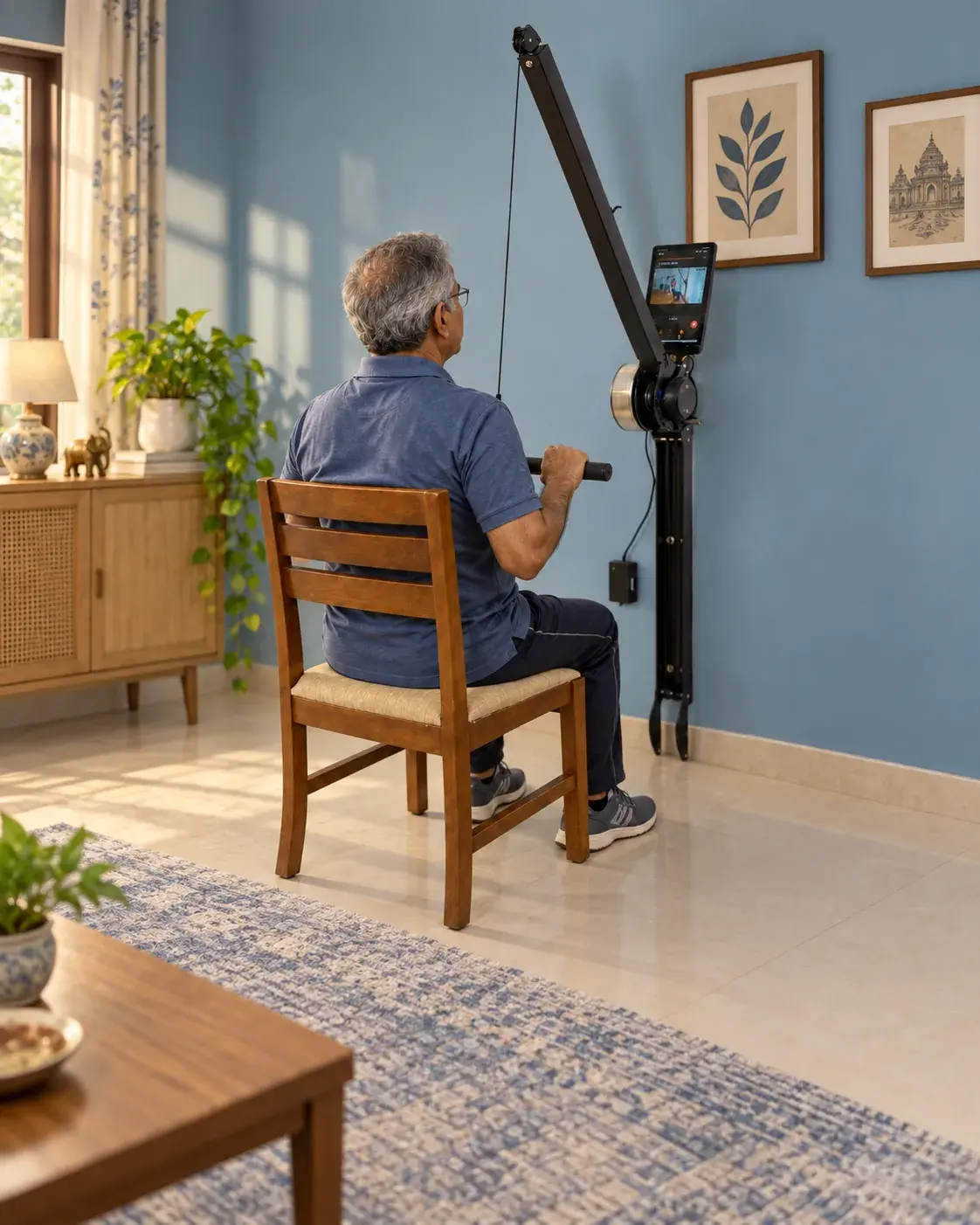
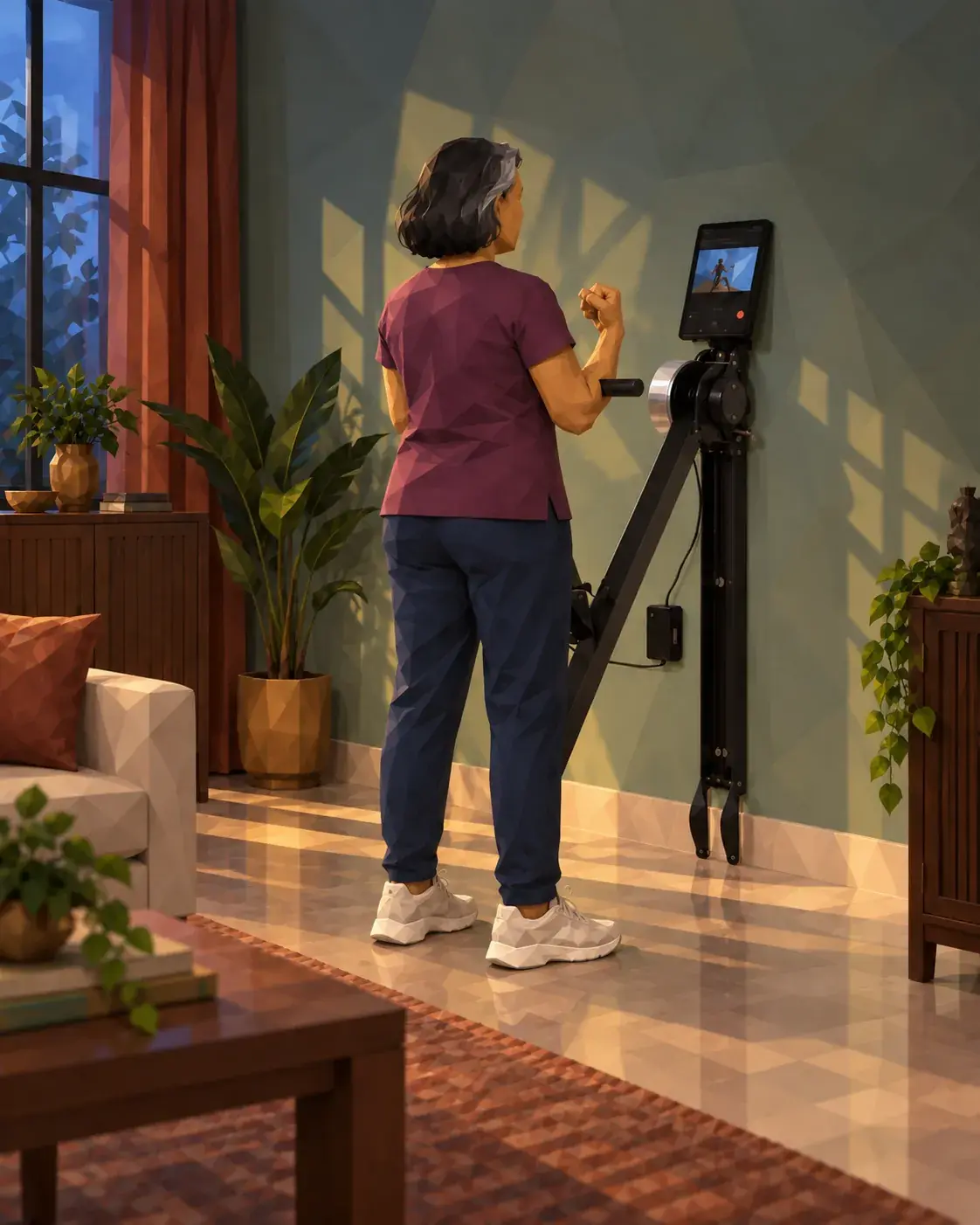
That is the gap strength training equipment for seniors like Ferra is built to close. It uses concentric-only resistance, so the machine resists your effort on the way up but never loads the body coming down. This removes the phase of exercise where it is easiest to lose control or strain a joint. Because the resistance adjusts automatically to your current strength, there is no risk of overloading at any stage.
Discover how Ferra works and build the steady, joint-safe strength that keeps your heart health goals realistic to maintain.
Conclusion
Lowering cholesterol naturally does not require a gym membership or a punishing cardio routine. A daily walk, a few resistance moves using a chair or towel, and a short stretching sequence cover the three things that actually move the numbers: circulation, muscle, and stress.
Start with two or three of these exercises this week, and let the rest follow once the habit feels steady. The body responds to consistent effort at any age, and a few months from now, checking your cholesterol will feel far less like waiting for bad news.
Exercises to Lower Cholesterol Naturally: Frequently Asked Questions
1/ Can strength training lower cholesterol as effectively as cardio?
Yes. Resistance training has a direct, documented effect on lipid metabolism and is not just a supporting activity to cardio. Combining both tends to work better than relying on either alone, especially for older adults who want variety without overloading any single joint.
2/ How soon can someone expect to see a change in cholesterol numbers?
Most people notice measurable improvements in 8 to 12 weeks of consistent activity, though this varies depending on your starting point and diet. Because lipids shift gradually, your next doctor’s visit is best viewed as a baseline check to see if your new habits are steering your numbers in the right direction, rather than a final deadline.
3/ Is it safe to exercise with existing heart disease?
This depends on the severity of the condition, so a doctor’s clearance is the right first step. Once cleared, low-impact movements like walking and resistance exercises using light loads are generally considered safe starting points.
4/ What if joint pain makes some of these exercises difficult?
Modify rather than skip. Chair squats can be done with a higher seat for less knee bend, and machines like Ferra, which use concentric-only resistance, are designed specifically to remove the loading phase that tends to aggravate sensitive joints.
5/ Does walking alone lower cholesterol, or is resistance work necessary too?
Walking alone can help, particularly with HDL, but combining it with resistance work produces better overall results. The two types of movement affect cholesterol through different mechanisms, which is why pairing them works better than choosing just one.
Build everyday strength — at your pace
Explore Ferra to see how strength training fits into life after 50 — it’s not about building muscle for its own sake, but moving with confidence.

Anurag Dani is the Co-Founder of Ferra, a company dedicated to redefining healthy ageing through strength training. Drawing from his experience building fitness and healthy ageing solutions for adults, he writes about healthy ageing to help readers stay strong and independent as they age.