Have you noticed a parent skipping the evening walk they used to love, or making excuses to stay seated at family gatherings?
It rarely looks dramatic. There is no single moment where someone announces they are afraid. Instead, one outing gets skipped, then another, until a full and active life quietly narrows into a much smaller one. This is fear of falling in elderly adults, and it is more common than most families realise.
In this article, we look at why fear of falling takes hold, how it slowly shrinks a senior’s world, and what actually helps.
The Fear of Falling Cycle – Explained
A little caution around stairs or wet floors is healthy. Fear of falling becomes a problem when it starts deciding what a person will and will not do that day.
Research on older adults shows that this fear often leads directly to activity restriction, and that restriction creates the very outcome it was trying to avoid. Muscles that are not used regularly get weaker. Balance, which depends on strength and practice, gets worse. The risk of an actual fall goes up, not down.
- Fear of falling leads to avoiding walks, stairs, or outings
- Avoidance leads to weaker legs and slower reflexes
- Weaker legs and slower reflexes lead to a higher chance of falling
- A fall or near-fall deepens the original fear
This is the core pattern researchers call the fear-of-falling cycle, and it explains why caution that starts small can grow much larger than the original risk ever was.
Fear of Falling Doesn’t Just Limit Movement, It Limits Life
The physical side of this cycle gets most of the attention, but the social side is just as real. Each skipped activity tends to lead to another.
A person who stops taking the evening walk soon stops running into neighbours. Someone who avoids the stairs may start declining invitations to homes without a ground-floor entrance. Over months, this adds up:
- Fewer walks, so fewer casual conversations with neighbours
- Fewer outings, so fewer family visits and celebrations
- Fewer hobbies, so less time spent doing things that once brought joy
- More time spent alone at home, reinforcing the sense that the outside world is risky
None of these choices feels like a big decision in the moment. But together, they explain why so many older adults describe their world feeling smaller than it used to be, without being able to point to one specific cause.
Recommended Reading:
If this pattern sounds familiar, it can help to understand the signs your coordination is declining, since coordination changes are often an early, overlooked contributor to this kind of caution.
Five Common Triggers Behind Fear of Falling
Fear of falling rarely comes from nowhere. It usually has a specific, identifiable source, and naming it is often the first step toward addressing it.

Common contributors include:
- A previous fall or near-fall, even a minor one
- Weak legs or core muscles, which make everyday movements feel less stable
- Vision changes, which make uneven ground or dim lighting feel riskier
- Watching a friend or family member fall, which can create anticipatory worry
- Certain medications, which can cause light-headedness or slower reactions
According to Cleveland Clinic, fear of falling can become something of a self-fulfilling prophecy, since limiting activity to feel safer often leads to the deconditioning that raises fall risk in the first place. Recognising which of these factors applies matters more than treating the fear as one single, vague problem, because the right next step depends on the actual cause.
How Elders Can Rebuild Confidence When Fear of Falling Takes Hold
The instinct to protect a loved one by encouraging them to slow down is understandable, but it often reinforces the fear instead of easing it. What actually helps is a gradual, structured return to movement.
A few starting points that make a real difference:
- Naming the specific activities being avoided, rather than treating the fear as general
- Starting with small, low-stakes versions of an avoided activity, like a short walk to the gate before a full block
- Making the home environment safer, with clear pathways and good lighting
- Building consistent strength in the legs and core, since stronger muscles support steadier movement
- Involving a doctor or physiotherapist if the fear follows a recent fall or health change
Confidence tends to return the same way it was lost, one small, repeated action at a time, rather than through a single dramatic decision to “get back out there.”
Recommended Reading:
For a simple place to begin, these daily exercises for seniors offer a manageable starting routine that builds confidence without requiring a gym or special equipment
Strength Training Equipment for Seniors Needs to Feel Safe to Actually Happen
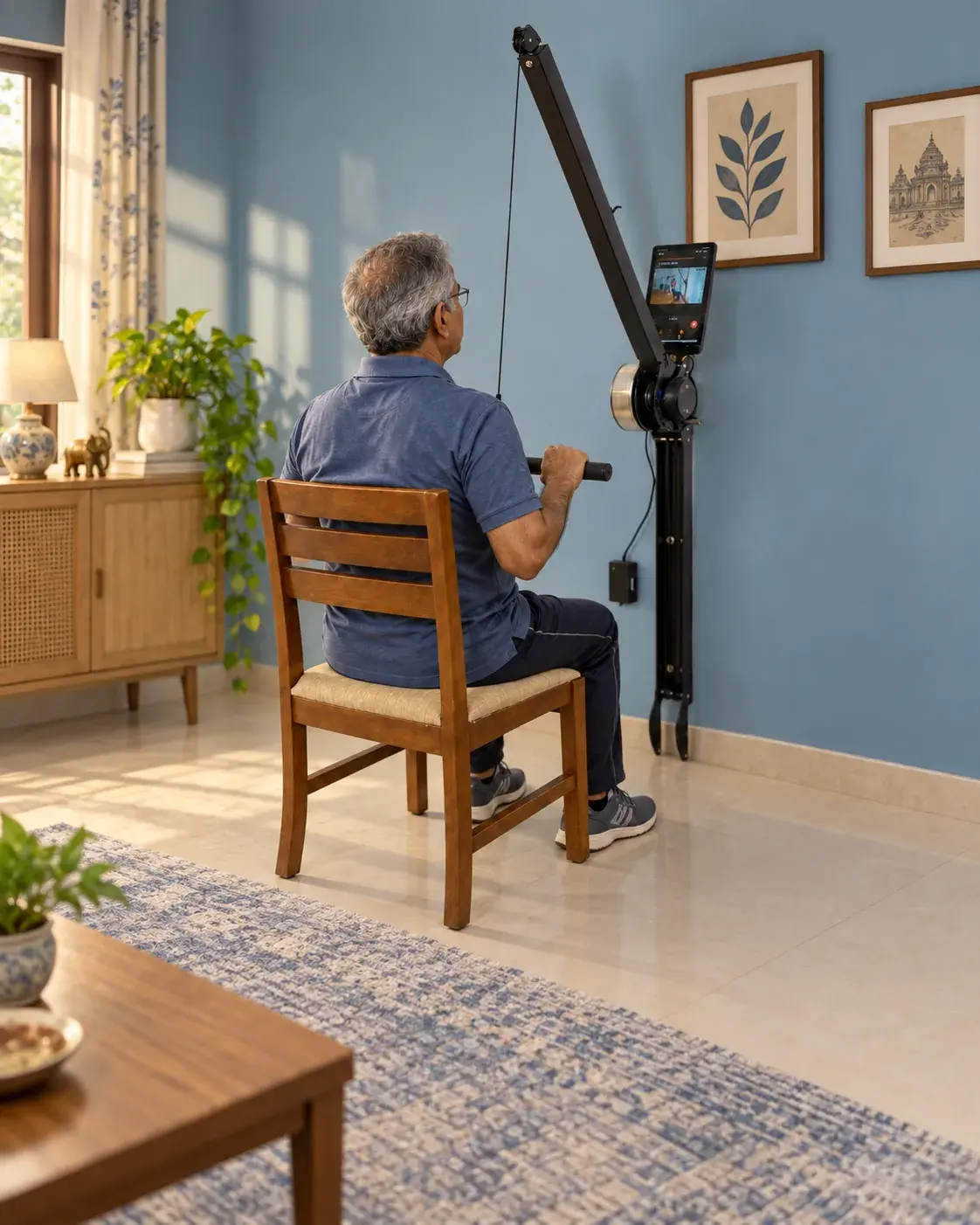
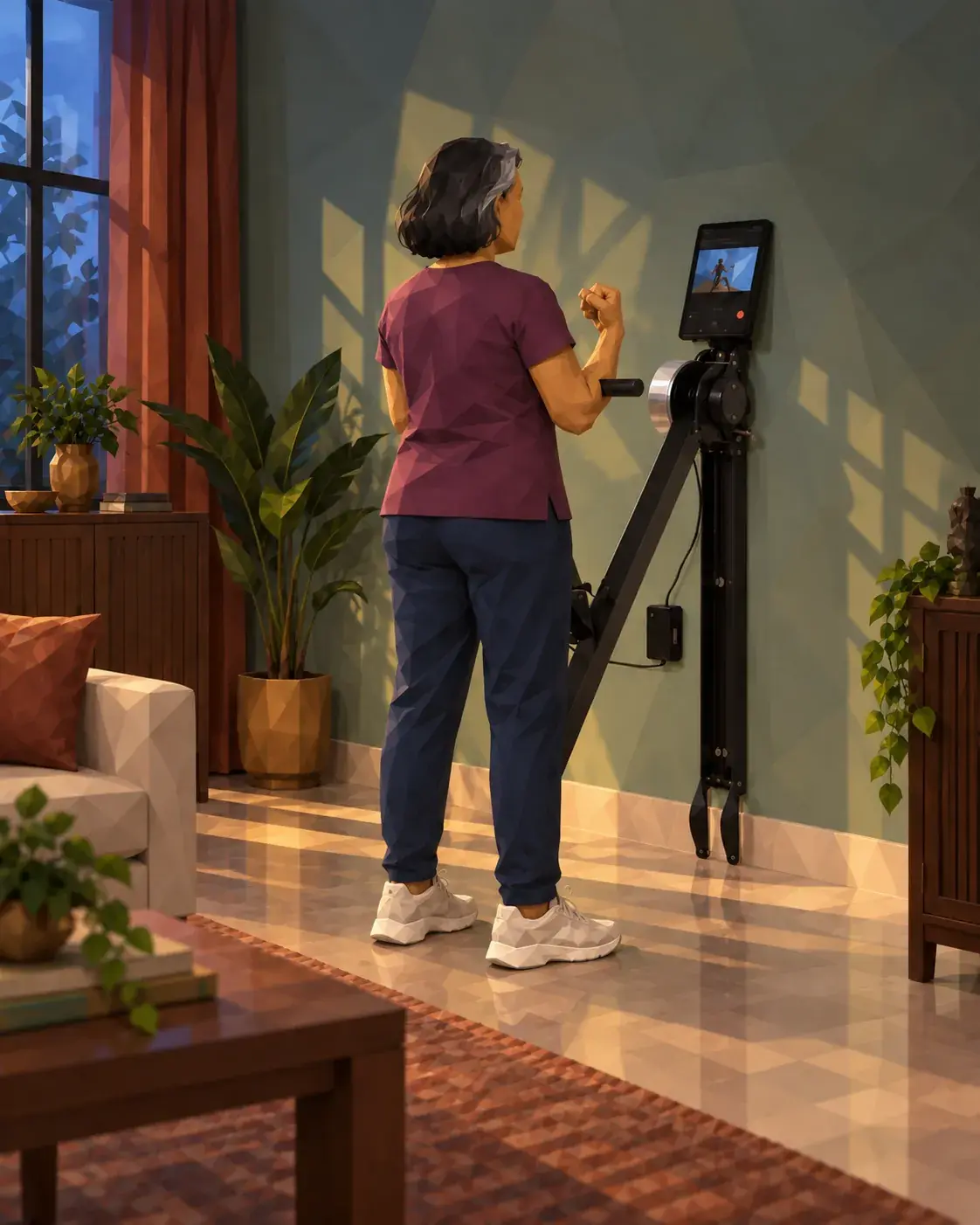
Every step above depends on one thing: the exercise itself has to feel safe enough to actually attempt. A senior who is nervous about falling is unlikely to persist with a workout that feels unpredictable or risky, no matter how well-designed the routine is on paper. This is exactly the gap that an all-in-one home gym machine like Ferra is built to close.
Ferra addresses this in a few specific ways:
- Concentric-only resistance means the machine resists the push but never loads the body on the way down, so there is no moment where a person feels pinned under weight
- Resistance adjusts automatically to what each person can safely manage, removing the guesswork of picking the wrong weight
- The seated, guided setup removes the instability that makes free weights and traditional gym machines feel risky for someone already anxious about falling
Once the exercise itself feels safe, showing up for it becomes far easier. Check out Ferra and build the strength that helps you move through the day without hesitation.
Conclusion
Fear of falling rarely announces itself. It shows up as a walk that gets skipped, an invitation that gets declined, a hobby that quietly falls away. Understanding the cycle and knowing that both the fear and the weakness behind it can be addressed changes the story. A parent or grandparent who feels steadier on their feet does not just reduce their fall risk. They start showing up again, for the walk, the visit, and the small everyday moments that make up a full life.
Frequently Asked Questions About Fear of Falling Among Elderly
1. Is fear of falling common in older adults?
Yes. Studies estimate that a meaningful share of community-dwelling older adults experience some degree of fear of falling, and this rises further among those who have fallen before. It is considered a common and well-recognised pattern, not a rare or unusual reaction.
2. Can fear of falling happen even without a previous fall?
Yes. While a past fall is a common trigger, fear of falling can also develop from watching someone else fall, from a general decline in balance or vision, or from a growing awareness of physical changes with age. The fear does not require a personal fall to take hold.
3. How long does it take to rebuild confidence after a fall?
This varies widely between individuals, depending on the severity of the fall and the person’s overall strength and health. Gradual, consistent activity over several weeks tends to produce noticeable improvements in both confidence and physical steadiness, though progress is rarely linear.
4. Should a senior avoid activity entirely if they are afraid of falling?
No. Avoiding activity tends to worsen the fear over time by weakening the muscles that support balance. A better approach is to reduce risk within an activity, such as using support or starting with easier versions, rather than avoiding movement altogether.
Build everyday strength — at your pace
Explore Ferra to see how strength training fits into life after 50 — it’s not about building muscle for its own sake, but moving with confidence.

Anurag Dani is the Co-Founder of Ferra, a company dedicated to redefining healthy ageing through strength training. Drawing from his experience building fitness and healthy ageing solutions for adults, he writes about healthy ageing to help readers stay strong and independent as they age.