Why does getting up from a low sofa suddenly take effort? Why does carrying two grocery bags up a flight of stairs leave you out of breath when it never used to? These small, everyday struggles are usually the first visible signs of functional decline in older adults, and they almost always start with muscle, not age itself.
The good news is that this decline follows a fairly predictable pattern. Once you know which muscles fade first and what they control, you know exactly where to focus.
Why Functional Decline Starts With Muscle, Not Age
Functional decline is not a diagnosis. It is the gradual loss of ability to do daily tasks without help, things like standing up, climbing stairs, or reaching a shelf. The biggest driver is sarcopenia, the natural loss of muscle mass and strength that begins in your thirties and speeds up after 60.
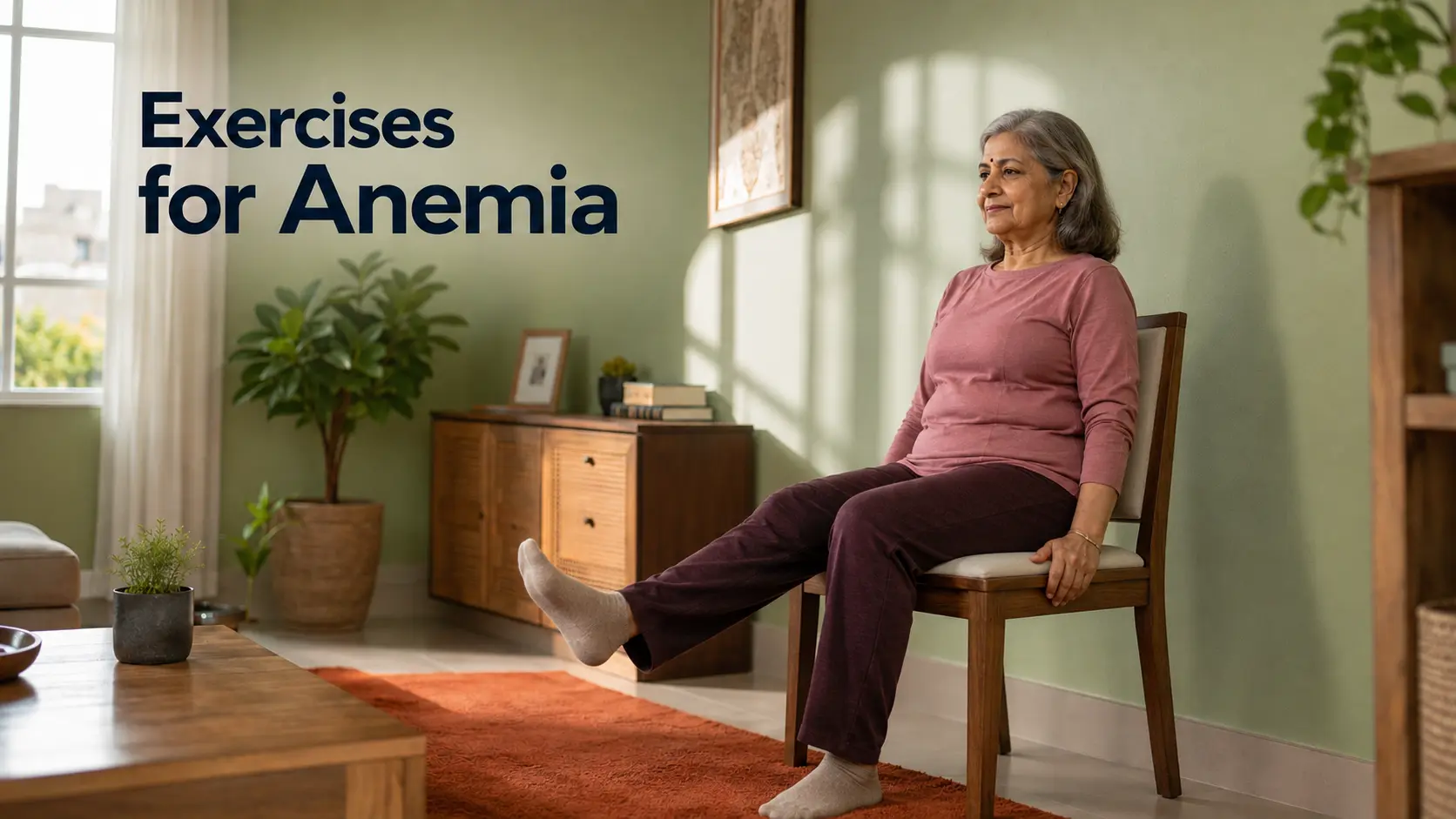
What makes this reversible is that most of what looks like “aging” is inactivity layered on top of natural decline. Muscles that go unused weaken faster than muscles that stay active, regardless of age. These simple home exercises show what a routine addressing this actually looks like.
- Muscle loss begins gradually, often unnoticed for years
- It accelerates after 60, particularly in people who sit for long stretches
- Strength, not muscle size, predicts how well you move and how independent you stay
This is why the same 10 muscle groups tend to weaken first, and why identifying them is the first practical step toward reversing the trend.
The 10 Muscles That Decline First, And What They Control
Each of these muscles supports a specific everyday movement. When one weakens, a particular daily task becomes noticeably harder, often before you connect the two.

- Quadriceps (front thighs): Power standing up and climbing stairs, often the first weakness people notice.
- Glutes: Stabilise the hips and drive getting up from low chairs or the floor.
- Grip and forearm muscles: Control jar lids, keys, and carrying grocery bags.
- Core and lower back: Support posture and protect the spine during bending or lifting.
- Shoulders: Handle reaching into overhead cabinets or lifting objects overhead.
- Upper back (between the shoulder blades): Maintain posture and control pulling movements.
- Calves: Keep you steady on uneven ground and support every step.
- Triceps: Push you up from a chair, the floor, or a bed.
- Biceps: Handle lifting and carrying, from groceries to a grandchild.
- Hip flexors and hamstrings: Drive walking gait and control stair climbing.
Recommended Reading: Curious how this decline actually begins in your 40s and 50s? This piece on how to prevent muscle loss after 45 breaks down the early signs to watch for.
Together, these 10 muscle groups cover nearly every movement involved in daily independence, which is why losing them is a functional problem, not just a cosmetic one.
How to Reverse Functional Decline at Home
Resistance training is the only approach with strong evidence behind it for reversing this kind of decline. Walking and stretching support mobility, but they do not rebuild lost muscle strength the way targeted resistance work does.
- Train consistently rather than occasionally. Regular, shorter sessions build more strength than infrequent long ones.
- Prioritise safe, controlled resistance over heavy, uncontrolled loads, since injury risk rises with age.
- Focus on functional movements that mirror daily tasks, like standing, pulling, and pushing.
Research from Harvard Health notes this kind of muscle loss can begin around age 35 and pick up pace to roughly 3 percent a year after 60, which is why consistency matters more than intensity once you start addressing it. Sticking with a structured approach built for this age group makes that consistency easier to maintain than a general gym routine.
Recommended Reading:
If you are just getting started, these beginner-friendly home workouts walk through how to build a routine without prior gym experience.
Functional Decline in Older Adults Needs the Right Kind of Strength Training
Knowing which 10 muscles decline first only helps if you can train them safely and consistently at home. Free weights and standard gym machines load your joints on the way down, which is exactly the phase that causes soreness and injury risk for older joints. Ferra’s all-in-one home gym machine is built to close that gap.
- Concentric-only resistance means the machine resists your effort but never pushes weight back down on you, removing the injury-prone part of the movement entirely
- Seven core exercises, from Front Squats to Seated Row to Overhead Press, map directly onto the 10 muscle groups covered in this article
- Resistance auto-adjusts to your current strength, so there is no risk of overloading
Consistency is what actually rebuilds these muscles, and having a system that adjusts itself removes the guesswork that usually stalls people out. Check out Ferra and start rebuilding the strength that daily independence depends on.
Conclusion
Functional decline in older adults feels sudden, but it builds slowly, one weakened muscle group at a time. The reassuring part is that the same muscles that fade first are also the ones that respond fastest to consistent, safe strength training.
You do not need to fix all 10 muscle groups overnight. Start with the ones tied to the tasks you notice most, whether that is standing up, carrying groceries, or reaching a shelf.
A few months of steady effort from now, those same daily tasks will likely feel automatic again, the way they used to before you ever noticed the change.
Functional Decline in Older Adults: Frequently Asked Questions
1/ How fast can functional decline be reversed?
Most people notice improvements in strength and daily movement within 8 to 12 weeks of consistent resistance training. Full recovery of lost muscle takes longer and depends on how much was lost and how consistently training continues. Progress is usually gradual rather than sudden.
2/ Is walking enough to reverse functional decline?
No. Walking supports cardiovascular health and mobility, but it does not load muscles enough to rebuild significant strength. Resistance training is needed alongside walking to actually reverse muscle loss and restore functional strength.
3/ Can functional decline be reversed after 70?
Yes. Muscle responds to resistance training at any age, including the 70s and beyond. The pace of improvement may be slower than in younger adults, but studies consistently show meaningful strength gains are possible well into later decades.
4/ What is the difference between functional decline and sarcopenia?
Sarcopenia is the loss of muscle mass and strength itself, while functional decline is the practical result, the growing difficulty with daily tasks like standing, walking, or lifting. Sarcopenia is usually the main driver behind functional decline.
5/ Should seniors with joint pain avoid strength training?
No, but the type of resistance matters. Machines like Ferra, which use concentric-only resistance, avoid the joint-loading phase that typically causes soreness and pain, making strength training more accessible for seniors with existing joint discomfort.

Anurag Dani is the Co-Founder of Ferra, a company dedicated to redefining healthy ageing through strength training. Drawing from his experience building fitness and healthy ageing solutions for adults, he writes about healthy ageing to help readers stay strong and independent as they age.