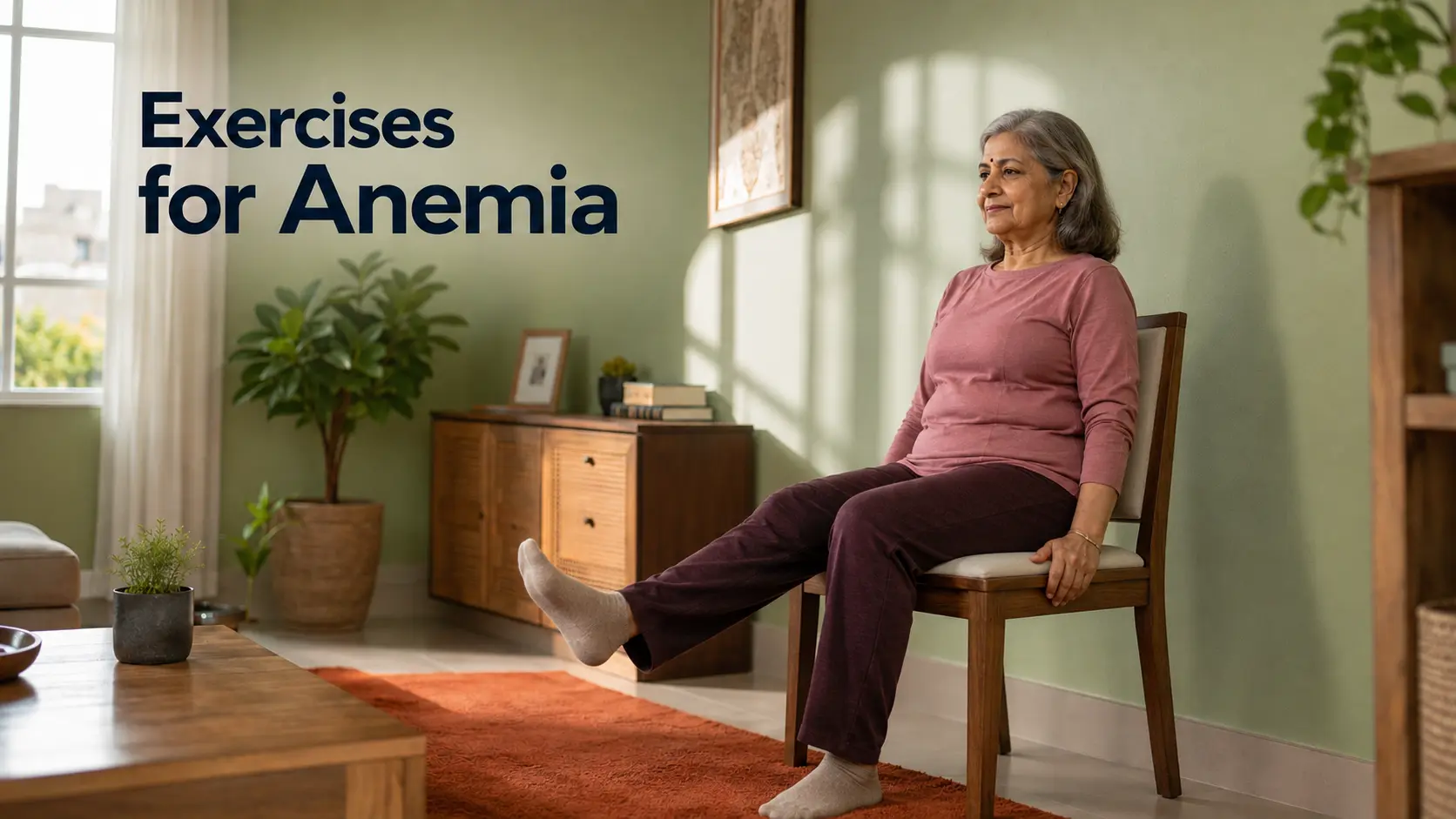
Why does getting up from a low chair suddenly take real effort?
It’s a small thing, but it’s often one of the first physical signs of muscle loss. Learning how to reverse muscle loss starts with recognising that it’s not a one-way street. With the right approach, most people can slow it down and, in many cases, rebuild real, usable strength again.
Why Muscle Loss Happens With Age
Muscle loss, known as sarcopenia, is a gradual process that begins decades before it becomes noticeable. According to UT Southwestern Medical Center, muscle strength declines by roughly 1.5-5% a year from midlife onward, and it’s possible to lose as much as 8% of muscle mass every decade later in life. Because the loss happens so gradually, it often goes unnoticed until stairs feel steeper and everyday tasks demand more effort than they used to.
The signs tend to show up in specific ways:
- Getting up from a low chair takes real, noticeable effort
- Stairs leave you more out of breath than they used to
- Carrying groceries or shopping bags feels heavier than it should
- Opening jars or turning a stiff key takes more strength than expected
These are not simply things to accept as inevitable. They are signals that the body needs more targeted resistance work than it has been getting, and that work is what the rest of this article covers.
Why Most Muscle-Loss Advice Falls Short at Home
Search online for how to reverse muscle loss, and most articles look the same: structured sessions on set days, more protein, reminders to “stay active.” Some of this overlaps with steps to prevent early muscle loss, but it misses two points that decide whether someone actually sticks with it.
- Most routines assume the reader already feels confident lifting weight or attending a gym, not starting from zero
- Plans built around a handful of longer sessions a week are hard to turn into an actual daily habit
- Few programs address the soreness and joint strain from the lowering phase of traditional lifting, which is often what causes people to quit within weeks
Muscle loss is a daily, ongoing process, and it responds best to an approach that fits into daily life rather than a handful of long sessions to remember each week.
What Actually Reverses Muscle Loss
Strength training is the activity most consistently shown to slow sarcopenia’s progression and blunt its effects, and it works because muscle responds to mechanical load in a way that walking or cardio alone cannot replicate.
A few principles matter more than any single exercise:
- Functional movements, like squatting, pulling, and pressing patterns that mirror real daily tasks, build more usable strength than isolated moves
- A protein-forward diet supports the muscle repair that resistance training triggers
- Consistency matters more than intensity. Showing up regularly with moderate effort outperforms occasional heavy sessions
None of this requires heavy weights, long sessions, or an advanced starting point. Even beginner strength training builds real results when the movement is consistent and safe.
Building a Daily Strength Habit Safely at Home
Once the “what” is clear, the harder question is “how,” especially at home without a trainer watching your form. This is where most people strain a joint or simply give up.
- Start with functional patterns rather than isolated moves. A sit-to-stand pattern builds more usable leg strength than a leg extension ever will
- Keep early sessions short. A small, repeatable daily habit builds consistency faster than infrequent long workouts
- Pay close attention to the lowering phase of any exercise, since that is usually where strain and soreness happen for older joints
Building this habit safely is less about willpower and more about removing its two biggest points of failure: injury risk and inconsistency.
Recommended Reading:
If you want a broader set of moves to build into this habit, these exercises for seniors at home are a practical, no-gym starting point.
Reversing Muscle Loss Depends on Training You Can Actually Repeat Daily
Knowing which movements help is only half the equation. The other half is doing them every day, at home, without the joint strain or soreness that makes most people quit within weeks. That gap is exactly what most muscle-loss advice leaves unaddressed.
That gap is what strength training machines for older adults like Ferra is built to close:
- Concentric-only resistance, so the machine resists the push but never loads the lowering phase, removing the part of training most responsible for soreness and injury risk
- Resistance that adjusts automatically as the muscles fatigue, so even a short daily session reaches genuine, safe fatigue without guessing at weight
Check out Ferra and start building the strength that reverses muscle loss at home.
Conclusion
Learning how to reverse muscle loss is not about chasing a dramatic transformation. It is about showing up daily, giving your muscles real resistance work, and letting the body do what it is still capable of.
Do this consistently, and a few months from now, the everyday moments that feel effortful today will simply feel easy again, proof that muscle loss can, in fact, be reversed.
Frequently Asked Questions About Reversing Muscle Loss
1/ Can you rebuild muscle after 70?
Yes. Muscle tissue remains responsive to resistance training well into the 70s and 80s. The rate of gain may be slower than at 40, but studies consistently show measurable strength and muscle mass improvements in older adults who train consistently, even with no prior weightlifting experience.
2/ Is walking enough to reverse muscle loss?
No. Walking supports cardiovascular health and mild endurance, but it does not provide the mechanical load muscles need to rebuild. Reversing muscle loss requires resistance training that challenges the muscles beyond what daily movement already asks of them.
3/ How soon can results appear?
Most people notice meaningful strength improvements within 8 to 12 weeks of consistent resistance training. Visible changes in daily tasks, like standing up from a chair with less effort, often show up even earlier, sometimes within the first few weeks.
4/ Is a gym membership needed to reverse muscle loss at home?
No. Home-based resistance training can be just as effective, provided the movements are safe and consistent. Machines like Ferra, which use concentric-only resistance, are designed specifically to make safe, effective strength training possible at home without gym equipment.
5/ Is it normal to feel sore after starting strength training?
Some initial soreness is common as muscles adapt to new load, and it typically fades within the first couple of weeks. If soreness is sharp, persistent, or affects a joint rather than a muscle, it is worth checking in with a doctor before continuing.

Anurag Dani is the Co-Founder of Ferra, a company dedicated to redefining healthy ageing through strength training. Drawing from his experience building fitness and healthy ageing solutions for adults, he writes about healthy ageing to help readers stay strong and independent as they age.