Why do simple things suddenly feel harder after 60?
- Stairs leave you a little breathless
- Grocery bags feel heavier than before
- Standing up from the couch isn’t easy anymore
None of this is sudden, but it adds up. In this article, we break down why this happens and how to stay fit after 60 without overdoing it.
What’s Happening to Your Body After 60
The body’s ability to hold onto muscle changes with age. Adults lose 3 to 8 percent of muscle mass per decade starting from age 30, and that decline accelerates after 60. This condition, known as sarcopenia, is not inevitable, but it is common, and it shows up in everyday life before most people recognise it as a fitness issue.
The signs are usually practical ones:
- Getting up from a low sofa requires pushing off with both hands
- Grocery bags that used to feel manageable now strain the arms
- Climbing a flight of stairs leaves you slightly out of breath
- Balance feels less automatic than it once did
Joints stiffen with age and recovery from exertion takes longer. This does not mean fitness is out of reach. It means the approach needs to match what the body is going through.

What Fitness Means When Staying Fit After 60
The most useful shift at this stage is to stop thinking about fitness as performance and start thinking about it as function. The goal is not to look a certain way. The goal is to stay capable of the things you enjoy, for longer, without pain getting in the way.
That reframe changes what to prioritise. Three things matter most:
- Strength: Muscle loss drives most of the physical decline that comes with age, and resistance training slows that process.
- Mobility: Stiff joints and tight muscles make ordinary movements feel risky, and consistent mobility work keeps the range of motion healthy.
- Consistency: Frequency matters far more than intensity at this stage, and short regular sessions build the reflex-muscle connection your body needs.
| What changes after 60 | What helps |
| Muscle mass declines | Resistance training |
| Joints stiffen | Regular mobility work |
| Recovery takes longer | Shorter, consistent sessions |
| Balance becomes less automatic | Strength and daily movement |
A good fitness routine at this age does not need to be complex. It needs to be consistent and focused on movements that carry over into daily life.

Recommended Reading:
Understanding how to prevent muscle loss after 45 gives important context for why the habits you build now matter more than you might think.
How to Start a Fitness Routine After 60 Without Overdoing It
The most common mistake when starting a fitness routine after 60 is doing too much too fast. Recovery is slower at this age, and soreness can be discouraging enough to stop a habit before it forms.
A more sustainable approach works in three steps:
- Start small and build the habit first: Five to ten minutes of daily movement is a legitimate starting point, not a compromise. The goal in the first few weeks is to make the routine stick, not to hit a target distance or weight.
- Add resistance before adding cardio volume: Strength is the foundation. Walking and light cardio are valuable, but resistance work should come first and stay central.
- Progress by adding sessions, not by pushing harder: Gradual progression keeps injury risk low and motivation intact.
Consistency matters more than intensity. Short regular sessions do more than build muscle. They rebuild the reflex-muscle connection that keeps movement safe and confident.

Recommended Reading:
If you are looking for a practical starting point at home, these exercises for seniors at home follow the same approach of building strength without overloading the body.
Why Most Strength Equipment Isn’t Built for Older People
Starting is the easy part. The harder challenge is finding a resistance method that does not leave you sore or put off after the first few sessions. Most strength equipment is designed for younger bodies that recover fast and can push through soreness. Traditional weights load the muscle on the way up and on the way down, and the downward phase is where most post-exercise soreness and joint strain comes from. For older adults, that soreness is often enough to break the habit.
That is the gap that strength training equipment for seniors like Ferra is built to close. Ferra uses concentric-only resistance, built specifically for ageing joints and muscles:
- It resists your effort on the push or pull, but never loads you on the way down, removing the phase most responsible for joint strain and next-day soreness
- The resistance auto-adjusts to your current strength level, so there is no risk of starting too heavy
Check out Ferra and build the strength that makes everyday movement easier.
Conclusion
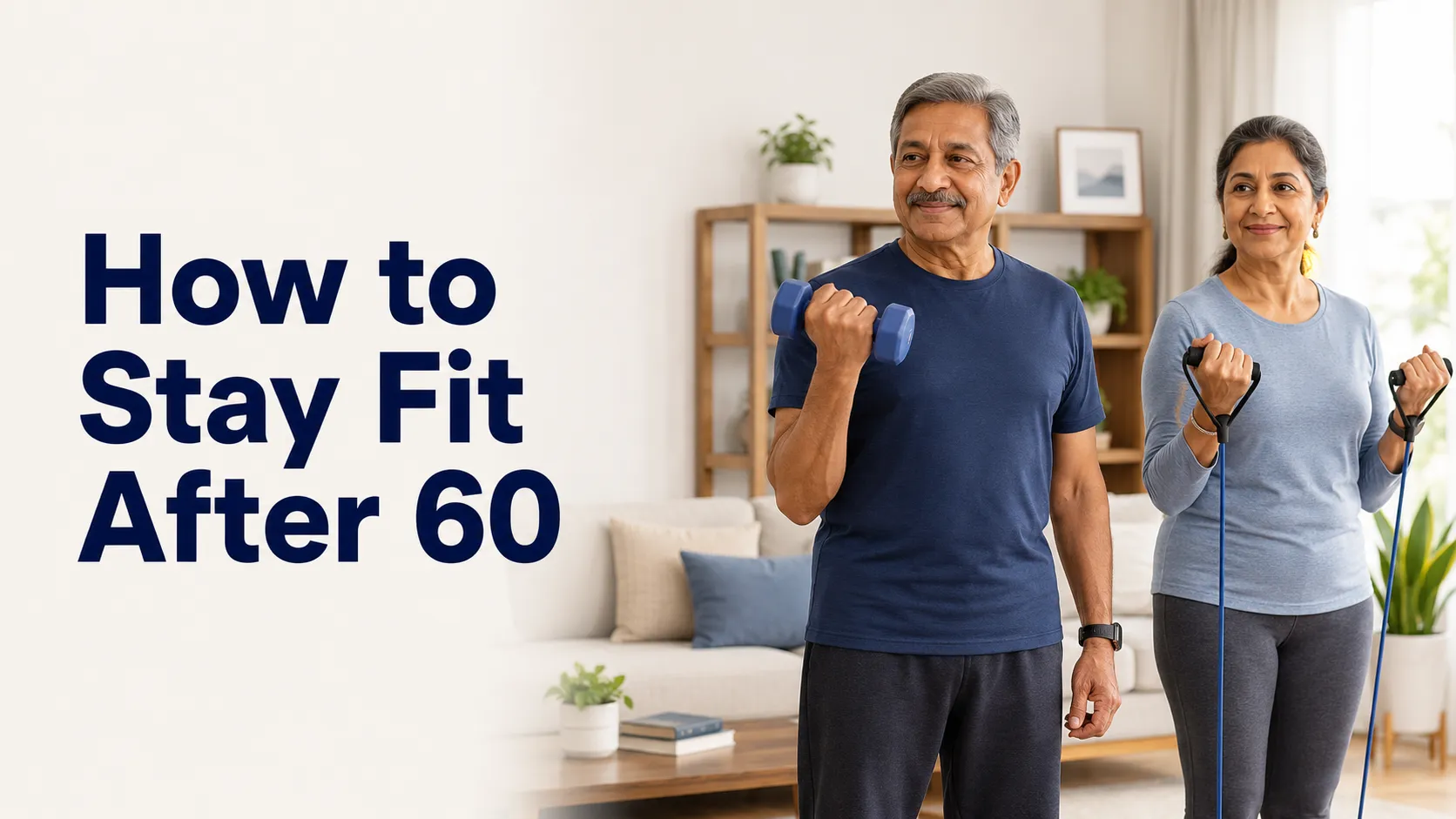
Fitness after 60 is not about intensity. It is about picking the right things and doing them regularly. Strength, mobility, and consistency are what the body needs at this stage, and none of them require a gym or long sessions.
These changes compound quietly. A few months in, mornings get easier, movement feels steadier, and the body stops catching you off guard. That is what staying fit after 60 looks like.
How to Stay Fit After 60: Frequently Asked Questions
1/ Is cardio or strength training more important after 60?
Strength training should be the priority. Cardio supports heart health and endurance, but muscle loss is the primary driver of physical decline after 60, and only resistance training directly addresses it. A routine that combines both works best, but strength comes first.
2/ How long does it take to see results from exercise after 60?
Most people notice improvements in energy and daily movement within four to six weeks of consistent training. Visible improvements in strength and muscle take longer, typically eight to twelve weeks, but functional benefits often show up well before that.
3/ Can someone with joint pain still exercise after 60?
Yes, with the right approach. Low-impact resistance training that avoids loading joints at extreme ranges is generally well-tolerated and can reduce joint pain over time by strengthening the muscles around the joint. Machines like Ferra, which use concentric-only resistance, are specifically designed to remove the loading phase that strains joints.
4/ Does diet matter for staying fit after 60?
Yes. Adequate protein intake is particularly important because the body becomes less efficient at using dietary protein to build muscle with age. Most research suggests older adults benefit from slightly higher protein intake than the standard recommendation, distributed across meals rather than concentrated in one sitting.
5/ What if someone has never exercised regularly before?
Starting later still produces meaningful results. Research consistently shows that resistance training improves muscle mass, strength, and physical function in adults well into their 70s, regardless of prior fitness history. The key is starting with a manageable volume and building gradually.

Anurag Dani is the Co-Founder of Ferra, a company dedicated to redefining healthy ageing through strength training. Drawing from his experience building fitness and healthy ageing solutions for adults, he writes about healthy ageing to help readers stay strong and independent as they age.