Ever been jolted awake at 2 a.m. by a calf muscle that suddenly feels like it’s tying itself into a knot?
For many seniors and older adults, this isn’t a rare event. It becomes a familiar, unwelcome part of the night, one that leaves the muscle sore and sleep disrupted long after the cramp itself has passed.
Leg cramps at night become more common with age, and there’s usually more going on than dehydration or an odd sleeping position. Understanding what’s actually causing them, and which leg strengthening exercises for seniors can help prevent them, makes it possible to get ahead of the problem instead of just reacting to it each time it strikes.
Why Do You Get Leg Cramps at Night?
Nighttime leg cramps, known medically as nocturnal leg cramps, are sudden, involuntary contractions in the calf, foot, or thigh. They strike without warning and can last from seconds to several minutes, often leaving the muscle tender for hours after.
Several factors make these cramps more common with age:
- Dehydration and electrolyte shifts, particularly low magnesium, potassium, or calcium
- Tendons naturally shortening over time, pulling the foot into a slightly pointed position during sleep
- Muscle fatigue from an unusually active day, or the opposite: long stretches of inactivity that leave muscles stiff
- Certain medications, worth mentioning to a doctor if cramps started around a prescription change
None of these causes act alone. Most nights it’s a combination working together, which is why relief that only targets one factor often falls short.
The Cause Most People Miss: Weakening Leg Muscles
Most cramp advice stops at hydration and stretching. Research points to something deeper, and it’s more fixable than it sounds.
A case-control study of adults over 60 found that muscle weakness in the lower limbs was directly associated with nighttime cramps. As muscle fibers change with age, they become more prone to firing off involuntary spasms instead of contracting smoothly.
Recommended Reading: If this weakness is showing up in other ways too, like heavier grocery bags or a harder time on the stairs, this piece on muscle loss after 45 walks through why it happens and what actually reverses it.
Stretching and hydration ease a cramp once it has already started. Building leg strength is what addresses why the muscle is cramping in the first place.
How to Stop a Cramp the Moment It Hits
When a cramp hits, the goal is to interrupt the contraction as quickly as possible.
- Flex the foot upward, pulling the toes toward the shin, to stretch the calf directly
- Walk on the heels for a few steps to activate the muscles opposite the calf
- Massage the area gently in the direction of the muscle fibers to encourage blood flow
- Apply a warm compress afterward if the muscle stays tender
Move carefully, especially getting out of bed in the dark. A simple bedtime routine built around these moves, paired with these exercises for seniors at home, can lower how often cramps happen.
Leg Strengthening Exercises for Seniors That Help Prevent Night Cramps
Stronger leg muscles are less prone to the involuntary firing that causes cramps. These leg strengthening exercises for seniors target the calves, shins, and thighs, done seated or standing, with no equipment needed.
1. Calf Raises
Stand behind a chair, holding the back for balance. Rise slowly onto the balls of both feet, then lower back down with control. Repeat 10 to 12 times for 2 sets. This strengthens the calf muscles most commonly involved in nighttime cramps.

2. Toe and Ankle Raises
Sit in a sturdy chair with feet flat on the floor. Lift the toes upward while keeping the heels planted, then lower them back down. Repeat 12 times for 2 sets. This works the muscles along the shin that balance out calf strength.

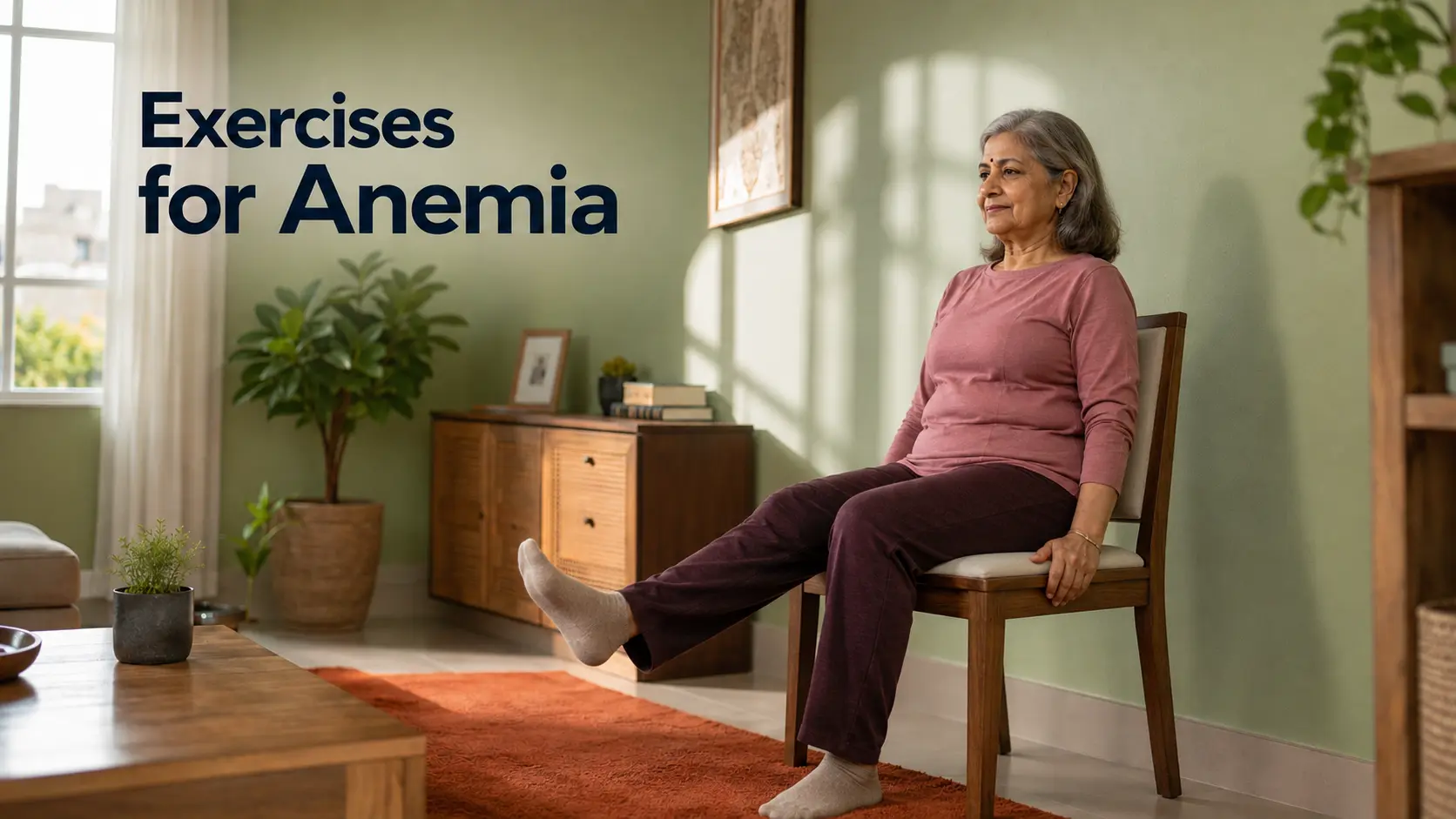
3. Seated Leg Extensions
Sit tall in a chair with feet flat on the floor. Straighten one leg out in front until it’s nearly parallel to the floor, then lower it slowly. Repeat 10 times on each leg. This builds thigh strength that supports the leg through daily movement.

Pairing these with hip pain exercises for seniors rounds out lower-body strength, since weakness in the hips can change how the legs move and add strain lower down. Done consistently, even a few minutes of strength training for seniors each day builds the kind of muscle resilience that stretching alone can’t provide.
Leg Strengthening Exercises for Seniors Work Best With the Right Support
Exercises like these only work if they happen regularly. Missing a few days, or not knowing if the resistance is even heavy enough, is where most home routines quietly fall apart. Ferra, an all-in-one home gym machine, is built to remove exactly that friction:
- Concentric-only resistance, so the machine resists effort but never loads the muscle on the way down
- Resistance that adjusts automatically as strength builds, so there’s no guesswork with settings
- Guided sessions that make it easy to stay consistent instead of skipping when motivation dips
That consistency is what turns a few strengthening exercises into a routine that actually keeps cramps away. Check out Ferra and build the leg strength that keeps nighttime cramps from coming back.
Getting Fewer Disrupted Nights
Leg cramps at night are common with age, but they’re not something to just live with. Once dehydration, tight tendons, and weakening muscles are addressed together, cramps usually become less frequent within a few weeks.
A few minutes of leg strengthening most days adds up faster than it seems. Before long, those 2 a.m. wake-ups become rare enough to stop bracing for, and sleep starts feeling like rest again.
Leg Strengthening Exercises for Seniors: Frequently Asked Questions
1/ Is it safe to start leg strengthening exercises if cramps happen often?
Yes, for most people. These are low-impact movements done seated or holding a chair for balance, so the risk is low even for someone dealing with frequent cramps. If a doctor has flagged a specific muscle or nerve condition, it’s worth checking with them before adding new exercises.
2/ How soon can leg strengthening exercises reduce night cramps?
Most people notice a difference within 3 to 4 weeks of consistent practice, though this varies by person. Muscle strength builds gradually, so a few sessions won’t produce results, but a daily or near-daily habit usually does.
3/ Should I focus on stretching or strengthening first?
Strengthening, alongside stretching rather than instead of it. Stretching before bed helps in the short term, but strengthening addresses the muscle weakness that research has linked to why cramps happen at all. Machines like Ferra, which use concentric-only resistance, make it easier to build that strength without added strain on the joints.
4/ Do I need any equipment to do these exercises?
No. Calf raises, toe raises, and seated leg extensions can all be done with just a sturdy chair for balance. This makes them a practical starting point before considering any equipment-based routine.
5/ Should I still exercise the day after a cramp wakes me up?
Yes, unless the muscle is still sore or tender. Gentle strengthening the next day is fine and won’t cause another cramp. If the area still feels tight or painful, give it a day of rest and stick to light stretching instead.

Anurag Dani is the Co-Founder of Ferra, a company dedicated to redefining healthy ageing through strength training. Drawing from his experience building fitness and healthy ageing solutions for adults, he writes about healthy ageing to help readers stay strong and independent as they age.