Are you eating enough protein, or just eating enough food?
Many older adults hear the advice to eat more protein without ever getting a straight answer on how much that means. A slice of toast at breakfast and dal at dinner can feel like enough, but the numbers tell a different story.
Protein intake for seniors is not the same as protein intake for a 30-year-old. As the body ages, it becomes less efficient at using the protein you eat, so the target moves higher, not lower. Knowing the actual number, and where it should come from, is the first step to keeping your muscle from slipping away.
How Much Protein Do Seniors Actually Need Each Day?
The standard adult protein target is 0.8 grams per kilogram of body weight. However, that figure is the Recommended Dietary Allowance, a baseline built for general population health rather than muscle preservation.
It sets a floor, not a target, for someone trying to protect muscle into their 70s and 80s.
For seniors, most current nutrition guidance points meaningfully higher: 1.0 to 1.2 grams per kilogram daily, with active seniors or those recovering from illness closer to 1.5 grams per kilogram.
Here is what that looks like at different body weights:
| Body Weight | Protein at 1.0 g/kg | Protein at 1.2 g/kg |
| 50 kg | 50 g | 60 g |
| 60 kg | 60 g | 72 g |
| 70 kg | 70 g | 84 g |
| 80 kg | 80 g | 96 g |
These ranges are a starting point, not a fixed rule, since individual needs still shift with activity level, kidney health, and recovery from illness or surgery. What makes the standard 0.8 gram baseline fall short becomes clearer once you look at what happens to muscle with age.
Why Protein Needs Rise After 60
Muscle loss does not begin at 60. It starts much earlier and simply becomes more noticeable with time. Muscle mass declines by roughly 3-8% per decade starting in the thirties, and the rate speeds up after 60.
Part of the reason protein needs climb with age comes down to anabolic resistance. Older muscle responds less efficiently to the same amount of protein, so it takes more of it to trigger the same muscle-building response a younger adult would get.
In daily life, this shows up as:
- Groceries or a grandchild feel heavier to carry
- Getting up from a low chair takes more effort
- Stairs feel more tiring than they once did
This is also why pairing enough protein with beginner strength training after 60 matters more than eating protein alone. Muscle that is not used simply breaks down, no matter how much protein you eat.
How to Spread Protein Across the Day
Total daily protein matters, but timing matters almost as much.
Spreading protein evenly across three meals works better than loading it all into dinner. Each meal needs roughly 25 to 30 grams to meaningfully trigger muscle repair, so one protein-heavy dinner cannot make up for two thin meals earlier in the day.
A sample day might look like this:
- Breakfast: eggs or curd with nuts (20 to 25 g)

- Lunch: dal, paneer, or chicken with rice (25 to 30 g)

- Dinner: fish, tofu, or lentils with vegetables (25 to 30 g)

Breakfast is usually the weakest meal of the day, often just tea and toast instead of something protein-forward. Fixing this one meal closes a meaningful part of the daily gap.
Recommended Reading:
Protein is only one piece of the picture. If you want to catch the broader signs of muscle loss early, this blog on preventing muscle loss walks through what to watch for.
Best Protein Sources for Seniors, Including Vegetarian Options
Protein does not have to come from meat, and for many Indian households, it usually does not. The key is variety, since no single food covers every essential amino acid on its own.
Reliable options include:
- Animal sources: eggs, curd, paneer, fish, and lean chicken
- Vegetarian sources: dal, rajma, chana, soy chunks, and tofu
- Everyday additions: milk, buttermilk, and roasted nuts
Vegetarian seniors should aim toward the higher end of their range because plant proteins are absorbed slightly less efficiently than animal proteins. You don’t need to stress about perfectly pairing proteins like dal and rice at every single meal. Your body pools amino acids throughout the day, so just focus on eating a variety of plant sources across all your meals.
Recommended Reading:
Diet alone is not the full answer, though. Pairing this eating pattern with resistance training for seniors gives the body a real use for that protein, rather than just storing it as energy.
Protein Intake for Seniors Goes Further With the Right Training
Even at the right daily total, protein sitting in a meal does not automatically turn into muscle. The body needs a clear signal that muscle is actually needed. Without that signal, extra protein tends to get used for energy or simply excreted.
That signal depends on a few things:
- A mechanical trigger, not just protein on a plate
- The muscle can safely push against resistance
- Consistent effort, not occasional workouts
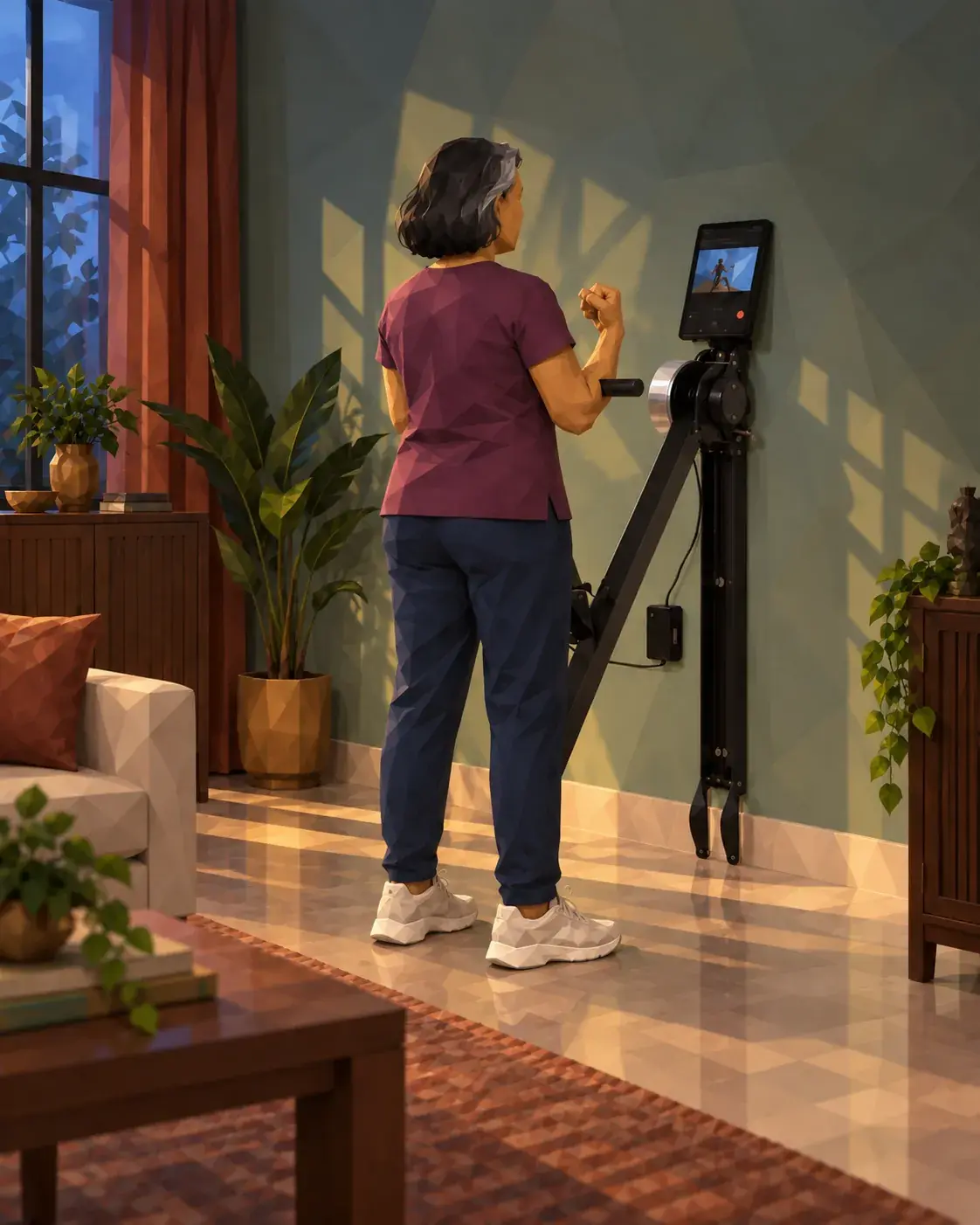
All-in-one home gym equipment like Ferra is built to provide that signal. It uses concentric-only resistance, so the machine resists your effort but never loads you on the way down, removing the joint strain that keeps many older adults away from resistance work. The resistance also adjusts as you fatigue, so every short session pushes the muscle enough to actually use the protein you eat.
Check out Ferra and build the training habit your protein intake needs to actually count.
Conclusion
There is no single magic number that fixes protein intake for seniors overnight. What matters is landing in the right range consistently, meal after meal, rather than chasing perfection on any one plate.
Eggs, dal, paneer, or fish, the source matters less than the habit. Muscle responds to what shows up regularly on the plate, not what shows up once in a while.
Keep that habit going alongside regular movement, and the results build on their own. A few months of consistent protein and consistent training add up to real, noticeable strength, without needing a single dramatic change to get there.
Frequently Asked Questions About Protein Intake for Seniors
1. How much protein does an average senior need per day?
Most seniors need between 1.0 and 1.2 grams of protein per kilogram of body weight daily, higher than the general adult recommendation of 0.8 grams per kilogram. For a person weighing 65 kilograms, that works out to roughly 65 to 78 grams a day. Active seniors or those recovering from illness may need closer to 1.5 grams per kilogram.
2. Can seniors eat too much protein?
For most healthy seniors without kidney disease, higher protein intake within the 1.0 to 1.5 grams per kilogram range is considered safe. Seniors with existing kidney conditions should follow their doctor’s specific guidance, since protein needs differ in that case. Otherwise, extra protein is generally used for energy or excreted rather than causing harm.
3. Is protein powder necessary for seniors?
No, protein powder is not necessary if daily targets can be met through food. It can help close gaps on days when appetite is low or meals fall short, particularly at breakfast. Whole foods like eggs, dal, and paneer remain the more reliable long-term source.
4. Does protein alone help build muscle without exercise?
No, protein alone has a limited effect without resistance training to signal the muscle to use it. Machines like Ferra, which use concentric-only resistance, pair safely with a higher-protein diet to give older adults a low-injury way to put that protein to work. Diet and movement need to work together for visible strength gains.
Build everyday strength — at your pace
Explore Ferra to see how strength training fits into life after 50 — it’s not about building muscle for its own sake, but moving with confidence.

Anurag Dani is the Co-Founder of Ferra, a company dedicated to redefining healthy ageing through strength training. Drawing from his experience building fitness and healthy ageing solutions for adults, he writes about healthy ageing to help readers stay strong and independent as they age.