Why does standing in a queue feel worse on your back than pushing a shopping cart?
For many older adults with spinal stenosis, this is a familiar pattern. Standing straight brings aching or heaviness in the legs, while leaning forward brings quick relief. That difference isn’t random. It comes down to how much space is available for the nerves inside the spine, and certain positions open up that space while others close it further.
Specific exercises can work with this pattern instead of against it. Knowing which movements help, and which ones to leave out, can make daily walking, standing, and lifting far more manageable.
The Real Reason Standing Straight Hurts More Than Walking Bent Forward
Spinal stenosis happens when the spaces inside the spine narrow, putting pressure on the nerves that run through it. This narrowing is usually gradual and linked to age-related changes in the discs, joints, and ligaments of the spine.
The position of the spine changes how much room those nerves have. Bending forward, called flexion, opens up the spinal canal slightly and eases pressure on the nerves. Bending backward, called extension, narrows the canal further and often brings on the aching, numbness, or heaviness that radiates into the legs.
This explains a few everyday patterns people with spinal stenosis notice:
- Walking becomes harder the longer you stay upright, but easier once you sit or lean forward
- Standing straight for long periods feels worse than walking with a slight forward lean
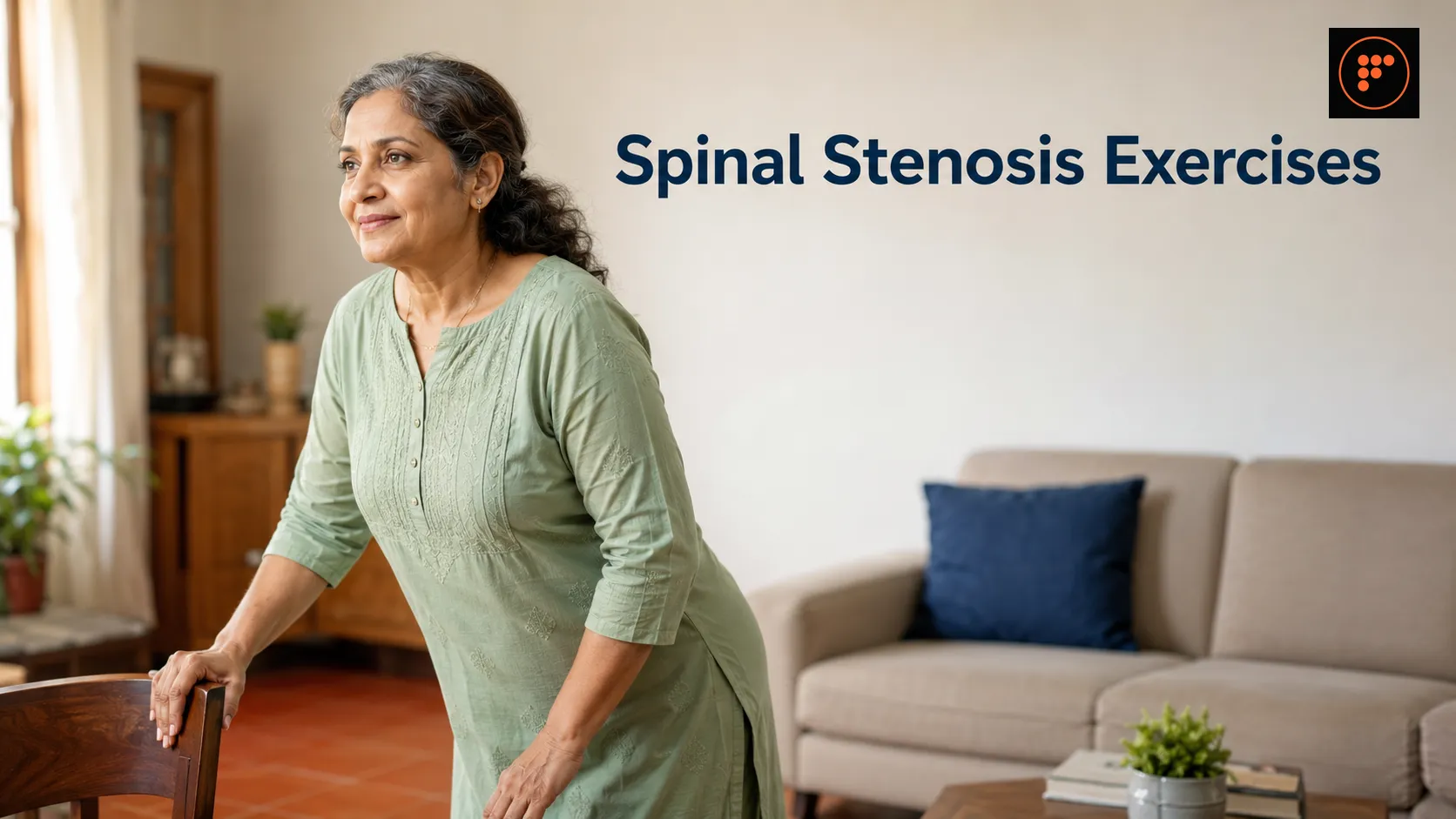
- Symptoms often ease when leaning on a shopping cart, walker, or countertop
This is why exercises that help with spinal stenosis favor gentle forward bending, while the ones to avoid usually involve leaning back or forcefully arching the spine.
Exercises That Help With Spinal Stenosis
1. Pelvic Tilt
Lie on your back with knees bent and feet flat on the floor. Gently press your lower back into the floor by tightening your stomach muscles, without lifting your hips. Hold for 5 to 10 seconds, then release. Repeat 10 times. This works the deep core muscles that support the lower spine without adding backward pressure.

2. Knee-to-Chest Stretch
Lie on your back with both knees bent. Slowly pull one knee toward your chest with both hands, keeping the other foot flat on the floor. Hold for 15 to 20 seconds, then switch sides. Repeat 3 times per leg. This gently opens space around the lower back nerves and eases tightness from standing.

3. Seated Lumbar Flexion
Sit toward the edge of a sturdy chair with feet flat on the floor. Slowly round your lower back forward, letting your chest move toward your knees, then return upright. Repeat 8 to 10 times, slow and controlled. This creates temporary extra room in the spinal canal and can bring quick relief during a flare-up.

These movements share the same logic: gentle forward positioning to create space, paired with light strengthening over time.
Recommended Reading:
If leg heaviness or tingling shows up alongside your back pain, it’s worth understanding the early signs of nerve pain that often accompany spinal stenosis.
Exercises And Movements That Make Spinal Stenosis Worse
Just as flexion tends to help, extension and high-impact movement tend to aggravate spinal stenosis symptoms. Back extension exercises past neutral are generally best avoided, since they narrow the spinal canal further and can worsen pain.
A few movements worth leaving out of your routine:
- Back extensions or hyperextensions, including leaning backward with hands on hips
- Deep backbends or yoga poses that arch the spine
- Lifting with a rounded back, especially heavier objects
- Running, jumping, or other high-impact activity
- Fast twisting movements at the waist
Avoiding these movements isn’t about doing less. It’s about redirecting effort toward positions that ease pressure on the nerves instead of adding to it. If you are dealing with a back injury or exploring other spine concerns, these lower back pain exercises for seniors follow a similarly gentle, flexion-friendly approach.
How to Stay Active With Spinal Stenosis Without Making It Worse
Staying inactive causes its own problems, including weaker muscles that offer less support to the spine. The goal is choosing movement that keeps you active without triggering symptoms.
- Break up walks into shorter stretches rather than one long walk
- Try low-impact options like cycling or swimming, which keep the spine more neutral
- Bend at the knees rather than the back when reaching for something low
If you have had spine surgery, exercise after spine surgery requires its own pacing, so it helps to follow a structured return-to-movement plan.
Consistency, rather than pushing through discomfort, is what keeps stiffness and weakness from building up around an already narrowed spine.
Building the Strength That Supports a Narrowed Spine
Stretching and flexion-based movement bring real relief, but they address only part of the picture. The muscles supporting the spine still need to be strong enough to keep pressure off the nerves during everyday standing and walking.
This is where the right kind of resistance work matters. An all-in-one home gym machine like Ferra is built around concentric-only resistance, which means:
- The machine resists your effort but never pushes back on the way down
- There is no rounded-back lifting involved
- There is no risk of loading the spine into the extended positions that worsen stenosis symptoms
Check out Ferra and build the strength that helps your spine handle everyday movement with less strain.
Conclusion
Spinal stenosis changes how your spine responds to different positions, but it doesn’t mean giving up on staying active. Leaning into gentle, flexion-based movement while avoiding backward bending and high-impact strain gives you a practical way to manage symptoms day to day.
With the right combination of stretching, mindful movement, and steady strength work, walking further and standing longer without that familiar heaviness becomes less of a daily struggle and more of a realistic goal.
Frequently Asked Questions About Spinal Stenosis Exercises
1/ Is walking bad for spinal stenosis?
No, but the way you walk matters. Short, frequent walks with brief rests are usually better tolerated than one long walk. Leaning slightly forward or using a support like a cart or walking pole can also reduce discomfort during longer walks.
2/ Can spinal stenosis be reversed with exercise?
No. Exercise cannot reverse the physical narrowing of the spinal canal. It can, however, reduce pressure on the nerves and build the muscle support that eases day-to-day symptoms, which is why a consistent routine still matters.
3/ Is yoga safe for people with spinal stenosis?
It depends on the poses. Gentle, forward-bending poses are generally well tolerated, while deep backbends or extreme extension poses should be avoided. It’s worth telling an instructor about your condition so poses can be modified.
4/ How long does it take for exercise to help spinal stenosis symptoms?
Many people notice some relief within a few weeks of consistent, gentle movement, though this varies by individual. Machines like Ferra, which use concentric-only resistance, can make it easier to build supporting strength without setbacks from overloading the spine.
5/ Is swimming a good option for spinal stenosis?
Yes. Swimming keeps the spine supported and reduces impact, which makes it one of the more comfortable ways to stay active. Strokes that keep the back relatively neutral, rather than heavily arched, tend to work best.

Anurag Dani is the Co-Founder of Ferra, a company dedicated to redefining healthy ageing through strength training. Drawing from his experience building fitness and healthy ageing solutions for adults, he writes about healthy ageing to help readers stay strong and independent as they age.