Blogs
Strength Training for Menopause: The 2026 Guide to Staying Strong

Is your body suddenly not responding to exercise the way it used to?
Many women notice this shift right around perimenopause and menopause. The workouts that once kept weight steady stop working. The muscle feels softer. Bones feel less certain. This is where strength training for menopause comes in. But is it actually the answer, and is it safe to start now? In this article, we will look at why menopause changes your body’s response to exercise, what happens if you skip strength work, and how to start safely.
Why Menopause Changes How Your Body Responds to Strength Training
Menopause is not just about hot flashes and mood swings. It is a hormonal shift that changes how your muscles, bones, and metabolism behave, which is exactly why strength training for menopause looks different from a standard workout plan.
As estrogen drops, several things happen at once:
- Muscle loss speeds up, on top of the natural decline that already begins in your thirties
- Bone density drops faster, raising the risk of osteoporosis and fractures
- Resting metabolism slows, making weight easier to gain and harder to lose
- Fat tends to shift toward the abdomen, even without a change in diet
A systematic review of clinical trials found that strength exercises improved leg and pelvic floor strength, bone density, and metabolic and hormonal markers in menopausal women, along with a reduction in hot flashes. This is not a coincidence. Muscle and bone respond directly to resistance, and that response does not disappear with menopause. It just needs the right stimulus, applied consistently.
Recommended Reading:
For a deeper look at this decline, this blog on preventing muscle loss after your forties is worth a read.
What Happens If You Skip Strength Training During Menopause
Skipping strength training during menopause does not just affect appearance. The consequences compound over time, and they show up in ways that affect daily life, not just how the body looks.
- Weaker bones increase fracture risk from falls that would have been harmless a decade earlier
- Declining muscle mass makes everyday tasks like carrying groceries or climbing stairs feel noticeably harder
- A slower metabolism makes weight gain more likely, even with the same diet and activity level
- Reduced strength affects balance, which raises the risk of falls in the first place
None of this happens overnight, but it speeds up during menopause because estrogen was quietly protecting muscle and bone for years. Once that protection fades, strength training has to pick up the work estrogen used to do.
The Safest Way to Start Strength Training During Menopause
Most advice on strength training for menopause pushes lifting heavy, close to failure. That works well for people who already know how to lift. For someone starting fresh, with joints that have not been tested in years, it raises real injury risk instead of solving the problem.
A safer starting point looks like this:
- Choose resistance that challenges you without straining your joints
- Prioritise controlled, full range of motion over heavy loads
- Build consistency before you build intensity
- Avoid free weights or machines that demand perfect form from day one to stay safe
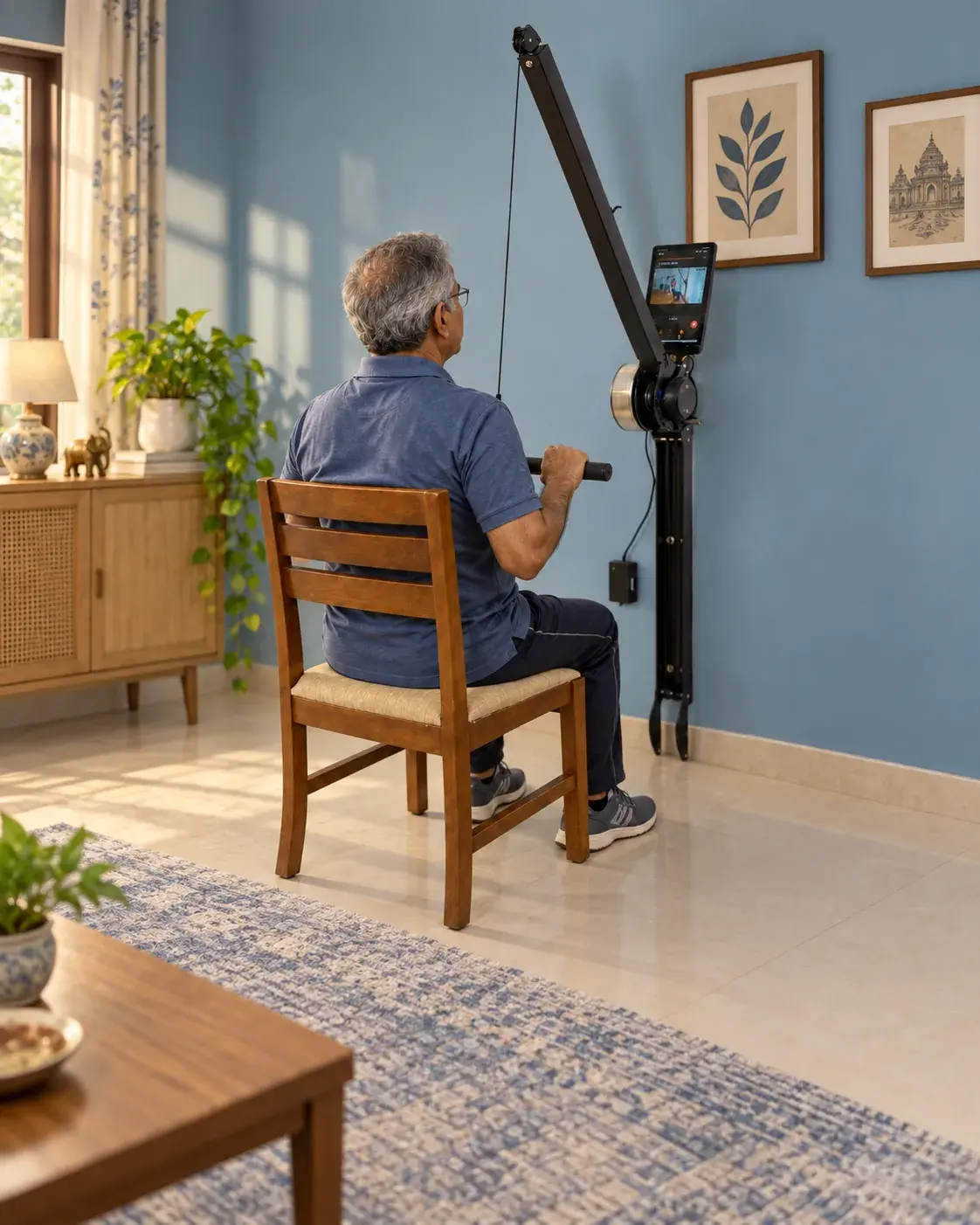
This is where strength training for older adults looks different from standard gym advice. Machines with adjustable, joint-friendly resistance let you build strength without guessing whether a weight is too heavy or your form is off.
Recommended Reading:
Want a low-pressure way to ease in before committing to a full routine? These exercises for seniors at home are a practical starting point.
How to Build a Strength Training Routine You’ll Actually Stick To
The women who see real results are not the ones who train hardest for a few weeks. They are the ones who show up consistently, week after week.
- Start small. A short, regular session beats an occasional long one
- Track how you feel, not just the scale. Strength and daily ease of movement are the real markers of progress
- Build the habit first, then increase the challenge once it feels routine
- Recovery matters as much as the workout itself, especially as sleep patterns shift during menopause
Consistency matters more than intensity. Small, regular sessions are what rebuild the muscle and bone foundation menopause quietly wears down.
Strength Training Equipment for Menopause: A Practical Next Step
Knowing that strength training helps does not solve the harder problem: doing it safely, without a trainer standing next to you, without joints that forgive mistakes the way they once did.
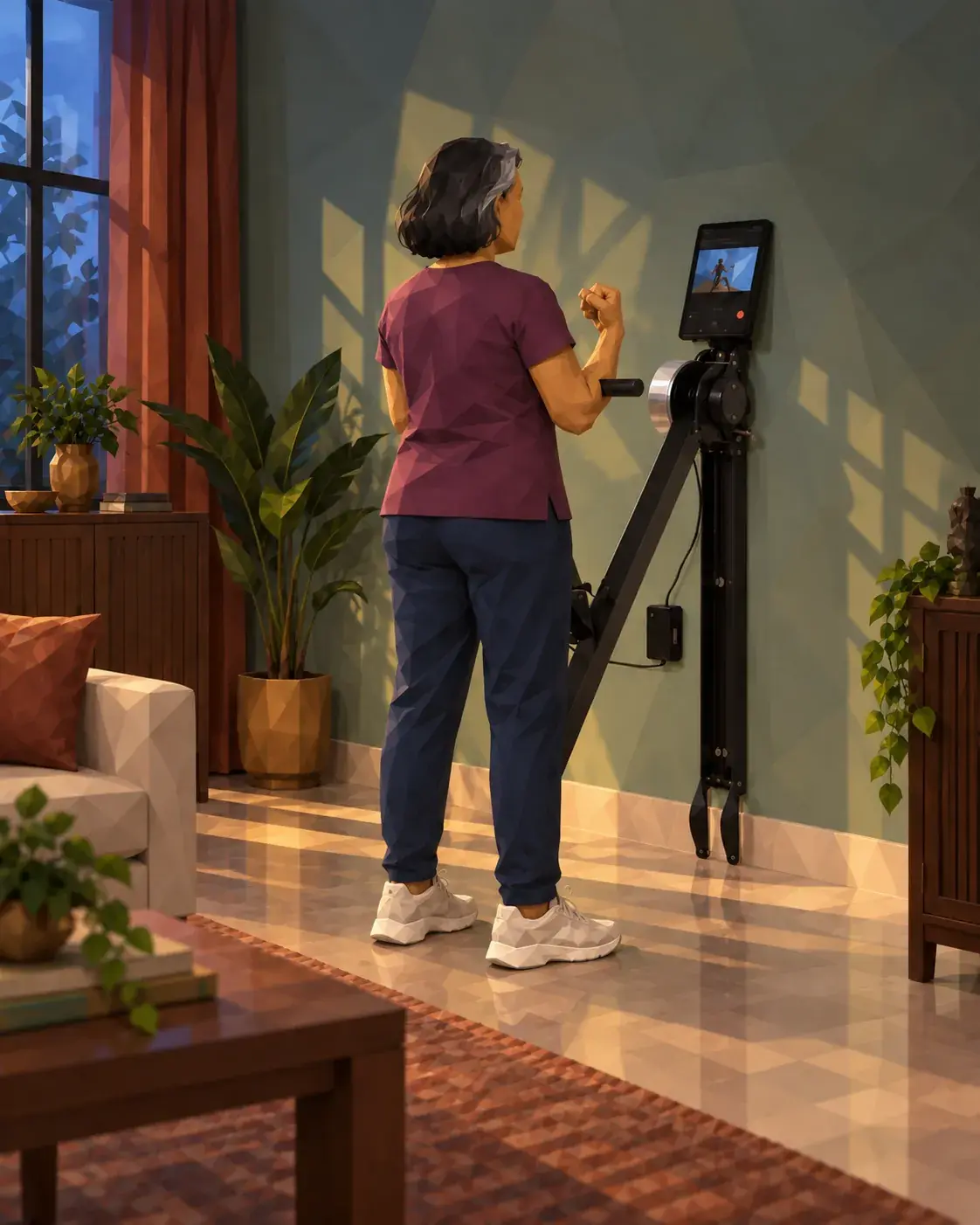
That gap is exactly what an all-in-one home gym machine like Ferra is built to close:
- It uses concentric-only resistance, so the machine resists your effort but never pushes weight back down on you
- There is no eccentric loading, the phase most responsible for soreness and injury
- The resistance adjusts automatically to your current strength, so there is no risk of loading too much, too soon
It is a practical fit for anyone easing back into movement, without needing to guess whether a routine is too advanced or too much too soon. Check out Ferra and build the bone and muscle strength that menopause makes harder to hold onto.
Conclusion
The changes menopause brings are real, but they are not a reason to sit this out. Strength training for menopause gives your body the direct signal to hold onto muscle and bone instead of losing them. Start small, stay consistent, and give your body the time it needs to rebuild what menopause has been quietly taking away.
Frequently Asked Questions About Strength Training for Menopause
1. Is strength training safe during menopause if joint pain is already present?
Yes, with the right adjustments. Low-impact resistance that avoids sudden or jerky movement is generally safe and can reduce joint discomfort over time by strengthening the muscles around the joint. Machines like Ferra, which use concentric-only resistance, remove the loading phase most likely to aggravate sore joints. It is still worth checking with a doctor before starting if pain is severe or ongoing.
2. Does hormone replacement therapy change how women should approach strength training?
No, strength training remains beneficial regardless of HRT use. HRT can help slow bone and muscle loss, but it does not replace the direct signal resistance training sends to muscles and bones. The two work well together rather than as substitutes for one another.
3. How soon do results from strength training show up during menopause?
Most women notice improved strength and daily ease of movement within four to six weeks of consistent training. Visible changes in muscle tone and bone-related markers typically take longer, often several months, since bone remodels more slowly than muscle adapts.
4. Is walking or cardio enough without strength training?
No. Walking and cardio support heart health, but they do not provide enough resistance to meaningfully slow muscle or bone loss during menopause. Strength training targets the specific mechanisms, muscle fibre stimulation and bone loading that cardio alone does not address.
5. What if someone has never done strength training before?
Starting with no experience is common and manageable. The priority is learning correct movement patterns with light, controlled resistance before adding intensity. Beginning with short, guided sessions builds both confidence and the habit, which matters more early on than how much weight is being lifted.
Build everyday strength — at your pace
Explore Ferra to see how strength training fits into life after 50 — it’s not about building muscle for its own sake, but moving with confidence.

Anurag Dani is the Co-Founder of Ferra, a company dedicated to redefining healthy ageing through strength training. Drawing from his experience building fitness and healthy ageing solutions for adults, he writes about healthy ageing to help readers stay strong and independent as they age.