Can you still open a jar or turn a key confidently after breaking your wrist? A wrist fracture, often caused by a fall onto an outstretched hand, needs more than rest until the cast comes off. Once the bone heals, the muscles around the wrist have usually weakened, and everyday tasks can feel unfamiliar again.
- Gripping a jar lid or door handle
- Twisting a key or turning a tap
- Lifting a cup or carrying groceries
This is exactly what wrist fracture exercises are meant to rebuild: the strength, flexibility, and coordination a cast takes away. Done in the right order, starting gently and adding strength only once movement feels comfortable, these exercises bring the wrist back to full, confident use.
Why Wrist Fractures Take Longer to Heal After 50
Bones naturally lose density with age, a condition called osteoporosis, which makes them more likely to break even in a minor fall. The wrist is often the first bone injured in a fall, since instinct sends the hand out to break the impact. Healing the bone is only part of the recovery, because the muscles around it don’t recover on the same timeline.
- Weeks in a cast reduce blood flow and movement, weakening the muscles around the wrist and forearm
- Grip strength often drops noticeably, making tasks like opening jars or holding a cup harder
- Stiffness in the wrist can linger well after the fracture has healed
That gap between bone healing and muscle recovery is the same pattern behind how to prevent muscle loss more broadly: consistent, gradual work rebuilds what one intense effort cannot. Treating the two processes as one is why stiffness often lingers after the cast comes off.
Before You Start: What Your Wrist Needs First
Timing matters more than intensity in early wrist recovery. Bone healing and muscle readiness don’t happen on the same schedule, which is why movement needs a doctor’s sign-off before it starts.
- Get clearance from a doctor or physiotherapist before beginning any exercise
- Start with gentle range-of-motion movement before adding grip work or resistance
- Mild stretching discomfort is normal, but sharp or sudden pain is a signal to stop
Wrist exercises after fracture work best when introduced gradually, moving from simple motion to light strengthening once that motion feels steady and pain-free. Getting the sequence right, motion first and strength second, protects the healing wrist while still moving recovery forward.
Recommended Reading:
For a broader routine that builds on this same gentle, consistent approach, these home exercises for seniors are a practical place to continue once the wrist feels ready
5 Wrist Fracture Exercises to Rebuild Strength & Movement
These five wrist fracture exercises move from basic motion to grip strength, covering what the wrist needs to return to daily use.
1. Wrist Flexion and Extension Stretch
Rest the forearm on a table with the hand hanging off the edge, palm down. Slowly bend the wrist up, then let it drop gently down. Hold each direction for 5 seconds and repeat 10 times. This restores the basic up-and-down motion lost during weeks in a cast.

2. Forearm Pronation and Supination
Sit with the elbow bent at the side, holding a light object like a pen. Slowly turn the palm to face up, then face down, keeping the elbow tucked in. Repeat 10 times each way. This rebuilds the twisting motion needed for turning a key or opening a jar.

3. Fist to Finger Extension
Rest the hand on a table and slowly close it into a loose fist, then open it fully, spreading the fingers wide. Repeat 10 times. This works the small muscles that lose coordination during immobilisation.

4. Grip Strengthening with a Soft Ball
Hold a soft stress ball or rolled towel in the palm. Squeeze gently and hold for 5 seconds, then release fully. Repeat 10 times, increasing the squeeze only as it feels comfortable. This targets the grip strength that drops most after a wrist fracture.

5. Wrist Radial and Ulnar Deviation
Rest the forearm on a table with the thumb facing up. Slowly tilt the wrist toward the thumb side, then the little finger side. Repeat 10 times each way. This restores the side-to-side movement that tasks like stirring or writing depend on.

Recommended Reading:
Once the wrist feels ready to carry that strength into the rest of the body, beginner strength training follows a similarly gradual approach.
Wrist Fracture Exercises Only Go So Far Without Overall Strength
Wrist fracture exercises restore movement and strength in the wrist itself, but they do not address the broader muscle loss that often follows weeks of immobilisation, especially for older adults who already carry a higher risk of falling again. Once the wrist can grip and hold comfortably, that same grip becomes the entry point into rebuilding strength through the rest of the arm and body.
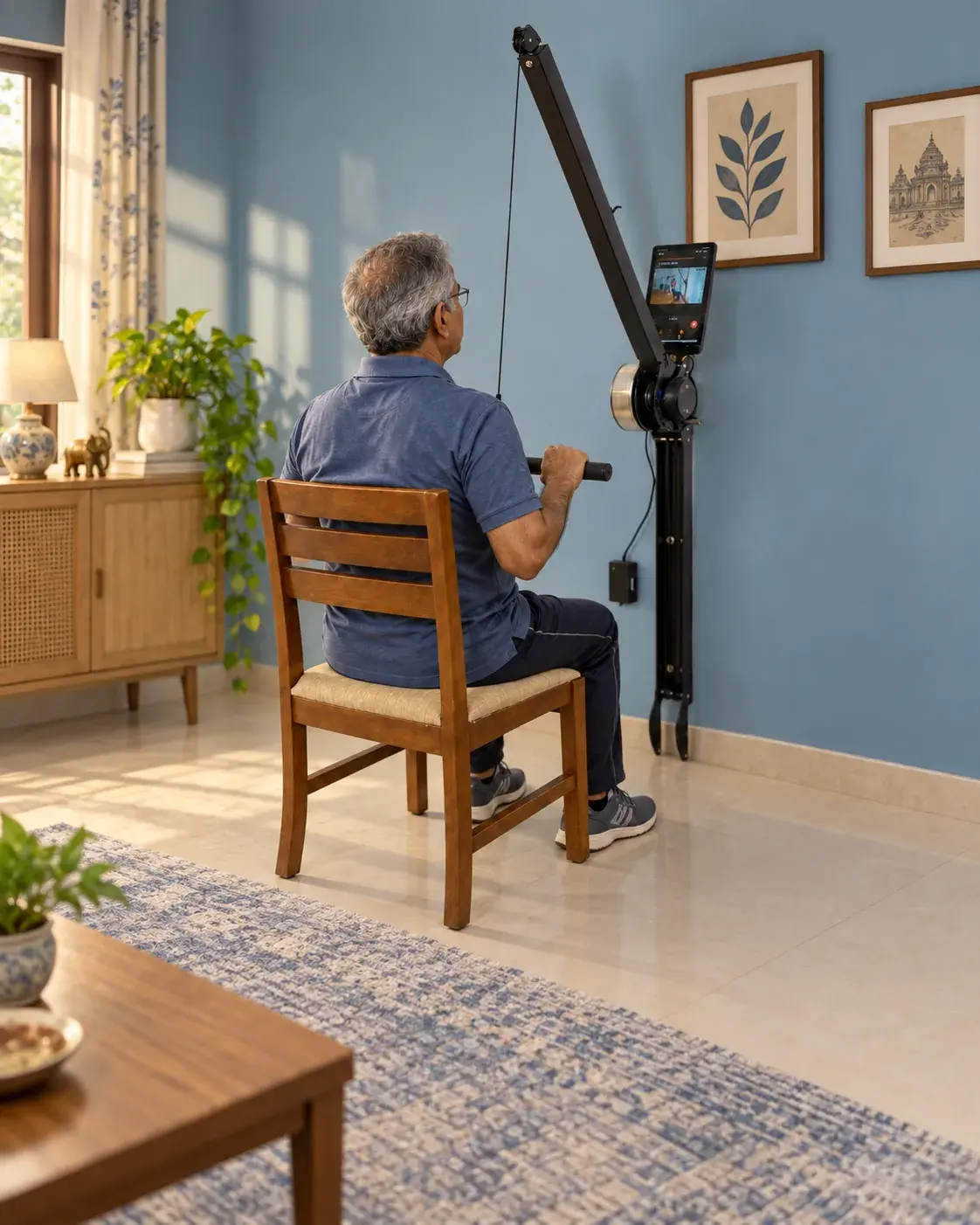
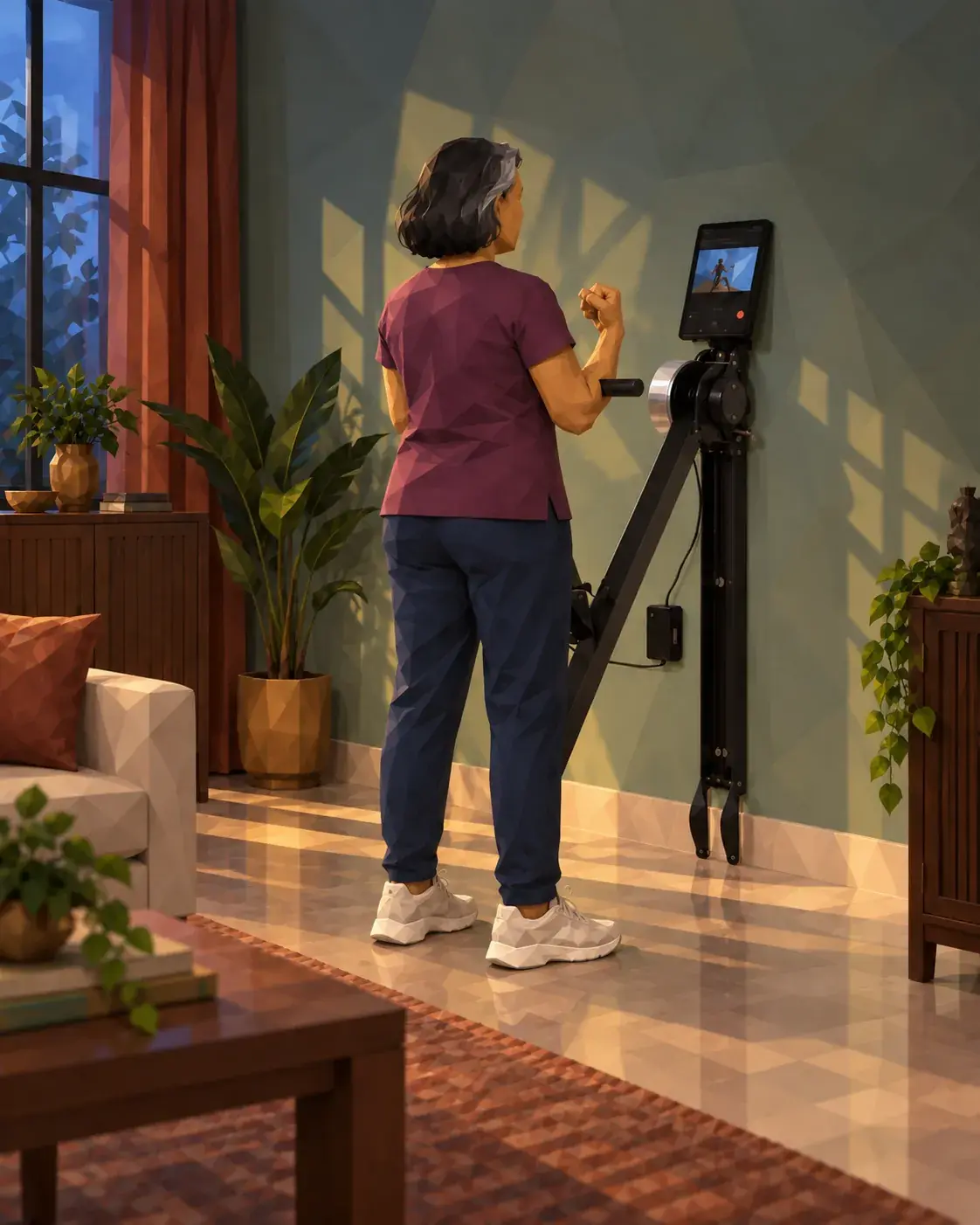
That’s where a few specific movements on a smart home gym machine like Ferra come in:
- Seated Row and Lat Pulldowns, both held through the same handle bar, keep the forearm and grip engaged while pulling
- Bicep Curls load the forearm directly, building on the grip strength the wrist exercises already started
- Overhead Press carries that grip strength into a full extended position, without asking the wrist to bear weight on the way down
Each movement uses concentric-only resistance, so Ferra resists the effort but never loads the body on the way down, removing the strain that could affect a healing joint. Resistance also adjusts automatically to current strength, so there’s no risk of overloading a wrist, shoulder, or arm still recovering.
Check out Ferra and build the everyday strength that protects you from the next fall.
Conclusion
A wrist fracture can feel like it takes away simple daily independence, from turning a key to carrying a cup of tea. Structured wrist fracture exercises, done in order and without rushing through pain, restore both movement and confidence over time. Healing the bone was the first step. Rebuilding the strength around it brings the hand back to full, reliable use, one small stretch and squeeze at a time.
Frequently Asked Questions About Wrist Fracture Exercises
1. Is some discomfort normal during wrist fracture exercises?
Yes. Mild stretching discomfort is normal in the first few weeks after cast removal. A sharp or sudden pain, however, is a sign to stop and check with a doctor or physiotherapist before continuing that particular movement.
2. How long does it take to regain full wrist strength after a fracture?
Functional strength often returns within a few months of consistent exercise, though full strength and any residual stiffness can take longer, especially after a more severe fracture. Recovery speed depends on the fracture type, bone health, and how early exercises started after cast removal.
3. Can wrist exercises be done if there are pins or a plate from surgery?
Yes, once a surgeon confirms the fracture is stable and cleared for movement. The exercise sequence stays similar, but timing and intensity should follow the surgeon’s specific guidance, since surgical fixation can change how soon resistance is safe to add.
4. Should ice or heat be used before wrist fracture exercises?
Light heat beforehand can help loosen a stiff joint, while ice afterward can ease any swelling from movement. Neither is required, and comfort during the specific exercise is usually the best guide.
5. What if grip strength does not improve despite regular exercise?
Plateaued grip strength usually means the muscles need more structured resistance than stretches and squeezes alone provide. Equipment like Ferra, which applies controlled resistance without loading the joint, can help build that strength safely once basic wrist mobility has returned.
Build everyday strength — at your pace
Explore Ferra to see how strength training fits into life after 50 — it’s not about building muscle for its own sake, but moving with confidence.

Anurag Dani is the Co-Founder of Ferra, a company dedicated to redefining healthy ageing through strength training. Drawing from his experience building fitness and healthy ageing solutions for adults, he writes about healthy ageing to help readers stay strong and independent as they age.