Will exercising too soon after spine surgery undo everything the operation fixed?
It is one of the first questions that comes up once the relief of a successful surgery wears off and daily life starts creeping back in. Movement feels necessary, but so does caution, and it is not always clear where one ends and the other begins. Exercise after spine surgery can genuinely speed up recovery, but only when it follows the right sequence and timing.
How Soon Can You Exercise After Spine Surgery?
There is no single timeline that applies to everyone. Recovery depends on the type of procedure, how the surgery was performed, and how the body responds in the first few weeks.
- Minimally invasive decompression surgery often allows light activity within 4 to 6 weeks
- Spinal fusion surgery typically needs 6 weeks to 3 months before structured exercise begins
- Multi-level fusions or complex procedures can take 4 to 6 months for a full return to activity
- X-rays or imaging are often used to confirm healing before progressing to resistance work
The surgeon’s clearance always comes first. Two people with the same diagnosis can heal at different speeds, so a specific green light matters more than any general guideline.
What to Avoid in the Early Recovery Weeks
The early weeks after surgery are about protecting the surgical site, not testing its limits. Certain movements place direct stress on a spine that has not finished healing.
- Twisting or rotating the trunk, even gently
- Bending forward from the waist to pick something up
- Lifting anything heavier than a few kilograms
- High-impact activity like running, jumping, or contact sports
- Long periods of sitting without support or movement breaks
These restrictions are not permanent. They protect the surgical site while the body does the slower work of healing underneath, and most lift gradually as recovery progresses.
Safe Exercises to Start With After Spine Surgery
Once a doctor confirms it is safe to move, the earliest exercises are simple by design. The goal is circulation, gentle mobility, and getting the body used to movement again.
1/ Walking
Start with short walks around the house and gradually add distance as comfort allows. This is often the first activity approved and helps reduce stiffness without stressing the spine.

2/ Heel slides
Lying on the back, slowly slide one heel toward the body and back, alternating sides. This restores hip and lower back mobility without bending the spine.

3/ Pelvic tilts
Lying with knees bent, gently flatten the lower back against the floor by tightening the abdominal muscles, then release. This activates core muscles that support the spine.

4/ Ankle pumps
Flexing and pointing the feet while lying down keeps blood flowing in the legs during the early rest period.
According to OrthoInfo’s low back surgery exercise guide, doctors often recommend short sessions spread across the day rather than one long session early on.

Recommended Reading:
Once these movements feel comfortable, these exercises for seniors at home are a natural next step.
Rebuilding Strength Safely After Spine Surgery Clearance
Once cleared for structured exercise, the focus shifts from protecting the spine to rebuilding the muscles around it. This is where many people either progress safely or unintentionally slow their own recovery.
- Start with bodyweight or very light resistance before adding external load
- Prioritise core and postural muscles, since they support the spine directly
- Keep form strict rather than chasing heavier resistance early
- Progress gradually over weeks, not days, even if pain has fully resolved
Weeks of reduced activity also speed up ordinary muscle loss, which is why this stage matters beyond the surgical site itself. The same gradual approach to preventing muscle loss applies just as well here.
Anyone who sits for work before surgery may find it useful to revisit back exercises for desk workers, since the same postural habits often return once longer sitting resumes. Rebuilding strength consistently, not in bursts, keeps the spine supported long after the site has healed.
Recommended Reading:
If stiffness in the lower back is still lingering at this stage, these lower back pain exercises for seniors follow the same gentle, gradual approach.
Exercise After Spine Surgery Needs Resistance That Does Not Reload the Spine
Bodyweight and resistance band work rebuild strength safely, but most home gym equipment still loads the spine on the way down, the phase that causes soreness and injury risk even in healthy backs. That becomes a real limitation once someone is ready to progress beyond bands.
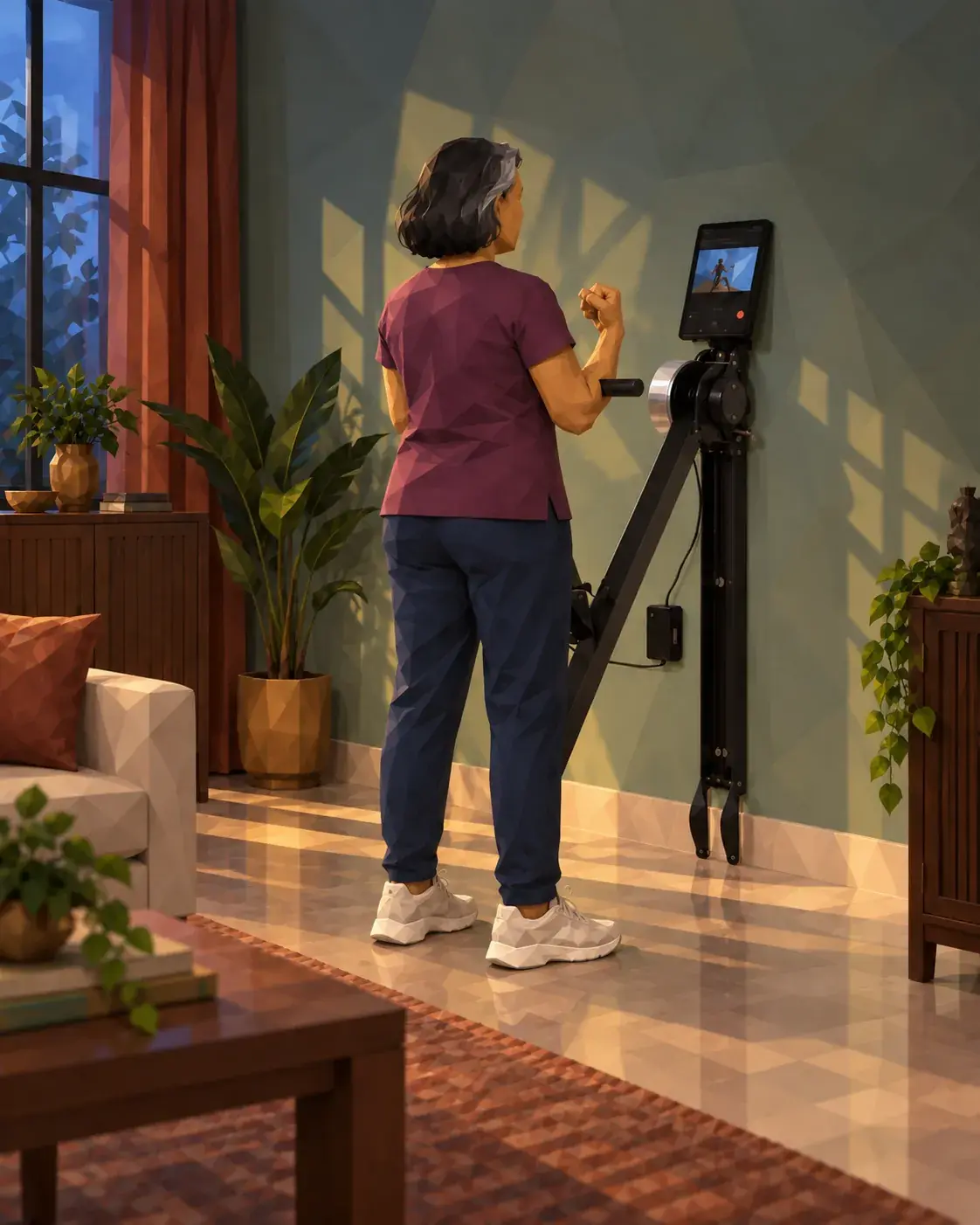
This is why an all-in-one home gym machine like Ferra uses concentric-only resistance:
- Resists effort in the working direction of each movement
- Applies no load on the return, removing the phase most likely to strain a healing spine
- Adjusts resistance automatically to current strength, with no risk of overload
For anyone easing back into resistance training for seniors after spine surgery, this controlled, seated approach removes much of the guesswork around safe loading.
Conclusion
Recovery from spine surgery is rarely a straight line, but it follows a predictable one. Movement that starts slow and increases gradually, guided by a doctor’s clearance rather than impatience, produces the steadiest results. A few months from now, the caution being exercised today will look like the reason full strength returned without a single setback.
Exercise After Spine Surgery: Frequently Asked Questions
1/ Is yoga safe after spine surgery?
Not right away. Many yoga poses involve twisting or deep forward bends that place stress on a healing spine. Gentle, doctor-approved stretching is usually a safer substitute until a surgeon confirms yoga poses are appropriate to reintroduce.
2/ How long until driving is safe after spine surgery?
Most surgeons clear driving between 2 and 6 weeks after surgery, depending on the procedure and whether pain medication use has stopped. Reaction time and the ability to sit comfortably for the duration of a drive both factor into this decision.
3/ Is walking enough exercise in the first month after surgery?
Yes, for most patients. Walking is typically the primary recommended activity in the first few weeks, since it supports circulation and gentle mobility without stressing the surgical site. Structured strengthening usually begins later, once a doctor confirms it is safe.
4/ Can resistance bands be used before gym clearance?
Only if a surgeon or physical therapist has specifically approved them. Resistance bands are lower-impact than free weights, but any external resistance still needs sign-off during early healing, since even a light load can affect a spine that has not finished fusing or healing.
5/ Should exercise stop completely if discomfort is felt?
Mild discomfort during early movement is common, but sharp pain, numbness, or tingling is not. Machines like Ferra, which use concentric-only resistance, are designed to reduce this risk once someone is cleared for strength work, but any exercise that causes sharp pain should be stopped immediately and discussed with a doctor.
Build everyday strength — at your pace
Explore Ferra to see how strength training fits into life after 50 — it’s not about building muscle for its own sake, but moving with confidence.

Anurag Dani is the Co-Founder of Ferra, a company dedicated to redefining healthy ageing through strength training. Drawing from his experience building fitness and healthy ageing solutions for adults, he writes about healthy ageing to help readers stay strong and independent as they age.