Blogs
Exercise After Surgery: A General Safety Guide for Seniors | 2026
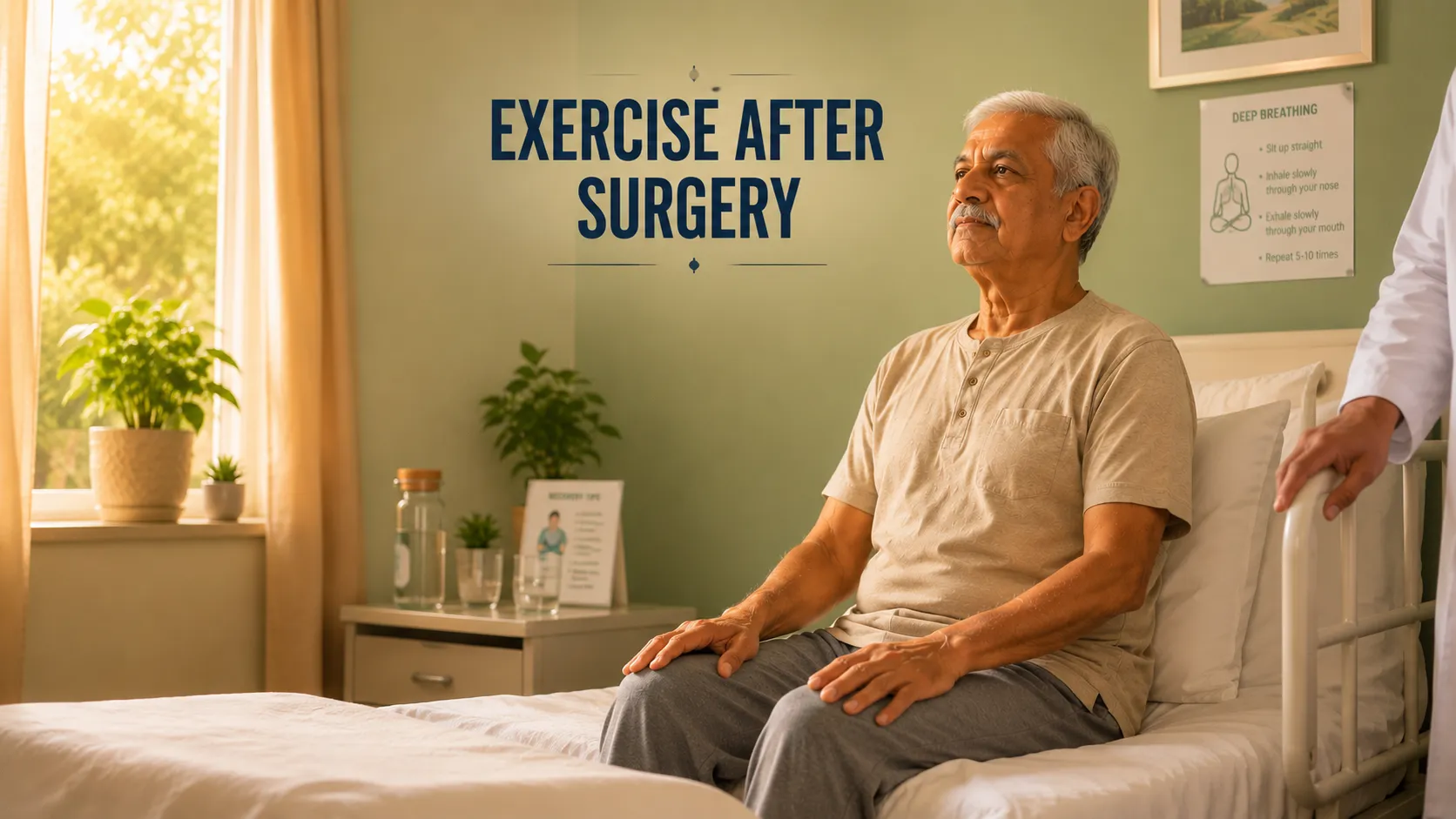
Is it too early to start exercise after surgery, or does waiting too long do more harm?
Many seniors go home after an operation and freeze between two instincts: rest completely until the body feels normal again, or start moving right away out of fear that lying still will make things worse. Neither instinct is quite right.
The truth sits in the middle, and it depends on the kind of surgery, the doctor’s clearance, and how the body responds day to day. Here are the general safety principles that apply across most types of surgery, so recovery feels less like guesswork.
Why Rest Alone Slows Down Recovery After Surgery
For many seniors, the instinct after surgery is to rest completely until the body feels “normal” again. But muscles do not wait for permission to shrink.
- Even a few days of bed rest can noticeably reduce muscle strength in older adults
- Weak muscles around the surgical site slow down healing rather than protecting it
- Prolonged inactivity also stiffens joints and reduces blood flow, which can delay recovery further
Surgery already places stress on the body. Without some guided movement, seniors lose ground on top of what the procedure took from them, making the return to daily activities harder than it needs to be.
When Is It Safe to Start Exercising After Surgery?
There is no single timeline that applies to everyone. Exercise after surgery depends heavily on the type of procedure and what the surgical team recommends.
- For general or abdominal surgery, gentle activity like sitting up, short walks, and breathing exercises usually begins within the first day or two
- For orthopedic surgery such as hip or knee replacement, weight-bearing restrictions may apply, and a physiotherapist typically guides the first few sessions
- For heart or spine surgery, movement is introduced carefully, often starting with supported walking before anything else
A scoping review of post-orthopedic recovery found that carefully guided early movement, even without full weight-bearing, improved stiffness, pain, and general function compared to prolonged immobilisation. The right starting point always comes from the surgeon or physiotherapist, not a generic day count.
Warning Signs You Should Never Ignore During Recovery
Some discomfort during recovery is expected. But certain signs mean it is time to stop and call a doctor, not push through.
- Sharp, sudden pain that is different from general soreness or stiffness
- Swelling, redness, or warmth around the incision or the operated joint
- Dizziness, breathlessness, or a racing heartbeat during light activity
- A wound that reopens, oozes, or looks different from the day before
Mild fatigue after a session is normal. Anything sharper, or anything that feels wrong compared to the day before, is the body signalling that it needs medical attention rather than more exercise.
How to Rebuild Strength Safely Once You’re Cleared
Once a doctor has given the go-ahead, the goal shifts from simply moving to rebuilding real strength. This works best as a gradual sequence rather than jumping straight back into a full routine.
- Start with range-of-motion movements to restore basic flexibility around the healing area
- Add light resistance work once the surgical site tolerates gentle movement without pain
- Progress toward functional strength that supports standing up, walking, and climbing stairs comfortably
Recovery is rarely a straight line, and muscle lost during downtime does not return on its own. This is also where preventing age-related muscle loss becomes especially relevant, since surgery often accelerates a decline that was already underway. Consistent, controlled resistance work is what closes that gap and turns cautious movement into lasting strength.
Recommended Reading:
If you are looking for a simple starting point once you have been cleared, these exercises for seniors at home follow the same gentle, gradual approach and can be done without any gym equipment.
Strength Training Equipment for Seniors Built for Post-Surgery Recovery
Range-of-motion work and light resistance restore mobility, but progress stalls once the body is ready for real strength work. Most seniors are told to avoid regular gym equipment here, since fixed weights and an uncontrolled lowering phase carry real re-injury risk right when the body is least prepared for it. What comes next needs resistance that adjusts with the body, not a fixed load.
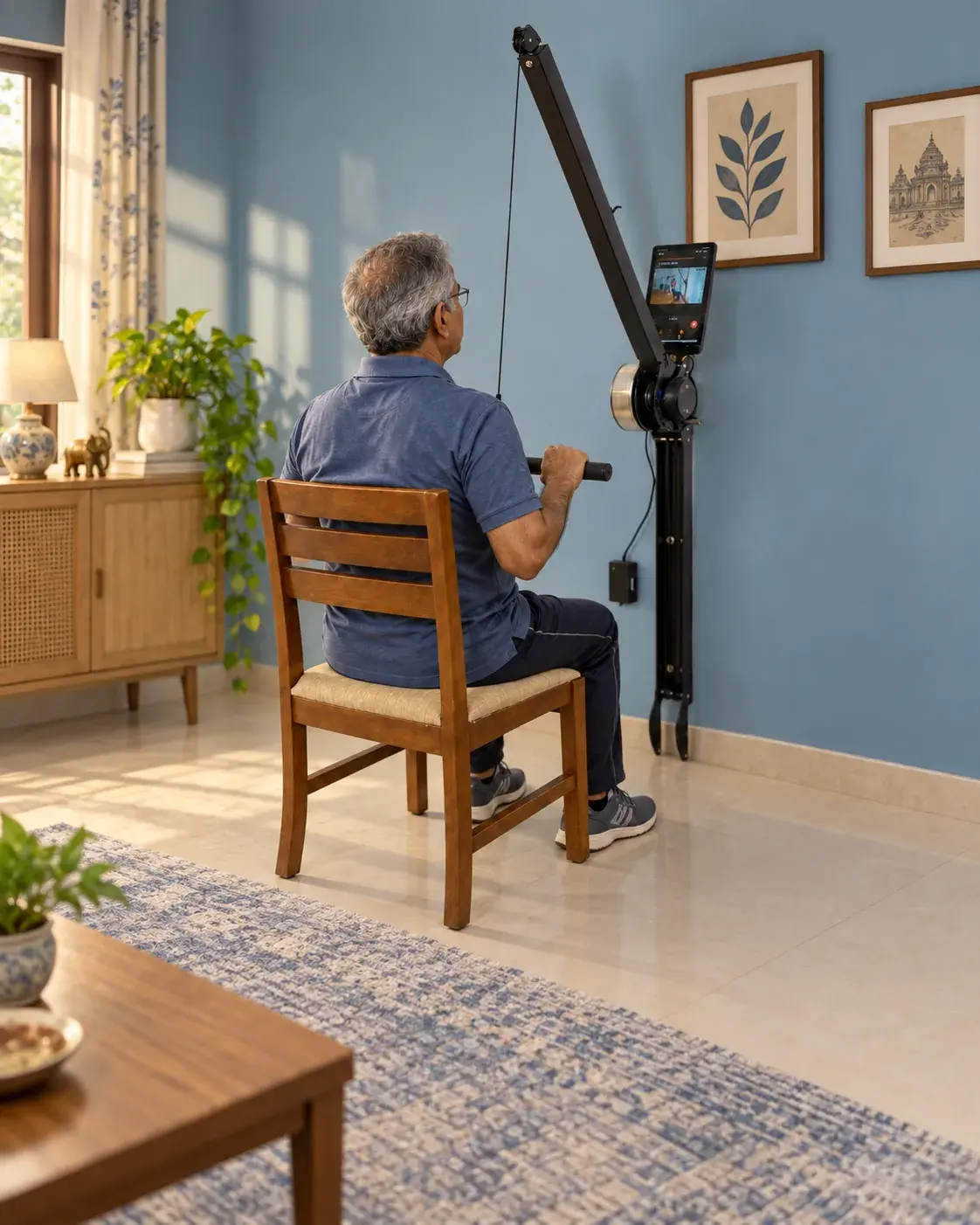
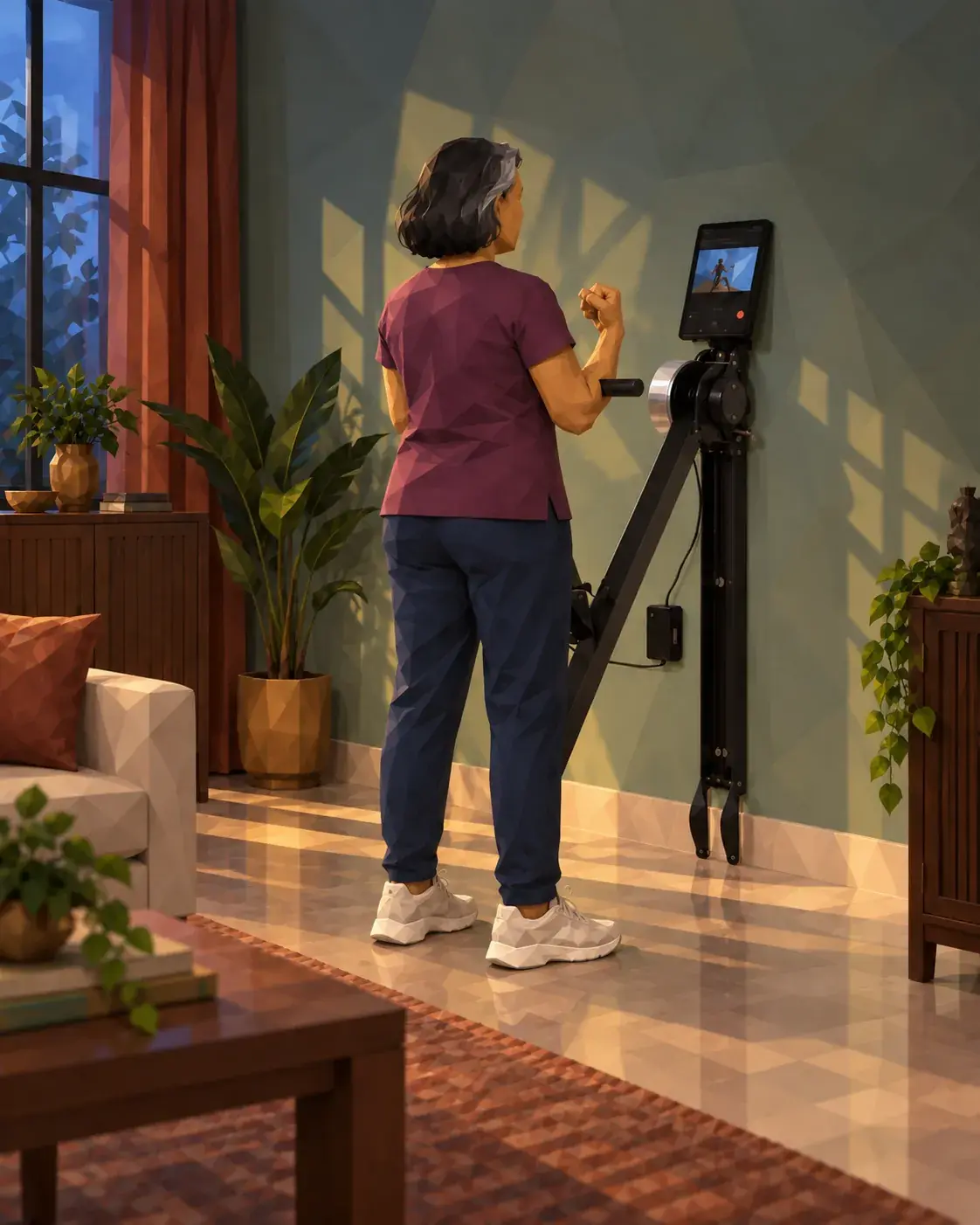
That kind of adjustment is what a smart home gym machine like Ferra is built around:
- Concentric-only resistance, so the machine resists the lift but never loads the body on the way down
- Resistance recalibrates automatically to what the user can safely manage that day
Check out Ferra and rebuild the strength recovery depends on, without risking another setback.
Conclusion
Exercise after surgery isn’t about choosing between total rest and pushing hard. It’s about matching each stage of healing with the right amount of movement, guided by a doctor’s clearance and the body’s own signals.
Small, guided steps taken consistently rebuild more strength than sudden bursts of activity ever could. Stay patient with the process, and the caution of these early weeks will feel like a distant memory in just a few months.
Exercise After Surgery: Frequently Asked Questions
1/ Is walking enough exercise after surgery, or is more needed?
Walking is an excellent starting point, but it is usually not enough on its own. It supports circulation and reduces stiffness, but it does little to rebuild the muscle strength lost during recovery. Once cleared, adding strength training exercises alongside walking gives a more complete recovery.
2/ How long after surgery can seniors return to normal exercise?
This varies widely by procedure, ranging from a few weeks for minor surgeries to several months for joint replacements or major operations. Most surgeons reassess progress at regular intervals rather than giving one fixed date upfront. Following their guidance closely gives the most accurate timeline for each individual case.
3/ Can strength training help even if surgery involved a joint like the hip or knee?
Yes, once a doctor has cleared it. Strengthening the muscles around a joint reduces the load the joint itself has to bear during daily movement. Smart home gym machines like Ferra, which use concentric-only resistance, are designed specifically to reduce strain around healing joints while still building useful strength.
4/ Should exercise stop completely if pain returns during recovery?
Not necessarily, but it should be paused and reassessed. Mild soreness after activity is common, while sharp or worsening pain is not. If pain returns consistently, it is worth checking in with a doctor before continuing the same routine.
5/ Do seniors need special equipment to exercise safely after surgery?
Not in the early stages, since most initial movement can be done with just a chair or a wall for support. As recovery progresses and strength training becomes appropriate, equipment designed for controlled, joint-safe resistance becomes more useful than standard gym equipment or free weights.
Build everyday strength — at your pace
Explore Ferra to see how strength training fits into life after 50 — it’s not about building muscle for its own sake, but moving with confidence.

Anurag Dani is the Co-Founder of Ferra, a company dedicated to redefining healthy ageing through strength training. Drawing from his experience building fitness and healthy ageing solutions for adults, he writes about healthy ageing to help readers stay strong and independent as they age.