Have you noticed your parents moving more cautiously lately?
- Stairs take longer than they used to.
- Groceries feel heavier to carry.
- Standing up from a low chair sometimes takes a second attempt.
These are usually the first signs families notice, and they are not just normal aging. After 60, muscle loss accelerates to nearly twice the rate it was in the 40s, and by age 70, many adults have lost up to 30% of their peak muscle mass. The good news is that this decline is not fixed. Gentle, consistent strength training can slow it down significantly, and that is where fitness for parents begins, safely and at home.
Why Does Strength Drop Faster After 60?
Walking is good for heart health, but it does not prevent muscle loss.
Muscle decline, known as sarcopenia, does not happen suddenly. It begins around age 30, continues quietly for decades, then speeds up sharply once parents cross 60. Without resistance training, muscles weaken and balance declines at the same time, which is why walking alone rarely closes the gap.
Strength training directly improves movements your parents rely on every day:
- Getting up from a chair.
- Carrying grocery bags.
- Climbing stairs.
- Lifting grandchildren.
For families thinking about fitness for parents, strength training should be the foundation, not an optional add-on.
Diet also plays a role. Many Indian seniors consume less protein than needed for muscle maintenance, and resistance exercise helps the body use available protein more effectively, which is why understanding how to prevent muscle loss after 45 becomes important as parents age.
A 2022 study published in the British Journal of Sports Medicine found that resistance training reduced fall risk in adults over 65 by up to 34%.
That's why strength training equipment for seniors is less about fitness goals and more about maintaining independence.
What Should Parents Expect When Starting Strength Training?
Many older adults hesitate before starting. The concerns are understandable.
“Am I too old for this?”
No. Adults in their 70s and 80s regularly build strength after starting resistance exercise. Age slows progress slightly, but it does not prevent improvement.
For families focused on fitness for parents, the most important factor is consistency, not age.
“Won’t this make my joint pain worse?”
When done correctly, strength training often reduces joint pain. Stronger muscles support the joints and reduce pressure during movement.
Some senior fitness equipment also uses concentric-focused resistance that reduces strain during the lowering phase of exercises.
“Can five minutes really help?”
Yes. The minimum effective stimulus for muscle growth is smaller than many people assume.
Short sessions performed regularly are more effective than occasional long workouts. That is why simple routines are often the most sustainable approach to fitness for parents, especially when they begin with exercises that feel safe and manageable.
How Do You Start Without Overdoing It?
The instinct is often to do too much on day one, which is usually why a parent loses motivation.
- Start with one or two exercises, not all five.
- Keep the first week light, even if it feels too easy.
- Watch for sharp pain, not tiredness, as the signal to stop.
Starting slow is what makes fitness for parents stick.
What Beginner Strength Routine Can Your Parents Start This Week?
Here are five simple exercises you can introduce to your parents. Think of this as something you are doing with them, not asking them to do alone.
1/ Sit-to-Stand
From a chair, stand up slowly and sit back down with control for 10 repetitions. This builds the leg strength your parents need to stand independently, so sit beside them and do it together the first time.
2/ Wall Push-Up
Place your hands on a wall, slowly lower your chest toward it, then push back for 10 repetitions. This maintains the upper body strength used for lifting and pushing tasks. Demonstrate the movement first so it feels familiar.
3/ Seated Row
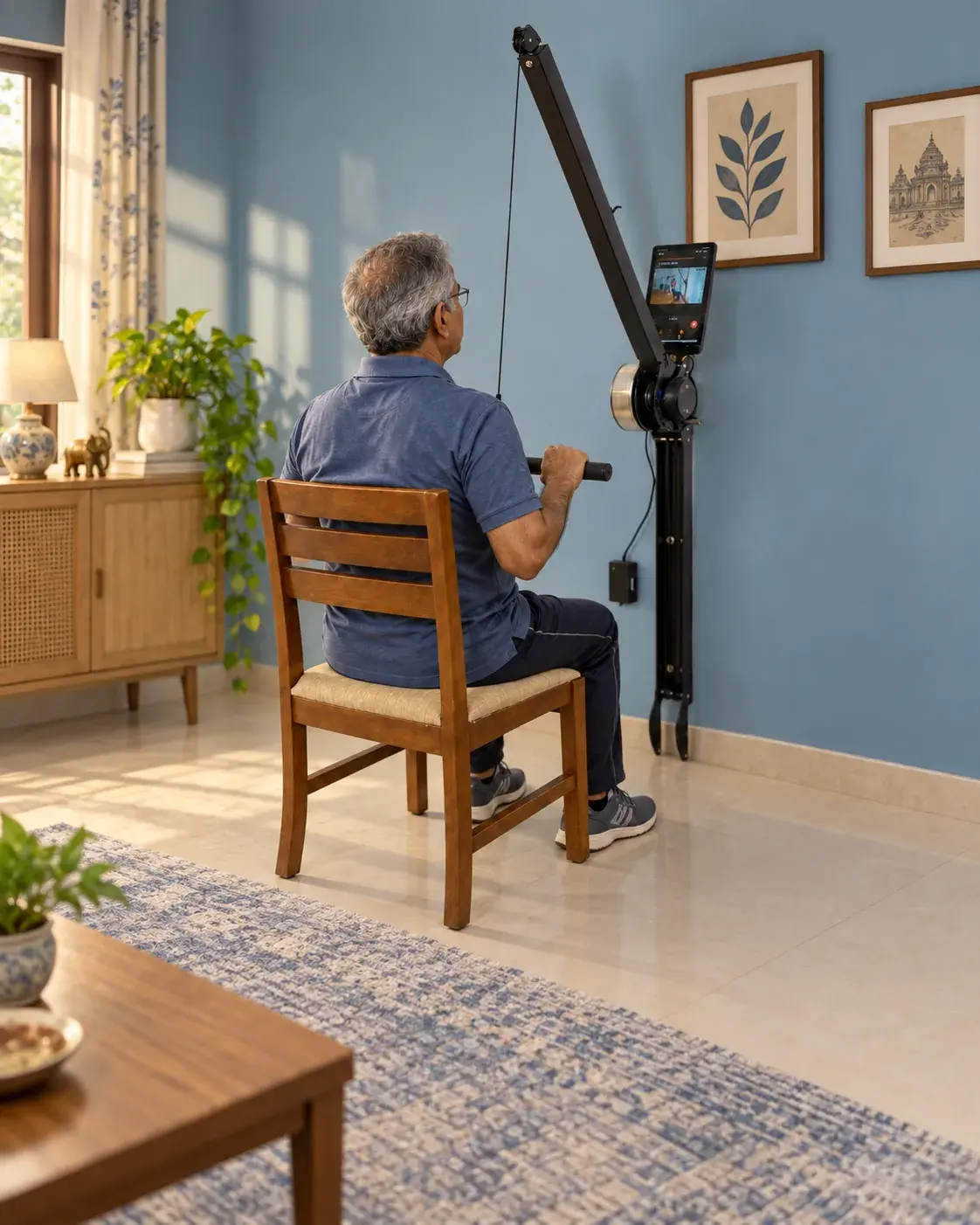
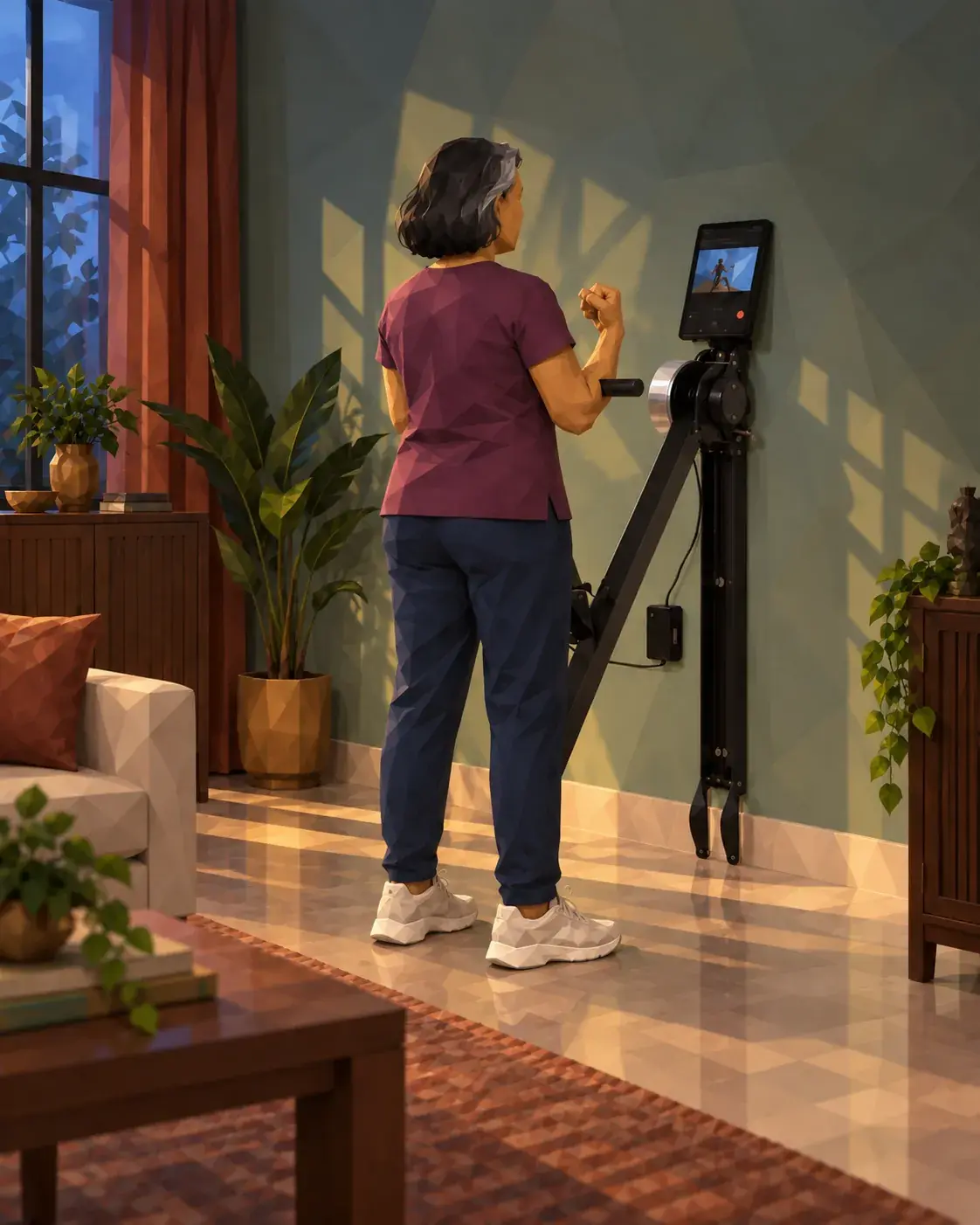
Using a resistance band or Ferra's machine, pull toward the torso and release slowly. This strengthens the upper back and improves posture. Ferra's adaptive resistance automatically adjusts to your parents' strength level, removing the guesswork of selecting weights.
4/ Glute Bridge
Lie on your back with feet flat, lift your hips upward, hold for 3 seconds, then lower slowly. This strengthens the glutes and lower back, reducing fall risk. Help them get onto the floor safely the first time.
Recommended Reading:
If hip stiffness is already limiting this movement, these hip pain exercises for seniors can make the progression more comfortable and supportive.
5/ Calf Raise
Stand behind a chair, rise onto the toes slowly, then lower with control for 12 repetitions. This improves ankle stability and balance. Hold their hand initially if the balance feels uncertain.
Unlike complicated gym equipment, these movements rely on natural body movements that support everyday tasks.
What Progress Can Families Realistically Expect?
Progress is rarely dramatic in the first few days. What shows up first is usually a small functional win, like standing up without pushing off the armrest, not visible muscle. Real change follows after several consistent weeks, which is why the biggest risk is stopping too soon.
How Can You Start the Conversation and Make It Stick?
Talking about fitness for parents can feel sensitive. The approach matters.
A few strategies make the conversation easier:
- Focus on function, not fitness.
- Frame it as something you do together.
- Start with one exercise for one week.
- Remove logistical barriers before discussing it.
Instead of presenting a full programme, begin small. Ask your parents one simple question each week: Did the stairs feel easier this week?
Small improvements build motivation far more effectively than long explanations.
Why Does Starting Strength Training Now Matter?
Your parents do not need a gym membership. They need a starting point, a safe environment, and someone who believes the effort is worthwhile. That last part is already you.
Once they are ready to go beyond these five exercises, this beginner strength training routine for older adults is a practical next step.
Small, consistent sessions compound over time, and a few months from now, the stairs your parents once avoided will barely register as a challenge.
Fitness for Parents: Frequently Asked Questions
1/ Is strength training safe after 60?
Yes. Research consistently shows that adults over 60 can safely build strength with controlled resistance exercises when the form is correct and progression is gradual. The key is starting light and increasing slowly, not the age itself.
2/ How should parents start strength training at home?
Start with one or two simple bodyweight exercises, such as sit-to-stand or wall push-ups, done together for the first week. Machines like Ferra, which use concentric-only resistance, remove the guesswork around choosing the right weight and reduce joint strain for first-time users. Add a new exercise only once the current ones feel comfortable.
3/ How soon can older adults feel stronger?
Most people notice small functional improvements, like standing up more easily, within three to four weeks of consistent practice. Visible strength gains typically take six to eight weeks. Progress depends more on consistency than intensity.
4/ How often should parents do strength training?
Consistency matters more than a fixed weekly count. Short, regular sessions spread across the week build muscle more reliably than occasional long workouts, and a daily or near-daily five-minute routine is often easier for beginners to sustain than trying to schedule fewer, longer sessions.
5/ How can adult children encourage parents to exercise?
The most effective approach is to frame exercise around daily function rather than fitness goals. Doing exercises together and starting with small routines often increases long-term consistency.
Build everyday strength — at your pace
Explore Ferra to see how strength training fits into life after 50 — it’s not about building muscle for its own sake, but moving with confidence.

Anurag Dani is the Co-Founder of Ferra, a company dedicated to redefining healthy ageing through strength training. Drawing from his experience building fitness and healthy ageing solutions for adults, he writes about healthy ageing to help readers stay strong and independent as they age.