Blogs
Exercises After Hip Replacement Surgery: What’s Safe & When 2026

Wondering when it is safe to start moving again after hip replacement surgery?
For many seniors and older adults, the first days after surgery bring a mix of relief and worry. The hip joint is in place, but the leg still feels weak, and every small movement raises the same question:
Is this the wrong way to move?
Gentle exercise is one of the fastest ways to recover well, not something to fear. Knowing which exercises after hip replacement surgery are safe and when to do them makes the difference between a smooth recovery and unnecessary setbacks.
What Exercise Actually Does for Hip Replacement Recovery
Hip replacement surgery repairs the joint, but it does not automatically restore the strength and coordination the hip lost before surgery. Months of pain before the operation left the surrounding muscles weak and tight. Exercise after surgery does the real work of recovery.
- Improves circulation and lowers blood clot risk in the first days
- Rebuilds strength in the muscles that support the new joint
- Restores range of motion that stiffened before surgery
- Improves balance and confidence in everyday movement
This is why doctors pair walking with structured resistance training for seniors rather than rest alone. Recovery depends less on the surgery itself and more on how consistently these supporting muscles are retrained in the weeks that follow.
Safe Exercises in the First Few Weeks After Surgery
The first few weeks focus on protecting the new joint while keeping blood flowing and muscles active. These exercises are usually approved within days of surgery, though a surgeon or physiotherapist should confirm timing for each case.
1. Ankle Pumps:
Lie on your back with legs extended. Slowly pull your toes toward you, then point them away. Repeat 10 times, several times an hour. This keeps blood moving in the lower leg and helps prevent clots.

2. Seated Knee Extension:
Sit with feet flat on the floor. Slowly straighten one knee until the leg is level, then lower it back down. Repeat 10 times on each side. This rebuilds strength in the thigh muscles that support the hip.

3. Glute Sets:
Lie on your back and gently tighten the buttock muscles without moving your legs. Hold for 5 seconds, then release. Repeat 10 times. This activates the muscles that stabilise the new hip joint.
These early exercises after hip replacement surgery are not about building visible strength. They are about waking the muscles back up safely before more demanding movement begins.

Recommended Reading:
If hip discomfort continues beyond these early weeks, these hip pain exercises for seniors build on the same gentle approach.
Building Strength as Recovery Progresses
Around four to six weeks after surgery, many people are cleared to add light resistance and standing exercises. According to the American Academy of Orthopaedic Surgeons, most people can begin standing resistance exercises once a surgeon confirms it is safe to bear full weight.
- Standing hip movements to the side, using a chair or counter for support
- Standing leg lifts backward to strengthen the muscles behind the hip
- Mini squats using a chair for balance and support
- Short daily walks, gradually increasing distance each week
Adding resistance, whether through bands, ankle weights, or a stationary bike, should always follow guidance from a surgeon or physiotherapist, since progressing too soon can strain healing tissue. For a full home routine that keeps up this consistency, these exercises for seniors at home offer a practical next step.
This is the phase where strength returns, not just from the exercises alone, but from doing them consistently every day.
What to Avoid During Hip Replacement Recovery
Not every movement is safe in the months after surgery. Certain positions put unnecessary stress on the new joint before the surrounding tissue has fully healed.
- Avoid crossing the operated leg over the other
- Avoid twisting the hip while the foot stays planted
- Avoid bending the hip past a right angle, such as with low chairs or toilets
- Avoid pushing through sharp pain instead of stopping
Building consistency safely matters more than speed. These beginner strength training after 60 principles apply just as much during recovery as they do to starting fresh.
Respecting these limits in the early months protects the joint long enough for the muscles around it to catch up and take over the support work.
Exercises After Hip Replacement Surgery Depend on Ongoing Strength
Physiotherapy after hip replacement surgery usually runs for six to twelve weeks. Once those sessions end, the exercises stop being supervised, but the need for consistent strength work around the hip does not disappear.
- Supervised sessions end, but the hip still needs regular loading to stay strong
- Without a continued routine, some of the strength gained during recovery can quietly slip away
- Consistency after physiotherapy matters as much as the exercises done during it
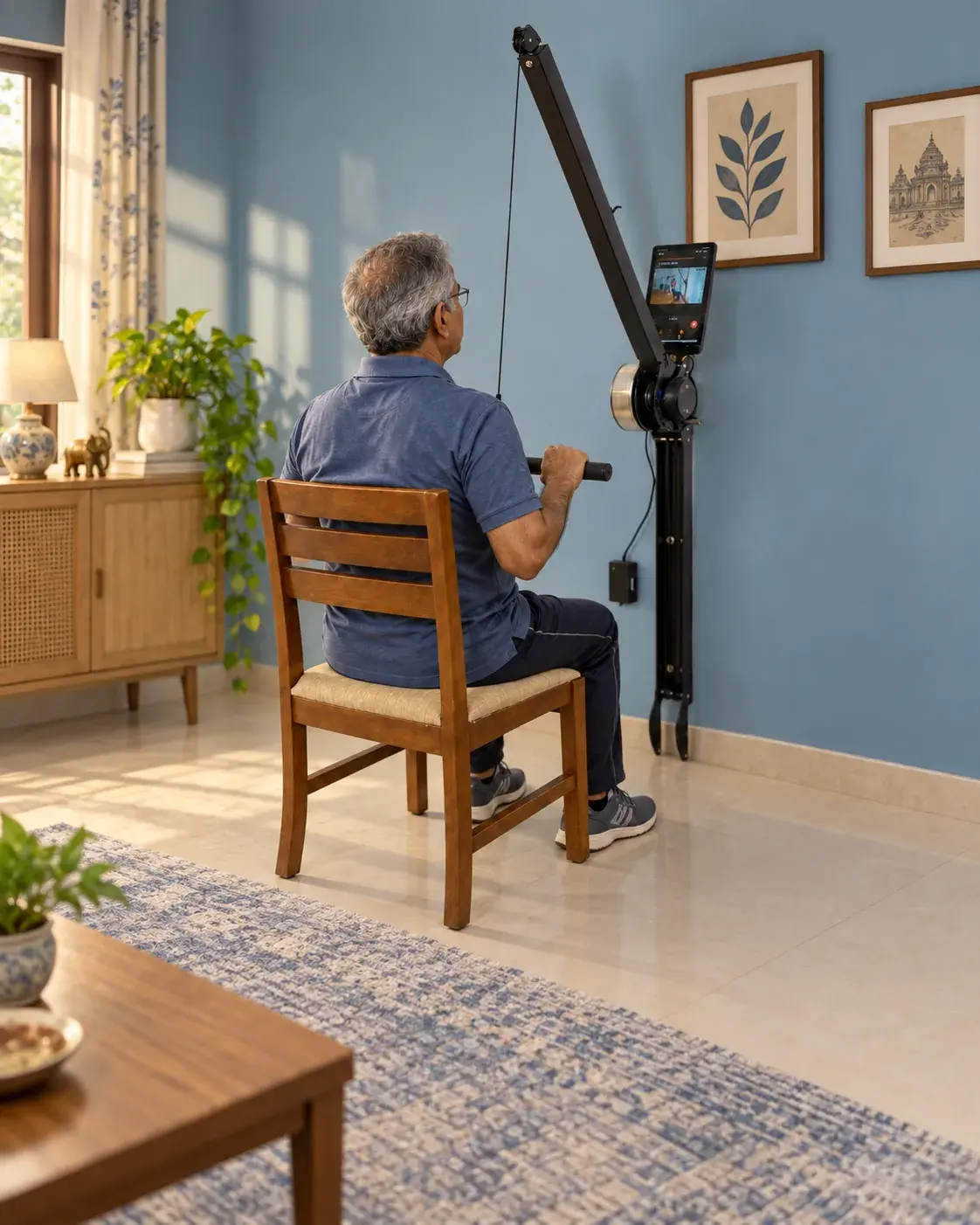
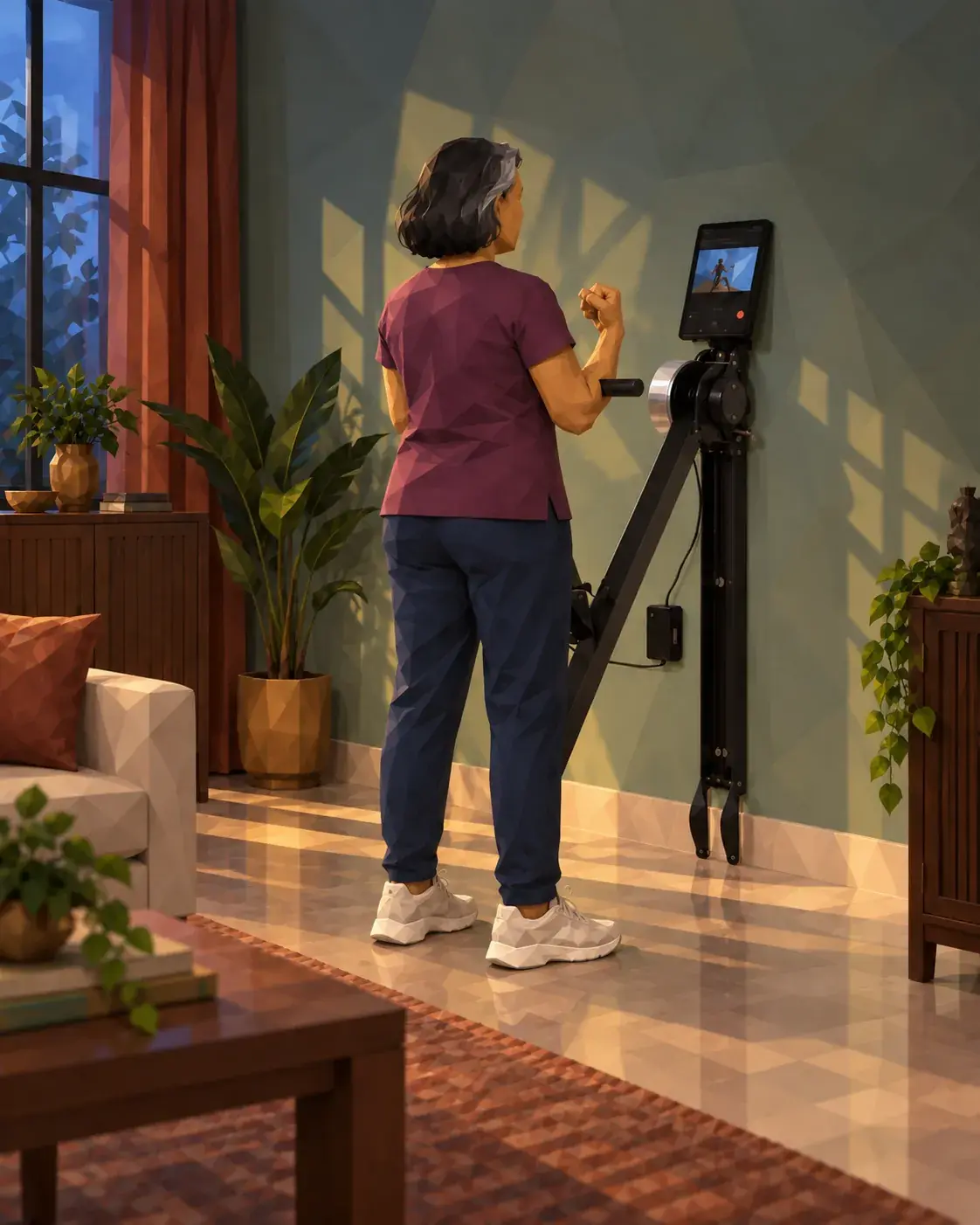
Keeping that strength requires the kind of strength training for older adults that Ferra was built around. Its concentric-only resistance means the machine works with your effort but never loads you on the way down, removing the strain that can aggravate a healing joint. Resistance also adjusts automatically to what you can safely handle that day, so there is no guesswork about how much load is appropriate.
Check out Ferra to keep that strength going long after physiotherapy ends.
Conclusion
Recovering from hip replacement surgery takes time, and the exercises change as healing progresses. The right exercises after hip replacement surgery help rebuild strength step by step, so the hip can handle daily movement without strain. A few months from now, climbing stairs or standing up from a chair will feel normal again, something you don’t have to think twice about.
Exercises After Hip Replacement Surgery: Frequently Asked Questions
1. How soon after hip replacement surgery can you start exercising?
Most people begin gentle exercises, such as ankle pumps, within a day of surgery. Standing and walking usually start soon after, with the support of a walker or physiotherapist. Always follow the specific timeline given by your surgeon, since recovery speed varies by individual.
2. Is it normal to feel pain during hip replacement exercises?
Mild discomfort during early exercises is common, but sharp or worsening pain is not. If an exercise causes sharp pain, stop and check with your physiotherapist before continuing. Consistent, gentle effort works better than pushing through pain.
3. Can you do these exercises without a physiotherapist present?
Yes, once your physiotherapist has approved a specific exercise for home use. Many exercises in the early weeks, like seated knee extensions, are designed to be done independently. Standing exercises should still be done near a stable support until balance improves.
4. How long does it take to recover strength after a hip replacement fully?
Most people regain functional strength within three to six months. Full muscle strength and confidence in movement can continue improving well beyond that, especially with consistent resistance work. Machines like Ferra, which use concentric-only resistance, are often used at this stage to keep building strength without added joint strain.
5. What happens if you skip hip replacement recovery exercises?
Skipping exercises slows recovery and increases the risk of stiffness, weakness, and poor balance. The muscles around the new joint need consistent activation to regain their supporting role. Without it, even a well-placed implant can feel unstable during daily movement.
Build everyday strength — at your pace
Explore Ferra to see how strength training fits into life after 50 — it’s not about building muscle for its own sake, but moving with confidence.

Anurag Dani is the Co-Founder of Ferra, a company dedicated to redefining healthy ageing through strength training. Drawing from his experience building fitness and healthy ageing solutions for adults, he writes about healthy ageing to help readers stay strong and independent as they age.