Why do your feet feel cold all the time?
It’s a small thing at first, until cold feet turn into tingling, swelling shows up around the ankles, or every short walk starts to feel heavier than it should.
In this article, we’ll look at three simple exercises to improve blood circulation in legs that fit into an ordinary day, no special equipment needed.
Why Does Blood Flow Slow Down in the Legs With Age?
As we age, a few things slow blood flow in the legs at the same time.
- Vein and artery walls stiffen with age
- Calf muscles weaken with less daily movement
- Long sitting hours slow blood flow in the ankles and feet
Together, these changes are what make circulation issues more common after midlife, and why the right exercises target the cause, not just the symptoms.
Exercises to Improve Blood Circulation in Legs
1/ Walk Daily to Keep Blood Moving Through the Legs
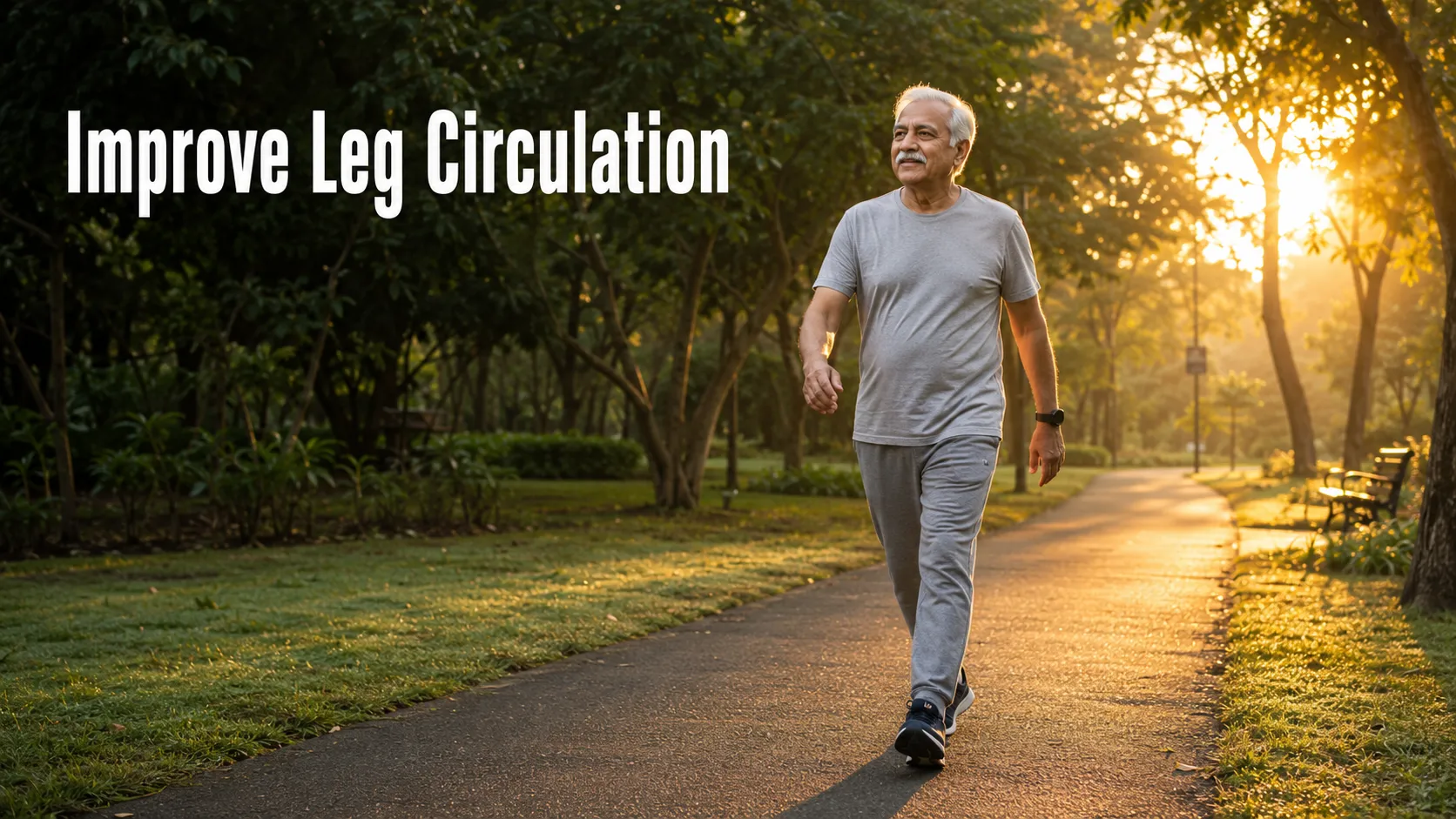
Walking is one of the simplest, most effective ways to support circulation. Every step contracts the calf muscles, pushing blood toward the heart instead of letting it settle in the lower legs.
How to Walk for Better Circulation
- Start with a comfortable 15-20 minute walk
- Keep the pace steady rather than fast
- If outdoor walking feels difficult, a short indoor or treadmill walk works just as well
What matters most is showing up daily. A short, regular walk does more for circulation over time than an occasional long one.

2/ Activate the Calf & Ankle Pump With Targeted Movements
The calf muscle is sometimes called the body’s second heart, since it directly supports blood flow back up the legs. During long periods of sitting, simple ankle and calf movements keep this pump working.
Quick Calf & Ankle Exercises
| Exercise | How to Do It | What It Helps With |
| Ankle pumps | While seated or lying down, flex your foot up and down 10 times | Prevents blood from pooling around the ankles |
| Heel raises | Hold a chair for balance, rise onto your toes, lower slowly, repeat 10 times | Strengthens the calf pump that pushes blood upward |
| Seated marching | While seated, lift one knee at a time as if marching, 10 times per leg | Keeps blood moving during long sitting stretches |

Recommended Reading:
For more gentle daily movements to build into a routine, these home exercises for seniors are a practical place to start.
3/ Build Leg Strength for Circulation That Lasts
Walking and calf activation help in the moment, but those muscles need to be strong enough to keep doing the work, day after day. This is where basic leg strength exercises come in, such as sit-to-stands, bodyweight squats, or supported leg presses.

Why Stronger Legs Mean Better Circulation
Bigger, stronger leg muscles act like a tighter sleeve around the veins, squeezing them more firmly with every contraction and helping blood move upward instead of settling. This is one reason strength work belongs next to walking, not in place of it.
Each habit covers a different gap:
- Walking keeps blood moving day to day
- Calf activation handles the long sitting stretches
- Leg strength is what keeps the whole system working well years down the line.
Put together, these three habits cover the short term, the in-between moments, and the long run, which is exactly what consistent circulation needs.
Exercises to Improve Blood Circulation in Legs Need Consistent Strength Work
Walking and calf activation help in the short term, but they only work as well as the muscles behind them. Once leg muscles weaken, even a daily walk struggles to maintain efficient circulation, and the same foot fatigue returns. The right fix is not more effort on bad days; it is consistent strength work that the legs can keep up with.
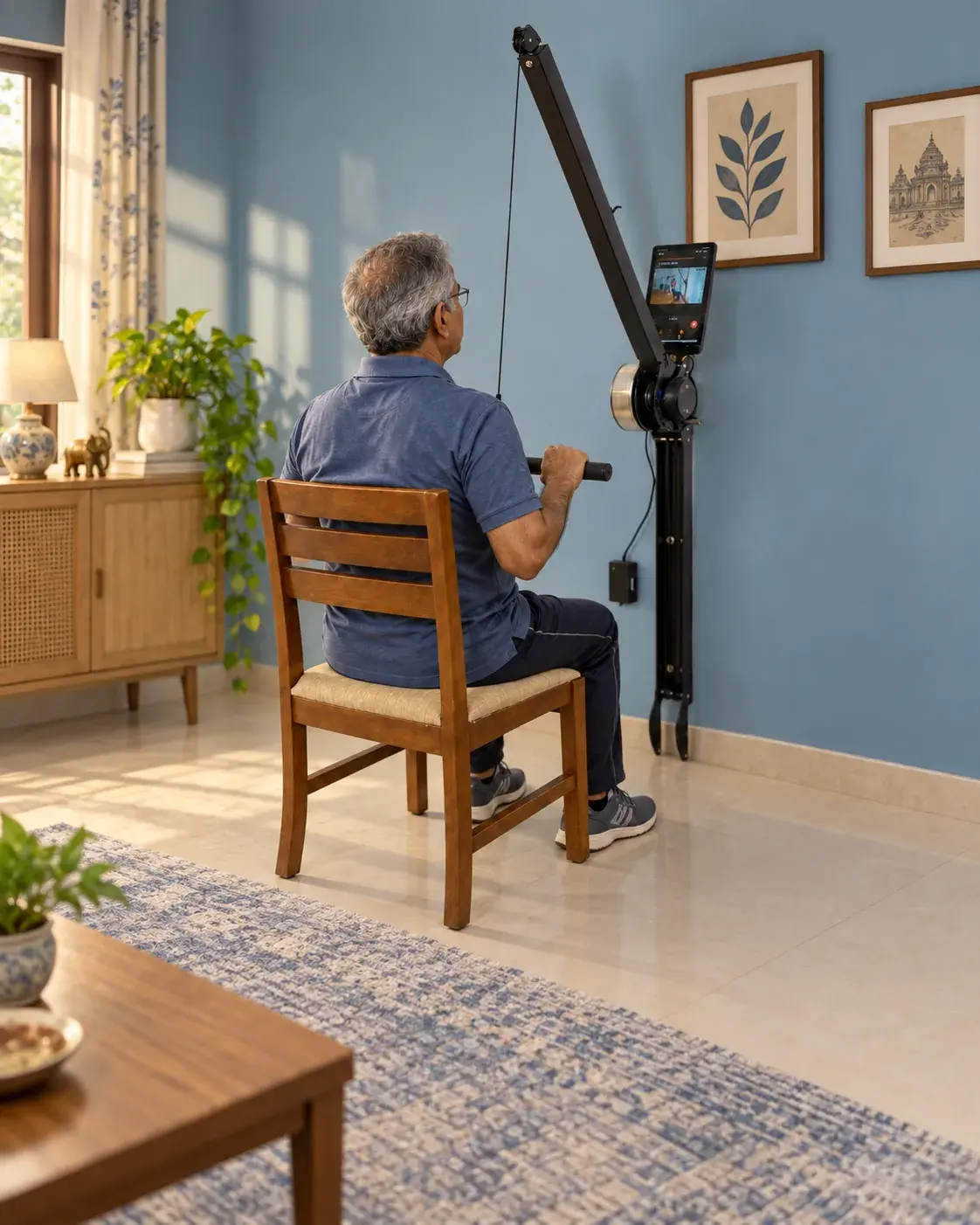
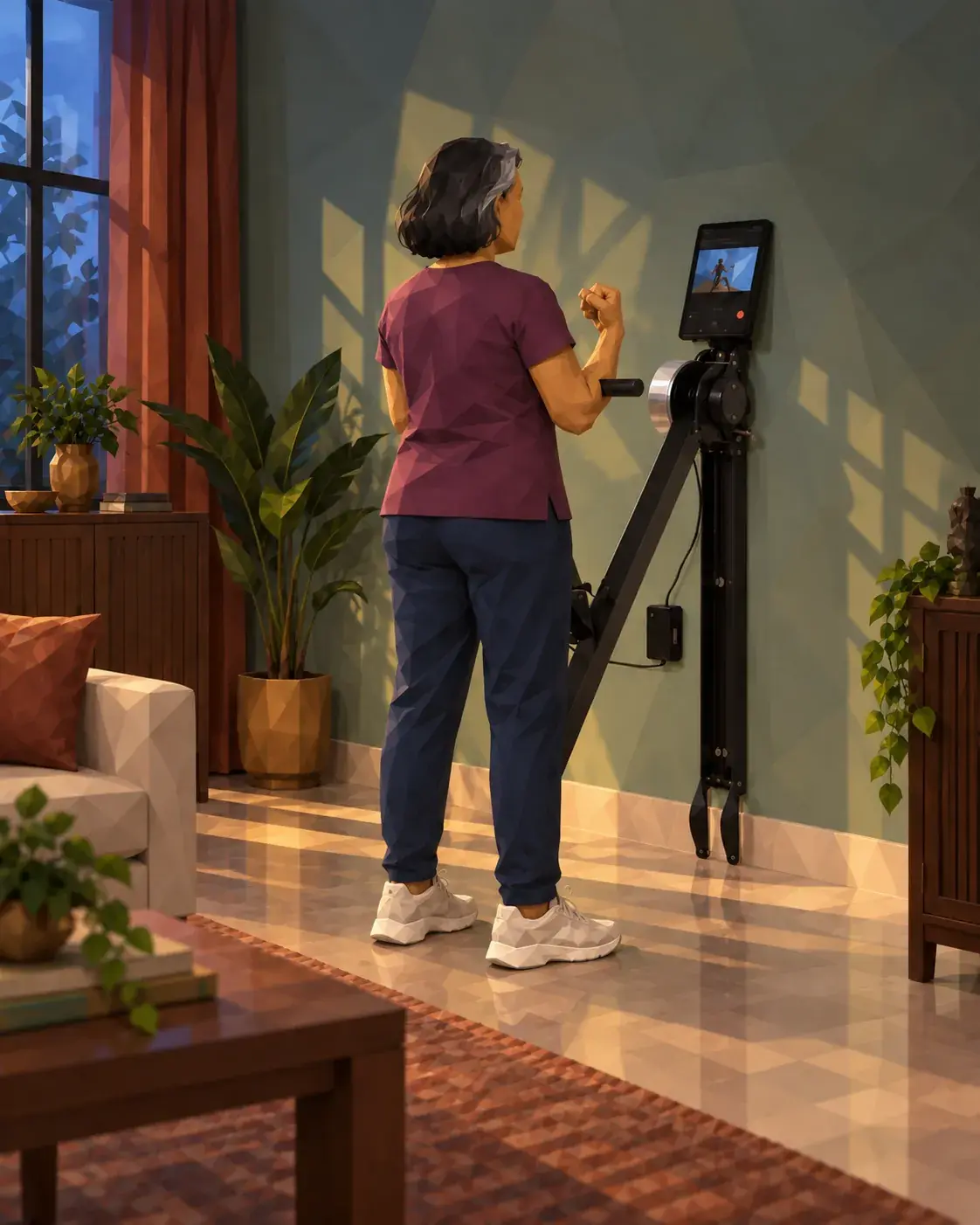
That ongoing strength is what a smart home gym machine like Ferra is built to support.
- Concentric-only resistance: resists effort but never pushes weight back onto the joints
- Auto-adjusting resistance: matches current ability, so there is no risk of overdoing it
- Short, fully seated sessions: easier to stay consistent with than a gym routine
Check out Ferra and build the leg strength that keeps blood moving long after the walk is over.
Conclusion
Improving circulation doesn’t require complicated routines. Consistently combining walking, calf activation, and leg strengthening can make a real difference over time. These exercises to improve blood circulation in legs help support healthier movement, reduce blood pooling, and keep your legs feeling stronger for everyday activities. When paired with regular strength training, they become a long-term habit that supports both circulation and independence as you age.
Exercises to Improve Blood Circulation in Legs: Frequently Asked Questions
1/ Is poor blood circulation in the legs a normal part of ageing?
Some slowing is normal as veins stiffen and muscles weaken with age, but regular exercise can help improve circulation.
2/ Can exercises improve blood circulation in the legs?
Yes. Walking, calf exercises, and strength training can improve circulation and reduce mild symptoms. Medical conditions may need additional treatment.
3/ How long does it take to improve blood circulation in the legs?
Many people notice improvements within 2 to 3 weeks. Strength-related benefits often take 6 to 8 weeks.
4/ Is strength training safe for beginners with poor circulation?
Yes. Starting with simple, low-impact exercises or beginner-friendly equipment is generally safe for most people.
Build everyday strength — at your pace
Explore Ferra to see how strength training fits into life after 50 — it’s not about building muscle for its own sake, but moving with confidence.

Anurag Dani is the Co-Founder of Ferra, a company dedicated to redefining healthy ageing through strength training. Drawing from his experience building fitness and healthy ageing solutions for adults, he writes about healthy ageing to help readers stay strong and independent as they age.