Do stairs feel steeper than they used to? Does standing up from a low chair take a small push instead of one smooth motion? Do groceries feel heavier than they should?
None of these happen overnight. They show up gradually, in small moments like:
- Holding the railing on stairs you used to take without thinking
- Needing a second push to get out of a chair or the car
- Feeling less steady on uneven ground or a crowded pavement
These are not signs of getting old. They are signs of losing muscle, and muscle loss is one of the few age-related changes you can actually reverse. Strength training over 40 rebuilds exactly the strength behind these everyday movements, and it works whether you are starting for the first time or picking things back up after years away.
Here is what a safe beginner start actually looks like.
Why Does Starting Strength Training Now Still Matter?
Muscle mass begins a gradual decline in the 30s, and by 40 the pace becomes noticeable. Left unaddressed, this shows up as weaker grip, slower stair climbs, and less steady footing on uneven ground.
The reassuring part is that muscle stays responsive to training at almost any age. Research on adults well past 60 has found meaningful strength gains within weeks of starting a structured resistance programme, which means starting strength training over 40, or well beyond it, is never too late to matter. Strength training over 40 does not reverse ageing, but it directly targets the one factor, muscle, that ageing quietly erodes.
Recommended Reading:
If muscle loss is the part you want to understand more deeply, this breakdown of what causes muscle loss with age covers the biology in plain terms.
What Are the Real Benefits of Strength Training Over 40?
The value of strength training over 40 is rarely about how the body looks. It is about how the body performs during an ordinary day.
Consistent training supports:
- Climbing stairs without needing to hold the rail
- Standing up from low chairs and sofas smoothly
- Carrying groceries or bags without strain
- Better balance, which lowers fall risk
- Steadier joints during everyday twisting and bending
None of these require heavy lifting. They respond to strength training equipment for seniors that applies resistance safely and consistently, which matters more for older joints than the size of the load.
What Is a Safe Beginner Strength Training Routine at Home?
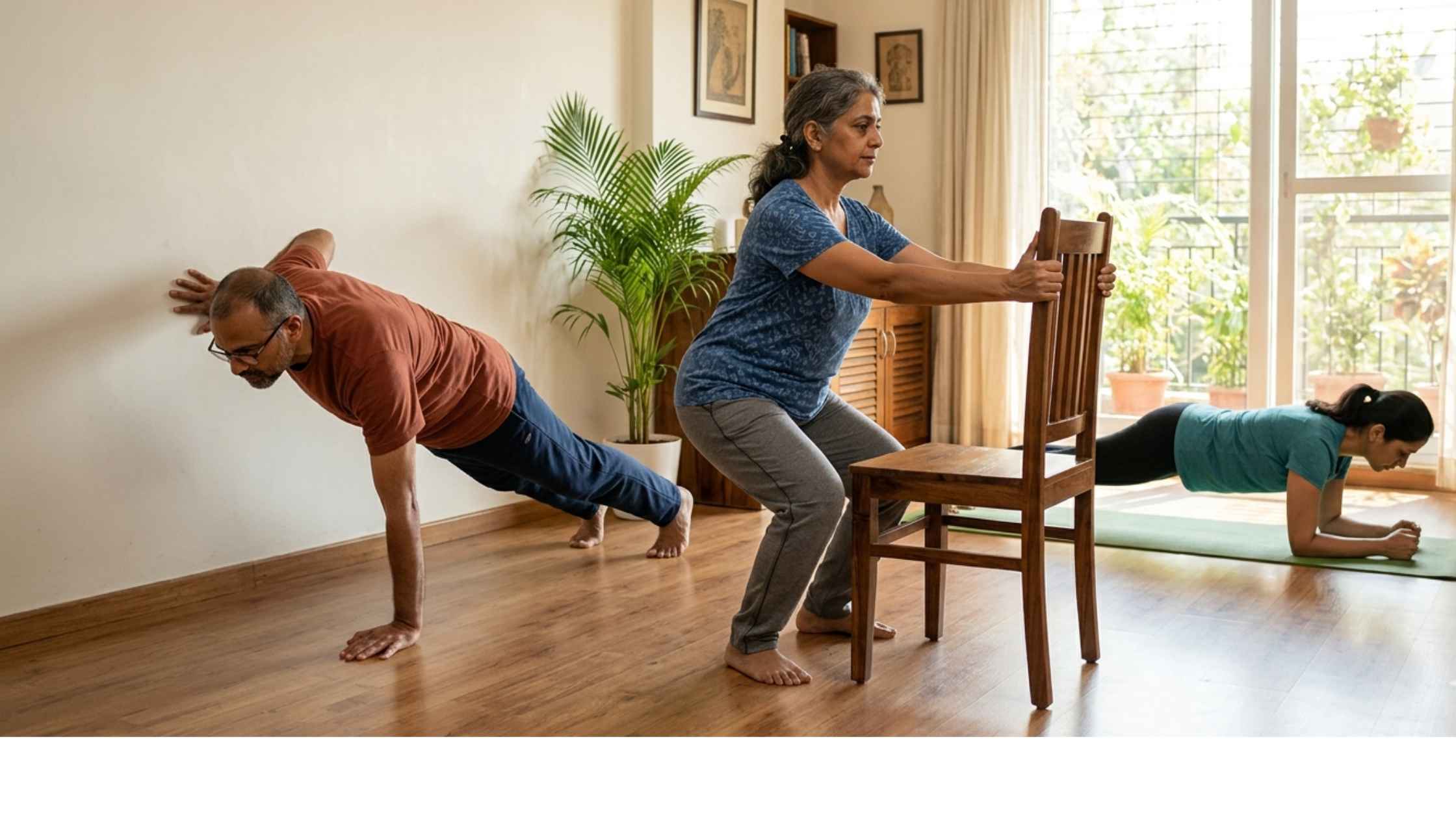
A beginner routine does not need a gym or specialised equipment. Five simple movements, done with control, activate the muscles most responsible for mobility and stability.
- Sit-to-Stand (Chair Squat): Stand up from a sturdy chair and sit back down slowly. Builds leg and glute strength for standing and stairs.
- Wall Push-Up: Palms on a wall, elbows bend and push back. Builds chest, shoulder, and arm strength for daily pushing movements.
- Seated Row with Resistance Band: Pull a band toward the torso, release slowly. Builds upper back and posture muscles.
- Standing Hip Hinge: Bend slightly at the hips with a straight back, return to standing. Builds glutes, hamstrings, and lower back.
- Calf Raise: Hold a chair for balance, rise onto the toes. Builds calf strength and ankle stability.
Starting with two or three of these movements, done with good form, builds more real strength training over 40 than five movements rushed through carelessly.
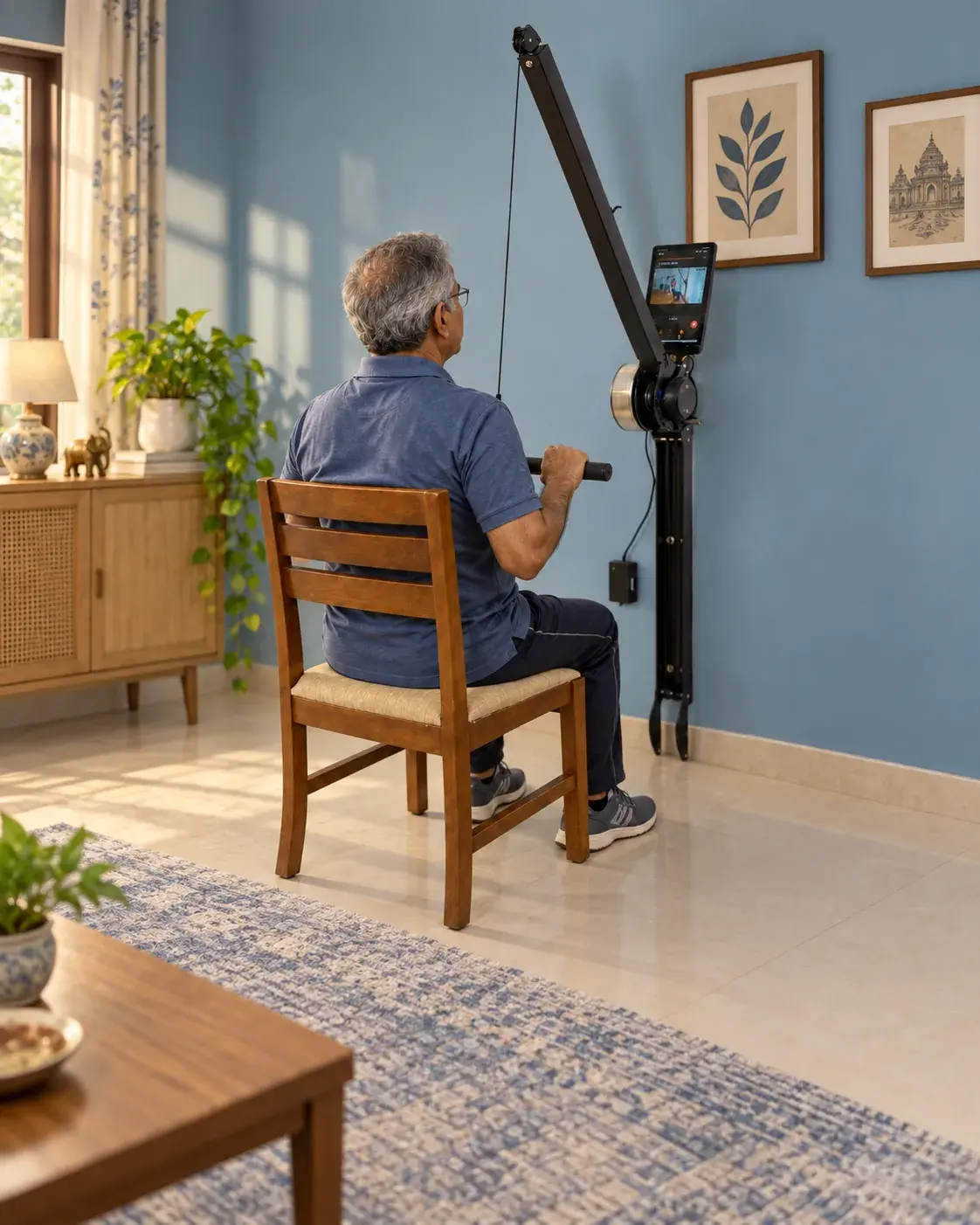
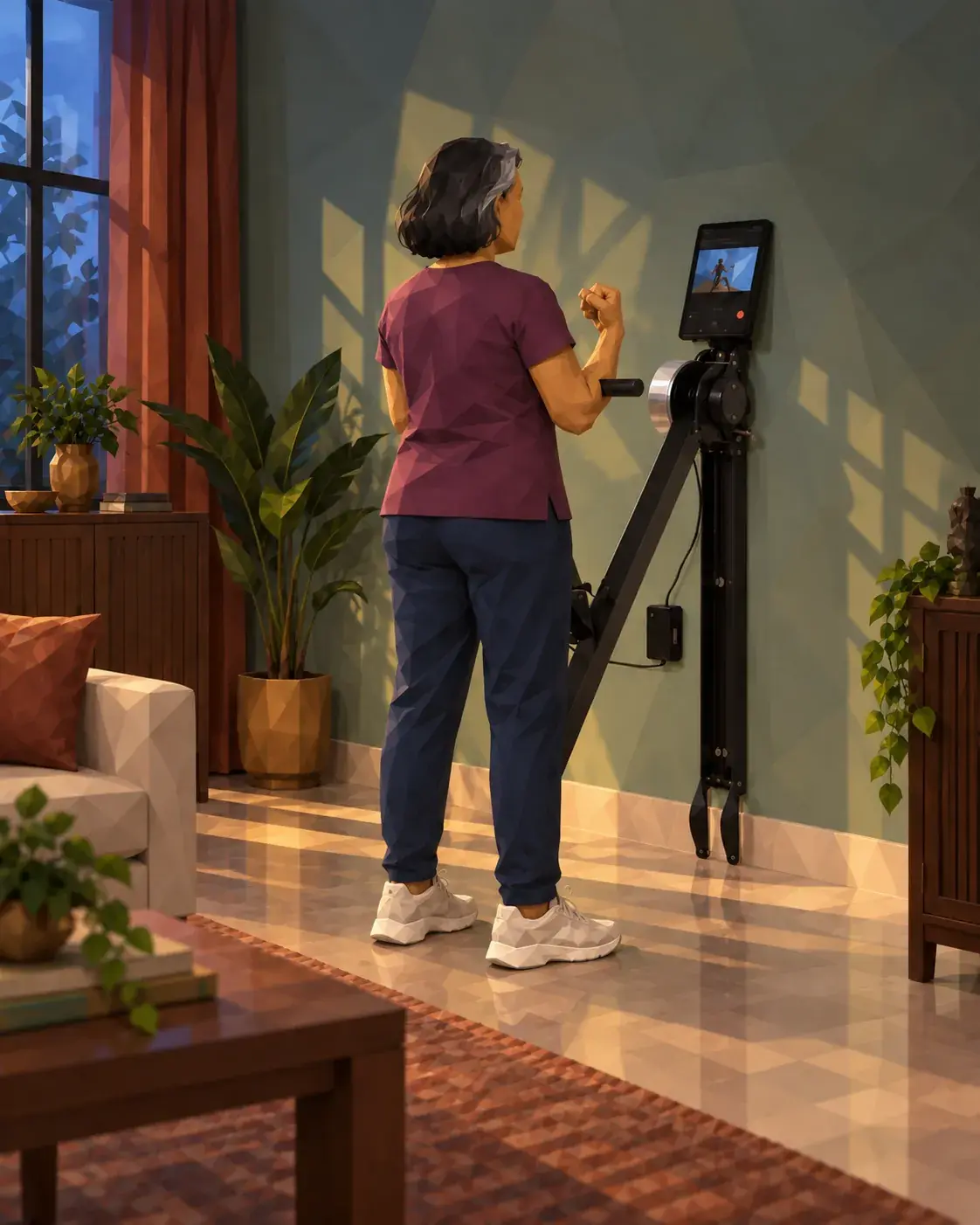
If remembering the right resistance and form for each of these feels like one more thing to manage, that is exactly the gap Ferra was built to close. It adjusts resistance automatically to each person's strength level and guides the movement on screen, so the only thing left to focus on is showing up.
How Often Should You Do Strength Training Over 40?
There is no single number that works for everyone. What matters far more than hitting an exact weekly count is whether the sessions actually keep happening.
This is usually where routines break down. A hard session leaves someone sore for days, so the next session gets pushed back, then skipped, then forgotten. Machines like Ferra remove that cycle by eliminating the lowering phase of each movement, the part responsible for most of the soreness, which is what makes short, regular sessions realistic to sustain even most days of the week.
The real goal is not a fixed schedule. It is making strength training for older adults feel routine enough that missing a day does not mean falling off the habit entirely.
What Mistakes Do Beginners Make With Strength Training Over 40?
A few avoidable habits slow progress or increase injury risk for beginners:
- Skipping a warm-up and moving straight into resistance work
- Choosing a resistance level that is too heavy in the first week
- Holding the breath during effort instead of breathing through it
- Stopping completely after the first bit of soreness, instead of adjusting form or load
- Starting too intensely, then quitting when it feels unsustainable
Most of these come from treating strength training like a sprint. Slowing down the first two weeks prevents the setbacks that usually end a routine before it becomes a habit.
Strength Training or Cardio: Which Comes First?
Cardio and strength training solve different problems. Cardio supports heart health and endurance. Strength training is what directly rebuilds the muscle and bone density that decline with age, something walking on its own does not fully address.
For someone starting from very little activity, prioritising strength training first tends to pay off faster. It protects the joints and muscles that make cardio, and daily movement in general, easier and safer to do. Neither replaces the other, but if the goal is staying steady on your feet and independent at home, strength is the piece that carries the most weight.
Recommended Reading:
If you have been relying on cardio and still feel weaker over time, this comparison of cardio and strength training explains why that happens and what to add instead.
Getting Started Is the Hardest Part
Nobody starts strength training feeling ready. The readiness comes after the first few sessions, once stairs feel a little easier or standing up stops needing a push off the armrest.
Small, consistent sessions compound faster than most people expect, and within a few weeks the difference shows up in the moments that matter most: an easier flight of stairs, a steadier grip, a smoother morning.
Strength Training Over 40: Frequently Asked Questions
1/ Is strength training safe for seniors?
Yes, when done with appropriate resistance and controlled movement. Bodyweight and light resistance exercises carry low injury risk and can be adjusted to any starting fitness level. Checking with a doctor first is worthwhile for anyone managing an existing health condition.
2/ How many days a week should older adults strength train?
There isn't one fixed number that suits everyone. What matters more is regularity, and machines like Ferra make that easier by removing the soreness that usually forces rest days in between, so short sessions can happen more often without setting anyone back.
3/ Can seniors build muscle at home without a gym?
Yes. Bodyweight movements, resistance bands, and machines like Ferra, which uses concentric-only resistance, can build meaningful strength without any gym equipment. What matters most is consistent effort, not the setting it happens in.
4/ What should beginners avoid when starting strength training?
Beginners should avoid jumping into heavy resistance too soon, skipping warm-ups, and holding their breath during effort. Progressing gradually and prioritising form over load reduces injury risk significantly in the first few weeks.
Build everyday strength — at your pace
Explore Ferra to see how strength training fits into life after 50 — it’s not about building muscle for its own sake, but moving with confidence.

Anurag Dani is the Co-Founder of Ferra, a company dedicated to redefining healthy ageing through strength training. Drawing from his experience building fitness and healthy ageing solutions for adults, he writes about healthy ageing to help readers stay strong and independent as they age.