Is the good-morning exercise safe for you?
That is a fair question to ask before you try it. Search for this exercise, and the first image is usually someone bent forward under a heavy barbell, which looks like the last thing your spine needs if you are just starting. The real concern is not how much weight to lift. It is whether this movement is safe for you in the first place.
In this article, we will break down what the good-morning exercise actually trains, where beginners go wrong, and how to build up to it safely at home.
How Can Beginners Do Good-Morning Exercise Safely at Home
1/ Bodyweight Standing Good-Morning
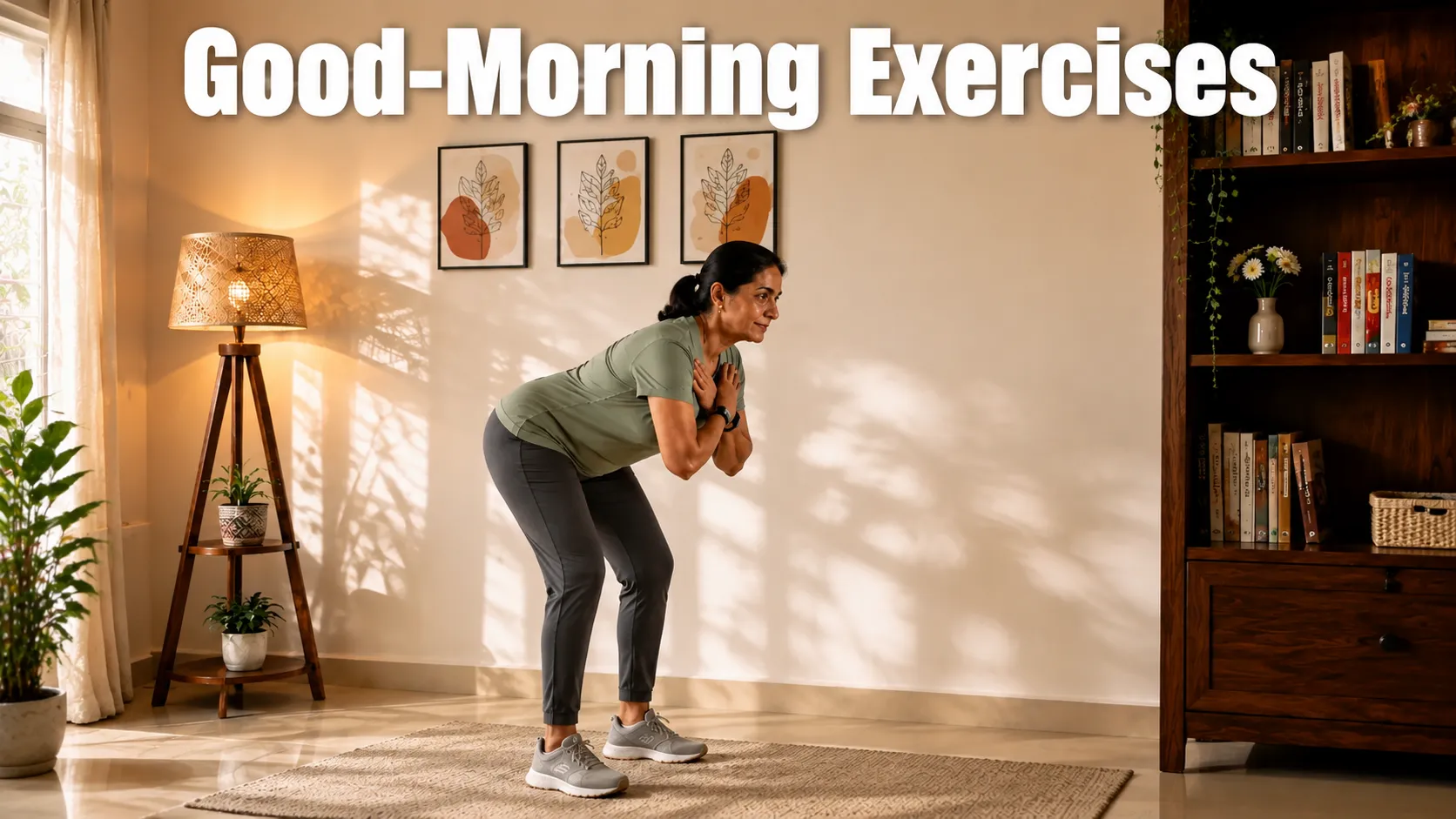
Stand with your feet hip-width apart and your hands resting lightly behind your head or crossed over your chest. Keeping a soft bend in your knees, push your hips back and lower your torso forward until it is close to parallel with the floor, or as far as you can go with a flat back. Slowly return to standing by driving your hips forward. Do 8 to 10 slow reps for 2 sets.

2/ Seated Good-Morning (Balance-Friendly Modification)
Sit toward the front edge of a sturdy chair with your feet flat on the floor and your hands behind your head. Hinge forward from your hips, keeping your back straight, until your chest moves toward your thighs. Slowly return upright. Repeat for 10 reps.
Prioritise good form over depth or speed. A controlled hip hinge is what makes good-morning exercise effective and safe.

Recommended Reading:
If your lower back already feels stiff or sore before you even start a new exercise, these lower back pain for seniors exercises are a useful place to build a foundation first.
Common Good-Morning Exercise Mistakes Beginners Make
The most common mistake is letting the lower back round while bending forward, taking on stress it was never built to handle. A couple of other faults show up often too:
- Rounding the lower back instead of keeping it flat through the hinge.
- Bending the knees too much, turning the move into a squat.
Some trainers recommend beginners skip the good-morning entirely until the hinge feels automatic without weight. That caution matters more after your mid-30s and 40s, when the lower back is less forgiving and the hinge is a pattern years of desk sitting have erased.
Recommended Reading:
The hip hinge is one of the first patterns to weaken with age, which is also why it ties closely into preventing muscle loss as you get older.
How Ferra Makes Good-Morning Exercise Safer
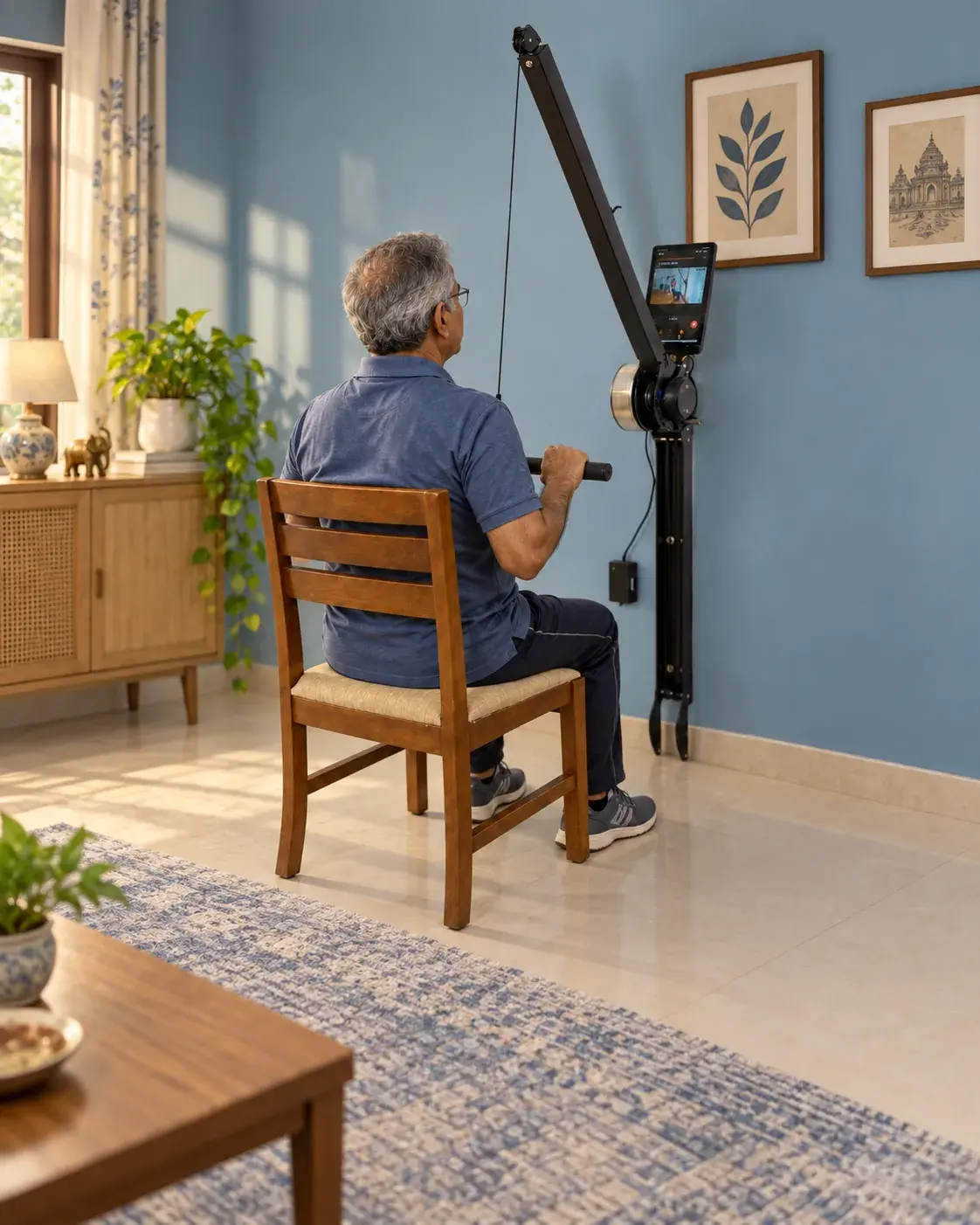
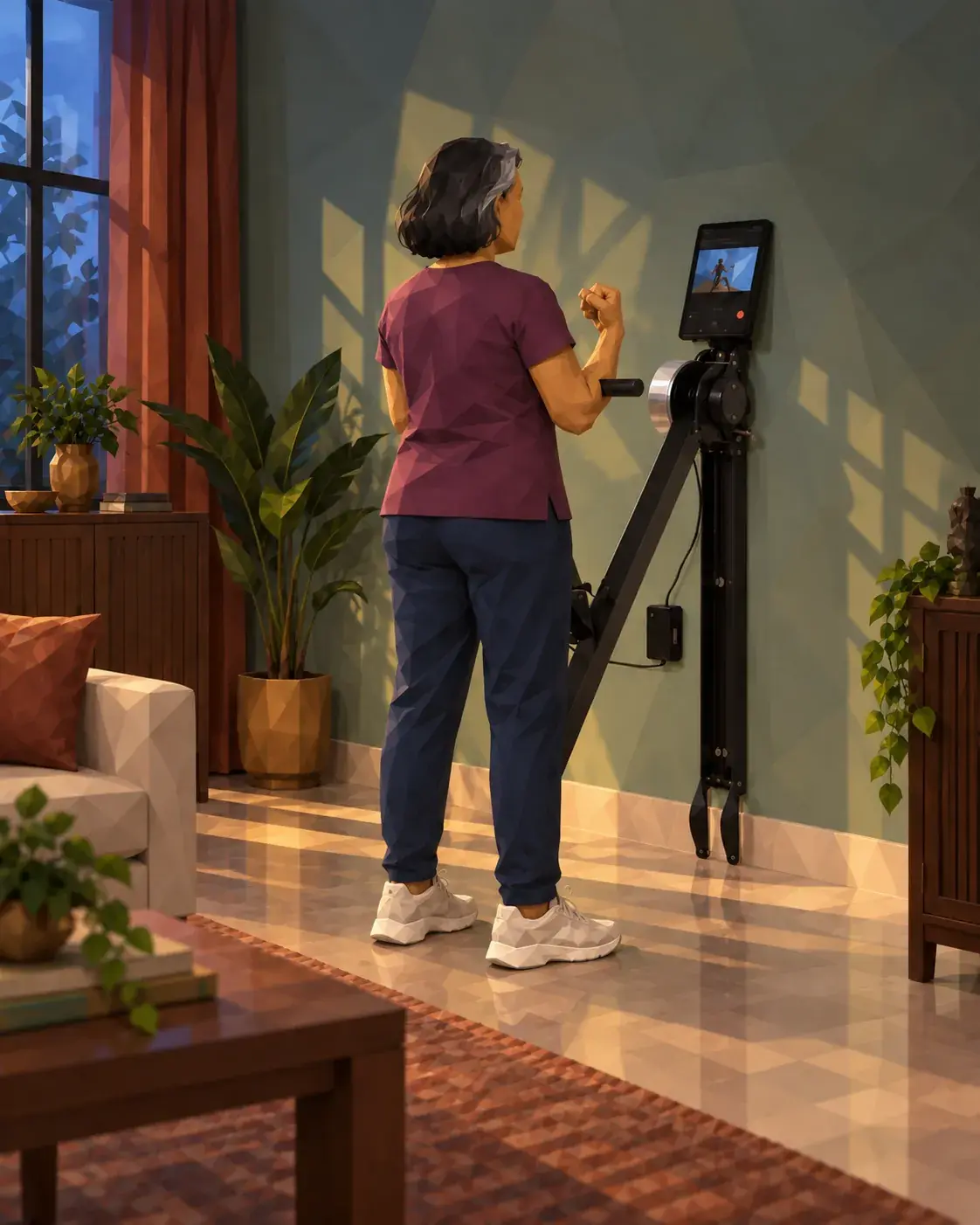
Ferra, all-in-one home gym machine, includes the good-morning too. It’s one of Ferra’s seven core exercises, grouped under the posterior chain, the same muscles you rely on every time you bend down to pick something up or tie your shoes.
- Every rep is guided by a form video, so the flat-back position you practiced earlier stays in check.
- The machine adapts resistance in real time, so you are never working against more than your back is ready for.
- Resistance is concentric only, meaning it pushes back against your effort but never loads you on the way down, the part of the movement where most form breaks down.
Check out Ferra and build the strength your back has been missing.
Conclusion
The good-morning exercise can be a safe and effective way to strengthen your posterior chain when performed with proper technique. Start with beginner-friendly variations, focus on a controlled hip hinge, and progress gradually as your form improves. Building the movement correctly from the start will help you get the benefits while reducing the risk of injury.
Good-Morning Exercises: Frequently Asked Questions
1/ Can older adults safely do good-morning exercises?
Yes, with the right starting point. Beginning with the bodyweight or seated version, focusing on a flat back, and avoiding any added weight until the pattern feels controlled makes this exercise appropriate for most older adults.
2/ How often should beginners practice good-morning exercises?
Two to three times a week is enough to build the pattern without overloading the lower back. Spacing sessions out gives the muscles around the spine time to adapt between practices.
3/ Is the good-morning exercise better than squats for seniors?
No single exercise replaces the others. Good-morning exercise targets the hamstrings, glutes, and lower back through a forward bend, while squats train the front of the legs through a bend at the knees. Seniors generally benefit from including both rather than choosing one over the other.
4/ Should good-morning exercises be stopped if pain occurs?
Yes. Mild muscle effort is normal, but sharp pain or pain in the lower back means the form has broken down or the movement is too advanced for now. Stopping, resting, and returning to the seated variation is the safer choice.
Build everyday strength — at your pace
Explore Ferra to see how strength training fits into life after 50 — it’s not about building muscle for its own sake, but moving with confidence.

Anurag Dani is the Co-Founder of Ferra, a company dedicated to redefining healthy ageing through strength training. Drawing from his experience building fitness and healthy ageing solutions for adults, he writes about healthy ageing to help readers stay strong and independent as they age.