Are you doing your exercises regularly but still unsure if they are actually working?
It is one of the most common frustrations with home strength training. There is no trainer checking your form, no gym instructor telling you that you have improved, and no obvious number to look at like there is on a weighing scale.
Without that feedback, it is easy to start doubting the effort altogether, and that doubt is usually what makes people quit.
The good news is tracking strength progress at home does not require special equipment or fitness expertise. It just requires knowing what to look for.
Why Tracking Progress Matters More as You Get Older
Muscle loss happens gradually, often without any obvious signal until daily tasks start feeling harder. Without a way to track progress, it becomes easy to assume nothing is changing, even when strength is quietly improving week over week.
This matters because motivation depends on seeing results. When progress feels invisible, consistency drops off, and consistency is what actually builds strength over time.
- Strength gains happen gradually, not overnight
- The body adapts before it is visible in daily life
- Without tracking, small improvements go unnoticed and unrewarded
Tracking is not about obsessing over numbers. It is about giving yourself proof that the effort is working, which keeps the routine going long after motivation alone would have faded.
The Simple Metrics That Actually Matter at Home
You do not need gym-style tracking to know if strength training is working. A few simple, repeatable markers say more than any single workout ever could.

- Reps at the same effort level: If a set that used to feel hard now feels manageable, that is real progress
- How a set feels overall: Note whether it feels lighter, steadier, or less tiring than the week before
- Everyday task markers: Carrying groceries, climbing stairs, or getting up from a low chair with less effort
None of these require an app, a coach, or specialised knowledge of resistance training. According to the National Institute on Aging, older adults who stay consistent with strength exercises often notice functional improvements in daily movement before they notice changes in strength numbers. That is exactly why everyday tasks are one of the most honest progress markers available.
Recommended reading:
If you are not sure which exercises to build this consistency around, these strength exercises for seniors are a practical place to begin.
A Simple Way to Log Progress Without an App
Tracking progress does not need to become a chore. A short weekly note is enough to spot patterns most people would otherwise miss entirely.
Keep a small notebook or a note on your phone, and after each session write down:
- The date and which exercises you did
- How many reps or rounds felt comfortable
- One word describing how the session felt: easy, steady, or tough
Reviewing this every couple of weeks reveals patterns that are easy to miss day to day, especially in resistance training for seniors, where gains build slowly and steadily rather than all at once.
Recommended Reading:
If your current routine still feels intimidating to build, these exercises for seniors at home offer a simple, low-pressure starting point.
Signs You’re Improving, Even Without Hard Numbers
Not all progress shows up as a bigger number. Some of the clearest signs of improvement are things you notice in daily life rather than during the workout itself.
- Recovering faster after a set, with less need to pause and catch your breath
- Feeling less stiff the next morning after training
- Attempting a physical task, like reaching a top shelf, with more confidence than before
- Moving with more steadiness, something family members often notice before you do
These changes matter because they reflect the kind of strength this training is meant to build: the strength that supports independence and everyday function, not just performance in a single session. A decline in these areas is often an early sign of functional decline in older adults, which makes noticing improvement here just as valuable as any number.
Tracking these small daily changes builds a clearer, more honest picture of progress than a single workout ever could, and it keeps you motivated to stay consistent.
Strength Training Equipment for Seniors Needs Consistent, Trustworthy Resistance
Self-tracking only works if the resistance behind each session is dependable. If the load changes unpredictably, whether a dumbbell feels heavier on a tired day or a resistance band loses tension over time, it becomes hard to tell whether you are actually improving or the exercise just happened to feel different. A smart home gym machine removes that guesswork by keeping the resistance consistent from one session to the next.
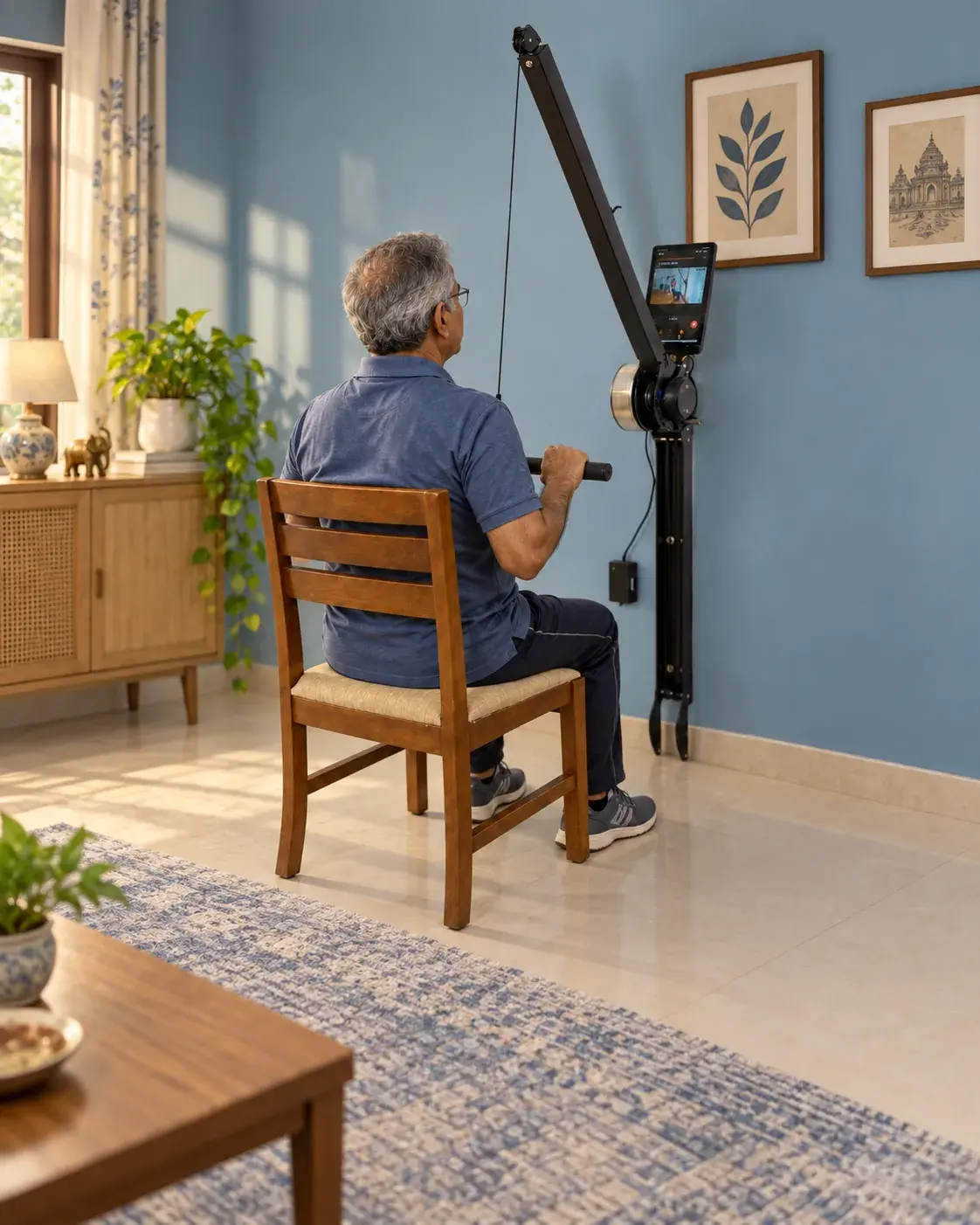
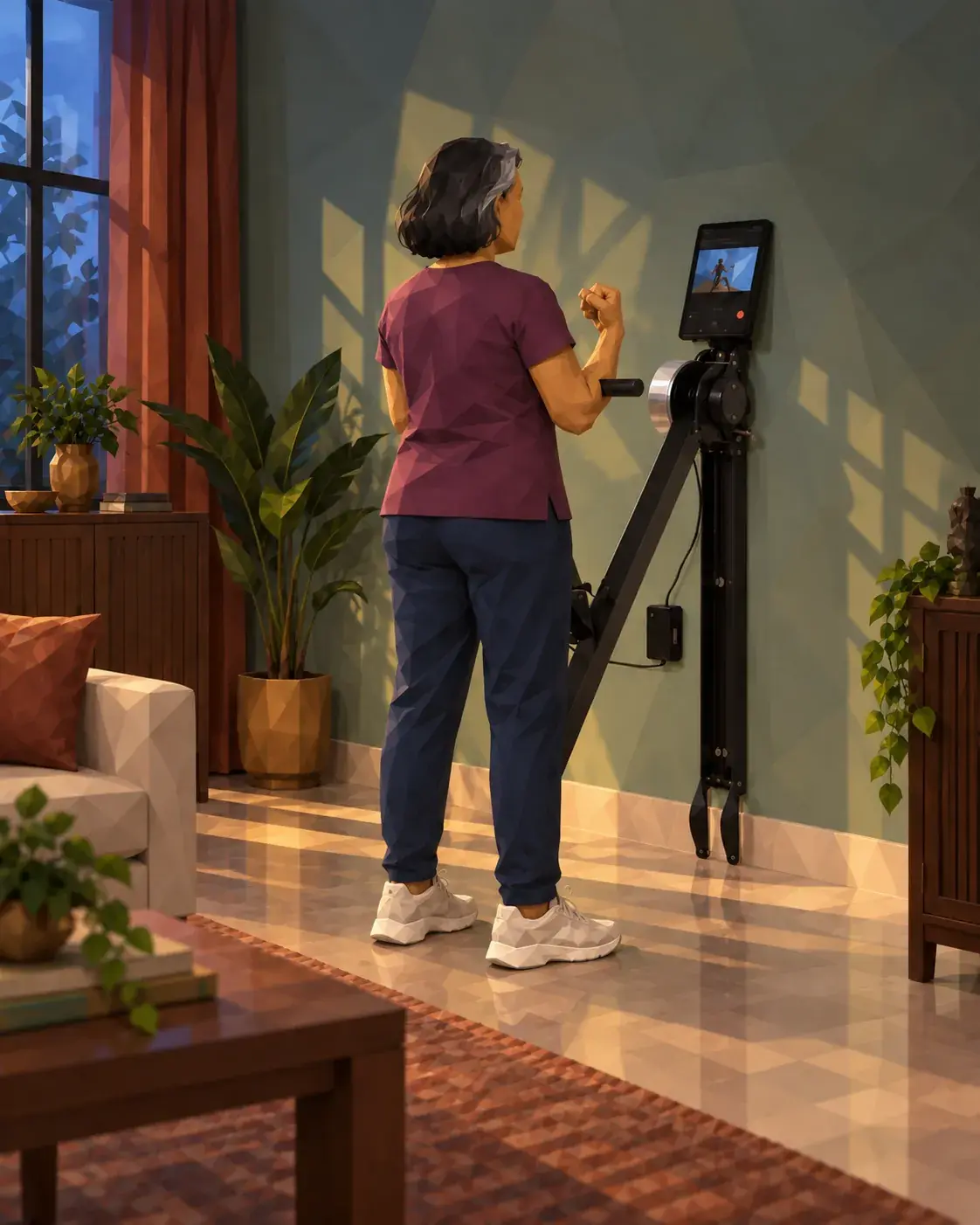
That reliability is exactly what strength training equipment for seniors like Ferra is built to provide:
- Concentric-only resistance means the machine resists your effort but never loads you on the way down, removing the uncertainty that comes with free weights
- Resistance adjusts automatically to your current strength level, so each session reflects your actual effort rather than a guess at the right weight
With the resistance staying consistent, every rep you log actually means something, and your progress notes start reflecting real change instead of random variation.
Check out Ferra and build the strength that makes your progress easier to trust.
Conclusion
Tracking strength progress at home does not require a trainer, an app, or a gym membership. A few honest markers, noted consistently, tell you far more than a single hard workout ever could.
The goal is not to chase numbers every day. It is to notice the quiet signs that your body is adapting, one week at a time.
Stay consistent with your notes, and in a few months, you will look back and see just how far that quiet, steady effort has taken you.
How to Track Workout Progress: Frequently Asked Questions
1/ How often should progress be reviewed?
Every two to three weeks is usually enough to spot a real pattern. Checking daily can be misleading, since strength naturally fluctuates from session to session based on sleep, stress, and energy levels.
2/ Does soreness mean a workout was effective?
No. Soreness is not a reliable indicator of progress and can happen even during a light session. A better sign of effectiveness is whether reps feel steadier or tasks feel easier over time, not how sore the muscles are afterward.
3/ What if progress seems to stall?
A plateau is common and does not mean the routine has stopped working. It often means the current resistance level needs a small increase, which is one reason machines like Ferra that adjust resistance automatically can help identify a stall sooner.
4/ Is a written log really necessary?
Not strictly, but it helps. Memory alone tends to blur week-to-week changes, while even a short weekly note makes patterns easier to spot and keeps motivation steady.
5/ Can progress be tracked without any equipment at all?
Yes. Reps, effort level, and how daily tasks feel are all trackable without equipment. These markers are often more meaningful for older adults than gym-style numbers, since they reflect real, everyday strength.

Anurag Dani is the Co-Founder of Ferra, a company dedicated to redefining healthy ageing through strength training. Drawing from his experience building fitness and healthy ageing solutions for adults, he writes about healthy ageing to help readers stay strong and independent as they age.