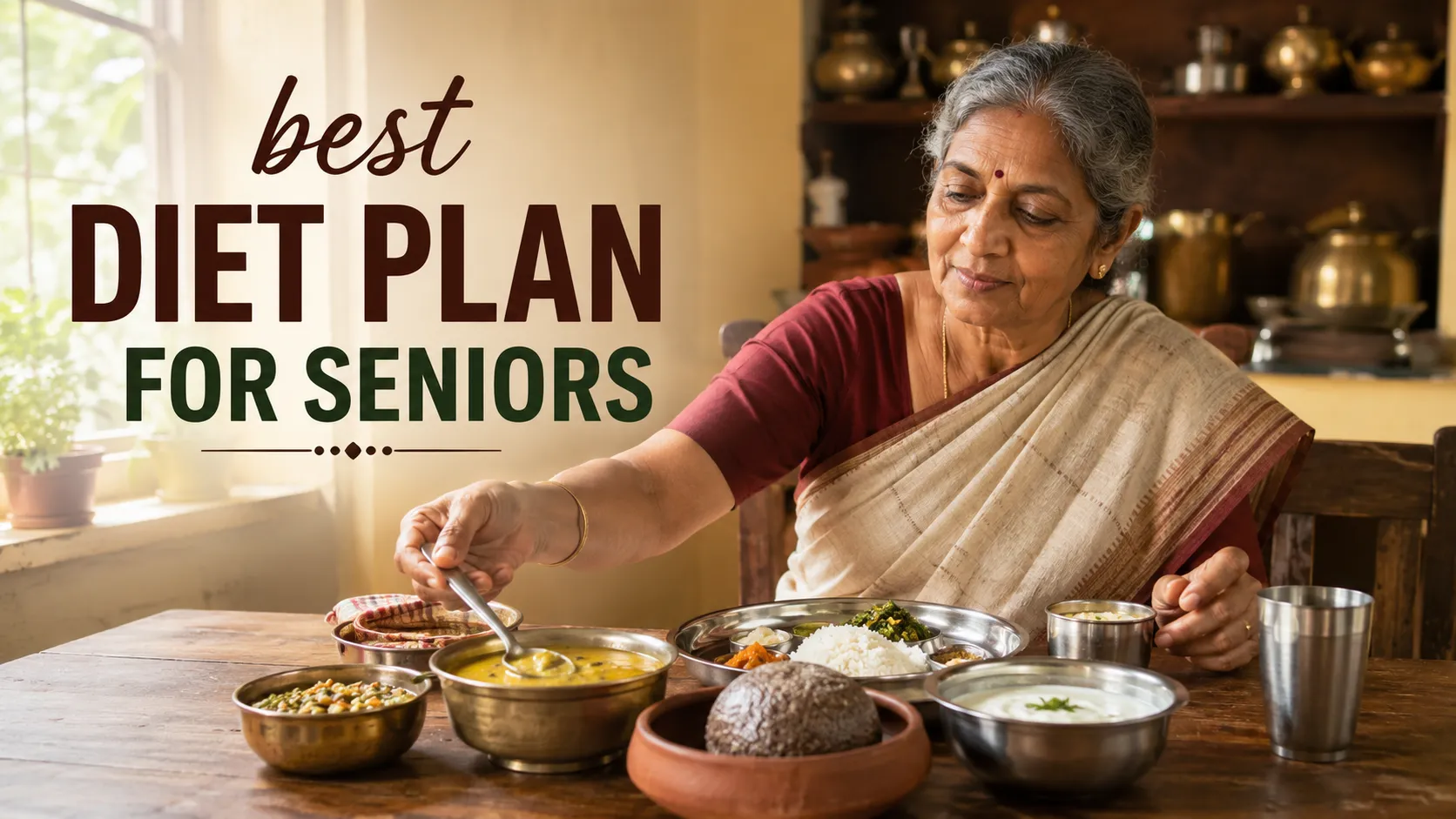
What counted as “eating healthy” at 35 does not work the same way at 65. The body shifts in ways that change what it needs from food:
- Metabolism slows, burning fewer calories at rest
- Appetite softens, often without a clear reason
- Digestion grows more selective
Calorie needs drop, but nutrient needs do not follow the same path; they often rise. That is the real challenge behind the best diet plan for seniors: eating less while getting more from every meal. In this article, we cover what to prioritise and what to scale back.
Why the Best Diet Plan for Seniors Looks Different After 60
Age brings physiological changes that directly affect how the body processes food:
- Stomach acid production decreases, slowing nutrient absorption.
- Appetite reduces, sometimes from medication, sometimes as taste and smell dim with age.
- Muscle loss, called sarcopenia, begins quietly around 35 and speeds up after 60.
That last point matters most. Muscle mass is not just about strength; it supports balance, posture, metabolic rate, and the ability to get through daily tasks without fatigue. A diet that does not actively support muscle is one that quietly lets the body decline. The goal at this stage is less about weight management and more about preserving the strength that keeps everyday life manageable.
Key Nutrients in the Best Diet Plan for Seniors
Certain nutrients become non-negotiable with age. The body either absorbs them less efficiently or uses them up faster, and deficiency shows up quickly in energy, bone density, and muscle strength:
1/ Protein
Frontiers in Nutrition recommends 1 to 1.2 grams per kilogram of body weight daily for adults over 65, yet most seniors fall short. Harvard Health found nearly half of adults over 51 do not meet daily protein requirements.

2/ Vitamin B12 and Vitamin D
Both are widespread deficiency concerns in India, especially for vegetarians and those with limited sun exposure, and directly affect bone strength, energy, and cognitive function
When intake stays insufficient, all three areas decline noticeably. These nutrients are not supplements for the unwell; they are daily requirements for staying functional, mobile, and independent.
| Nutrient | Why It Matters | Key Indian Sources |
| Protein | Prevents muscle loss; supports immunity and repair | Dal, paneer, eggs, fish, curd, rajma |
| Calcium | Maintains bone density; reduces fracture risk | Dahi, milk, ragi, til (sesame seeds) |
| Vitamin D | Enables calcium absorption; supports muscle function | Sunlight, fortified foods, eggs |
| Vitamin B12 | Nerve health, energy production; poorly absorbed with age | Eggs, fish, dairy; supplements if vegetarian |
| Fibre | Digestive health, blood sugar regulation | Whole grains, vegetables, legumes |
| Healthy Fats | Joint lubrication, brain health | Nuts, seeds, ghee in moderation |
Recommended Reading:
If muscle loss is a concern alongside diet, this article on how to prevent muscle loss after 45 covers what happens in the body and how to slow it down.
What to Eat: Foods Seniors Should Prioritise Daily
A senior-friendly Indian diet does not need to be complicated or unfamiliar. Most of what works is already part of traditional cooking; it just needs to be chosen deliberately and portioned consistently:
1/ Protein at every meal
Dal, rajma, chana, curd, paneer, eggs, or fish should anchor breakfast, lunch, and dinner, not appear as an afterthought

2/ Calcium-rich staples
Ragi is one of the richest plant-based calcium sources, while dahi, milk, and til (sesame seeds) make practical daily additions

3/ Whole grains over refined
Jowar, bajra, oats, and brown rice provide fibre and sustained energy without spiking blood sugar

4/ Seasonal vegetables
Cooked soft for easy digestion, leafy greens, carrots, pumpkin, and bottle gourd are gentle on the gut and nutrient-dense

5/ Healthy fats in small amounts
A teaspoon of ghee, a small handful of nuts, or a tablespoon of seeds supplies essential fatty acids without overloading digestion

6/ Consistent hydration
Seniors often lose the thirst signal with age, so regular sips through the day, topped up with chaas, soups, or coconut water, work better than waiting to feel thirsty
For seniors managing blood sugar alongside their diet, these healthy habits for diabetics cover how food and routine work together to keep glucose stable.
The best diet plan for elderly individuals is not a rigid prescription. It is a consistent pattern of nutrient-dense, easy-to-digest food choices that match the body’s changing needs, and Indian kitchens already offer the variety to make that achievable.
What Foods Should Seniors Limit or Avoid?
Knowing what works against the body at this stage is equally important. A few consistent reductions make a meaningful difference over time:
1/ Excess salt
Sodium sensitivity increases with age, and high intake raises blood pressure and strains the kidneys. Processed foods, pickles, and packaged snacks are the biggest sources
2/ Refined carbohydrates
White bread, maida-based snacks, and white rice in large quantities spike blood sugar and crowd out more nutritious options
3/ Fried foods
Harder to digest as stomach acid decreases with age; occasional consumption is fine, but daily habits are the concern
4/ Sugary drinks
High in sugar, low in nutrition; water, chaas, or unsweetened nimbu pani make simple, effective swaps
5/ Ultra-processed foods
Biscuits, namkeen, and instant soups run high in sodium, refined carbs, and additives, with little of the protein and fibre seniors actually need
Diet shapes what the body has to work with, but without physical activity, even a well-nourished body loses muscle. Pairing good nutrition with strength training equipment for seniors is the most effective combination for slowing that loss, and reducing these foods makes room for what actually supports strength, digestion, and long-term independence.
Best Diet Plan for Seniors Works Best with the Right Movement
Diet provides the raw material: protein, calcium, vitamins. But the body needs a reason to use it, and without regular resistance training, even a nutritionally sound diet cannot stop muscle from declining with age. Food alone cannot signal the muscles to stay strong; that signal comes from movement.
Strength training for older adults through a machine like Ferra is built around exactly this need:
- Concentric-only resistance works the muscle during the effort phase but never loads the joint on the way down, removing the phase most linked to soreness and injury
- Resistance adjusts automatically to current strength levels, so there is no risk of overloading
- Sessions can start from just a few minutes a day, keeping the habit manageable at any fitness level
Check out Ferra and give your body the movement it needs to turn good nutrition into lasting strength.
Conclusion
Getting nutrition right after 60 is not about eating less or following a rigid plan. It is about understanding what the body needs more of: protein, calcium, key vitamins.
The adjustments are small. More dal at meals. Less maida. A glass of chaas instead of a sugary drink. A handful of nuts as a snack. Done consistently, these choices compound.
Diet and movement work together. A body that eats well and moves regularly holds on to the strength that shows up where it matters most: carrying groceries without strain, climbing stairs without pause, and ending the day with energy left over.
Best Diet Plan for Seniors: Frequently Asked Questions
1/ Is protein powder safe for seniors to use?
Yes, for most seniors, a good-quality whey or plant-based protein supplement is safe and can be helpful when food intake alone does not meet daily requirements. It is best used to supplement meals, not replace them. Anyone with kidney concerns should check with their doctor before starting.
2/ How much water should seniors drink in a day?
A practical starting point is 6 to 8 glasses of water per day, though individual needs vary by body weight, climate, and activity level. Seniors often lose the thirst signal with age, so setting a regular sipping schedule works better than waiting to feel thirsty. Chaas, soups, and coconut water count toward daily fluid intake.
3/ Does a senior diet need to change if someone has diabetes?
Yes. Seniors managing diabetes benefit from reducing refined carbohydrates and sugar, choosing lower glycemic grains like jowar and oats, and spreading meals evenly through the day rather than eating large portions at once. Protein and fibre at every meal help stabilize blood sugar. A registered dietitian can help personalise the plan.
4/ Can seniors build muscle with diet alone, without exercise?
Diet and exercise each play a distinct role. Protein and key nutrients give the body what it needs to build and repair muscle, while resistance training is what signals the muscles to actually use that fuel for growth. Together, they produce far better outcomes than either one alone. Machines like Ferra, which use concentric-only resistance, make this kind of training safe and manageable at home alongside a nutrient-rich diet.
5/ Are there foods seniors should avoid entirely?
Not necessarily. Moderation matters more than elimination for most foods. That said, high-sodium processed foods, fried snacks consumed daily, and sugary drinks offer very little nutritional value and consistently work against the goals of a senior diet. Reducing these consistently, rather than cutting them out completely, is a more sustainable approach.

Anurag Dani is the Co-Founder of Ferra, a company dedicated to redefining healthy ageing through strength training. Drawing from his experience building fitness and healthy ageing solutions for adults, he writes about healthy ageing to help readers stay strong and independent as they age.