Do simple things like climbing stairs or carrying groceries suddenly feel harder than they used to? If a recent blood test showed low hemoglobin, that heaviness in your limbs is not just in your head. Anemia affects how much oxygen reaches your muscles, and that shows up as fatigue long before it shows up as anything else. The question that usually follows a diagnosis is whether moving more helps or makes things worse, and whether strength training specifically has any role to play here.
Why Anemia Leaves You Feeling Weak, Not Just Tired
Hemoglobin carries oxygen from the lungs to every muscle in the body. When hemoglobin runs low, muscles get less oxygen during activity, and that is why even light movement can feel disproportionately draining.
This shows up as two separate problems that often get lumped together as one:
- Fatigue: A general lack of energy that affects mood, focus, and motivation
- Muscle weakness: A reduced ability to perform physical tasks, even when the person feels rested
Older adults tend to notice the second one first. A jar that used to open easily suddenly needs both hands. Getting up from a low chair takes an extra push. These are muscle function signals, not just tiredness, and they respond differently to rest than they do to movement. Recognising this distinction matters. Addressing fatigue alone will not necessarily rebuild the strength that anemia has quietly worn down.
The Link Between Anemia and Muscle Strength
Research backs up what many older adults already sense in their own bodies. A study of community-dwelling adults over 65 found that lower hemoglobin levels were closely associated with reduced grip strength, one of the simplest and most reliable markers of overall muscle function. Other population data have found a similar pattern, with low grip strength closely linked to anemia in older adults more broadly.

This matters for everyday life in very practical ways:
- Reduced grip strength makes carrying bags, opening containers, and gripping railings harder
- Weaker leg and back muscles make stairs and getting up from chairs more tiring
- The combination often gets mistaken for “just getting older” instead of an addressable strength gap
Recommended Reading:
If grip strength is something you have noticed slipping, these grip strength exercises are a gentle place to start rebuilding it.
Can Strength Training Help With Anemia-Related Fatigue?
Strength training does not treat anemia. It cannot correct low iron, B12, or folate levels, and it will not replace whatever your doctor prescribes for the underlying cause. What it can do is protect and rebuild the muscle function that anemia tends to erode over time, which often makes daily fatigue feel more manageable.
Here is what appropriately dosed movement can support, when paired with proper medical treatment rather than used instead of it:
- Energy levels and quality of life in people managing anemia
- Physical performance and daily function, even in the presence of other health conditions
- Muscle strength that has already started to decline, making it easier to reverse muscle loss once energy allows for it
This lines up with what’s already known about general strength training in older adults, where consistent resistance work supports physical function even alongside other health conditions. The main barrier is usually not motivation but guesswork around load and intensity, which is exactly what removes the added risk once that guesswork is taken out of the equation
How to Approach Exercise Safely With Low Energy
The goal with anemia is never to push through exhaustion. It is to move in a way that supports the body without draining it further.
- Start with very short sessions and build up gradually as energy allows
- Choose low-intensity movement over anything that spikes your heart rate quickly
- Stop and rest if you feel dizzy, short of breath, or notice chest discomfort
- Time workouts for when you naturally feel more energised during the day
- Pair movement with adequate protein intake to support the muscle you are working to maintain
Some days will call for gentler movement than others. On those days, low-impact exercises are a safer starting point than anything that raises your heart rate quickly.
A quick note:
Consult your doctor before starting or changing an exercise routine if your anemia is moderate to severe, or if you experience symptoms during daily activities. Building consistency at a pace your body can handle protects both your energy and your muscle strength over the long run.
Strength Training Equipment for Seniors Built for Low-Energy Days
Manual weights make this harder than it needs to be. When energy is unpredictable, it is difficult to know what load is safe on a good day versus a low one, and guessing wrong either strains the body or wastes the effort entirely.
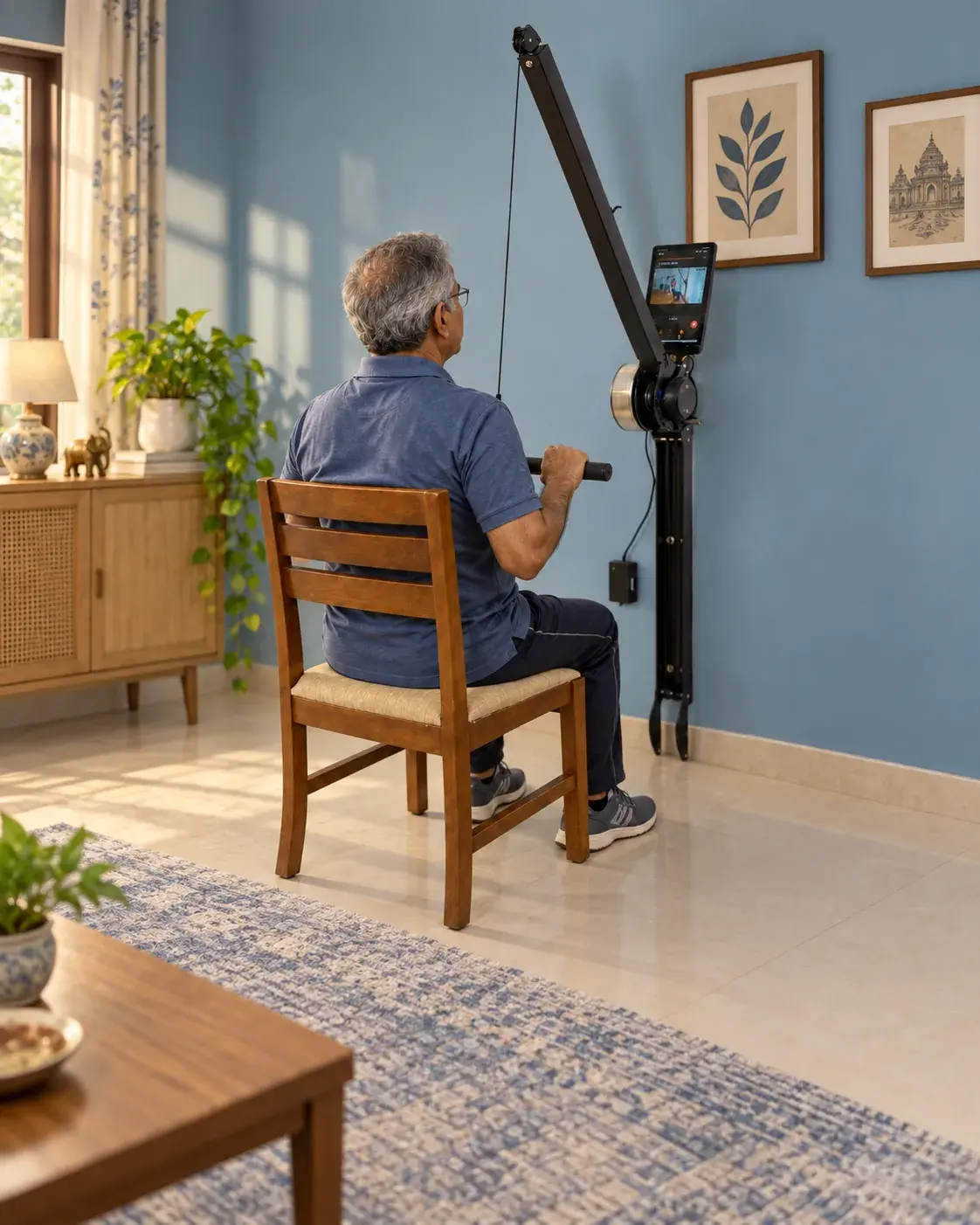
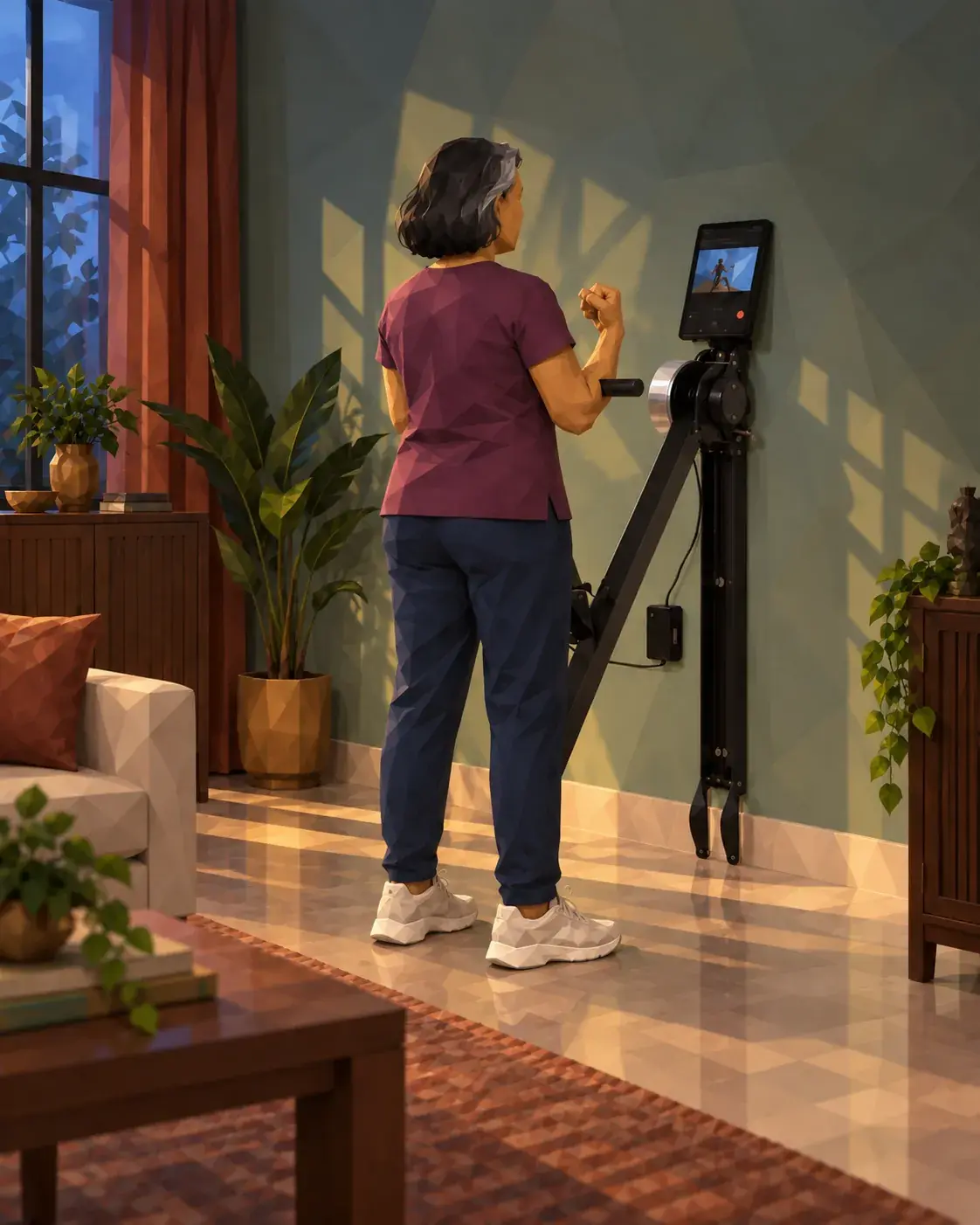
This is exactly the gap that an all-in-one home gym machine like Ferra is designed to close:
- Concentric-only resistance means the machine resists your effort but never loads you on the way down, removing the muscle strain that follows a hard or over-ambitious session
- Resistance adjusts automatically to your current strength, so there is no risk of overestimating what your body can handle on a lower-energy day
- Tablet-guided coaching removes the guesswork around form and load, so every session stays within a safe range regardless of how much energy you’re starting with
The result is a way to stay consistent without second-guessing whether today is a good day to push or a day to hold back.
Conclusion
Anemia can make even ordinary movement feel like a bigger effort than it should. But the fatigue it causes and the muscle weakness that comes with it are not the same problem, and they don’t need to be solved with rest alone. Working with your doctor to treat the underlying cause, while gently rebuilding strength alongside it, gives your body the best chance of keeping up with daily life. Over time, the tasks that once left you drained start to feel ordinary again.
Frequently Asked Questions About Exercise for Anemia
1. Can strength training cure anemia?
No. Strength training cannot correct the underlying cause of anemia, whether that is low iron, B12, folate, or a chronic condition. It can support muscle strength and function alongside proper medical treatment, but it is not a substitute for it.
2. Is walking or strength training better for anemia-related fatigue?
Both play a role, and they are not competing options. Walking supports cardiovascular health and is easier to sustain on low-energy days, while strength training protects the muscle function that anemia tends to reduce. A combination of both, at a gentle pace, tends to work better than relying on either alone.
3. What symptoms mean you should stop exercising?
Dizziness, chest pain, an unusually rapid heartbeat, or severe shortness of breath are all signs to stop immediately and rest. If these symptoms happen regularly during light activity, it is worth discussing with a doctor before continuing any exercise routine.
4. How long before energy levels improve?
This depends on the underlying cause of anemia and how well it responds to treatment, so there is no fixed timeline. Many people notice gradual improvements in daily energy as hemoglobin levels recover and consistent, low-intensity movement becomes part of the routine. Machines like Ferra, which use concentric-only resistance, are designed specifically to make that consistency safer to build on low-energy days.
5. Does diet matter as much as exercise?
Yes, often more so. Iron, B12, and folate intake directly address the cause of anemia, while exercise supports the muscle and energy side effects. Neither replaces the other, and both work best when addressed together under a doctor’s guidance.
Build everyday strength — at your pace
Explore Ferra to see how strength training fits into life after 50 — it’s not about building muscle for its own sake, but moving with confidence.

Anurag Dani is the Co-Founder of Ferra, a company dedicated to redefining healthy ageing through strength training. Drawing from his experience building fitness and healthy ageing solutions for adults, he writes about healthy ageing to help readers stay strong and independent as they age.