Is there a right way to move a shoulder after surgery, or is any movement risky?
It is a fair worry. Too little movement carries its own risk too, since stiffness sets in fast.
A shoulder that barely moves in the first weeks often takes longer to recover full function, while moving too soon can undo weeks of healing.
This guide breaks down exactly which exercises after shoulder surgery are safe at each stage, so nothing gets rushed.
What Happens to Your Shoulder in the First Weeks After Surgery
Recovery does not start with lifting or stretching. It starts with rest and small, guided movement.
Most surgeons keep the arm in a sling for the first four to six weeks while the repaired tissue heals. Movement in this window is passive, meaning a therapist or trained family member moves the arm through a gentle range rather than the person moving it alone.
- Pendulum swings, where the arm hangs loosely and sways gently, often begin within the first few days
- The sling stays on for most of the day, including sleep, unless a doctor says otherwise
- Reaching, pushing, lifting, or using the arm to prop up the body should be avoided completely
This phase feels slow, but the joint stays just mobile enough to avoid freezing up while the tissue heals underneath.
When Can You Start Moving the Shoulder on Your Own?
Around the four to six week mark, most people move from passive movement to active-assisted movement, guiding their own arm with light support instead of relying entirely on a therapist’s hands. A therapist usually introduces resistance bands and simple assisted-motion exercises here, though the goal still isn’t strength. It’s teaching the shoulder to move through its available range without pain or compensation from other muscles, and rebuilding the confidence to move it at all, since many people hold a shoulder stiff out of habit long after the tissue has actually healed enough to move freely.
- Assisted shoulder flexion, using the other arm or a stick to help lift the operated arm forward
- Table slides, where the hand rests on a table and slides forward while seated
- Wall exercises where the fingers walk up a wall to encourage a fuller reach
Progress here is measured in range of motion, not effort, so pushing through pain to move faster usually backfires and delays the strengthening phase that comes next. A therapist typically checks range of motion at each visit and adjusts the pace based on how the joint actually responds, rather than following a fixed calendar.
Recommended Reading:
Wondering how this compares to the stiffness that shows up without surgery? These frozen shoulder exercises at home offer useful reference points once similar movement is cleared.
Safe Strengthening Exercises for Shoulder Surgery Recovery
Once a surgeon or therapist confirms the repair has healed enough, usually between eight and twelve weeks, light strengthening begins. The American Academy of Orthopaedic Surgeons notes that sessions should stay short, letting pain decide the pace rather than a set number of reps, since pushing through discomfort at this stage does more harm than good.
1. Isometric shoulder presses
Press the palm against a wall without moving the arm at all, hold for about five seconds, then release. Because the joint stays still throughout, this is often the first strengthening move introduced, letting the muscles reactivate without putting any load through the healing repair.

2. Scapular squeezes
Sit tall and squeeze the shoulder blades together as if pinching a pencil between them, hold briefly, then relax. Most of the muscles that stabilize the shoulder attach around the shoulder blade, so this move rebuilds that supporting structure before the joint itself is asked to do more work.

3. External rotation with a band
Keep the elbow tucked against the body and bent at ninety degrees, then rotate the forearm outward against light resistance from a band. This targets the rotator cuff directly, the group of muscles most surgeries are repairing in the first place, so it’s usually introduced carefully and progressed slowly.

4. Standing rows
Anchor a resistance band at chest height and pull it toward the body, leading with the elbow rather than the hand. This mimics daily pulling motions like opening doors or lifting bags, which makes it one of the more functional exercises in this phase.

These exercises after shoulder surgery rebuild what surgery alone cannot restore, and consistent strength training for seniors is what decides whether the shoulder returns to full daily use rather than staying functionally weaker than the other side.
Recommended Reading:
For a broader look at building strength without a gym, these exercises for seniors at home follow a similar low-risk approach.
Warning Signs After Shoulder Surgery That Mean You Should Pause
Not all discomfort during recovery is a problem, since some soreness is simply part of tissue healing. But a few signs cross the line into something that calls for a pause and a conversation with a doctor.
- Sharp or sudden pain during a movement that felt fine the day before
- Swelling, warmth, or redness around the surgical site
- A noticeable decrease in range of motion instead of gradual improvement
- Numbness or tingling that spreads down the arm or fingers
Muscle loss around an immobile joint is common, and rebuilding it safely matters as much as regaining motion. Recovery rarely moves in a straight line, and a short pause to check with a professional is safer than pushing through a symptom that does not feel right.
Recommended Reading:
For anyone supporting a parent through this stage, strength training for older adults covers strength work once acute recovery has passed.
Exercises After Shoulder Surgery Depend on the Right Resistance Long-Term
Exercises after shoulder surgery only go so far without a way to keep building strength once formal recovery ends. Free weights bring back the exact risk that months of rehabilitation worked to avoid, since the wrong load can strain a shoulder still rebuilding trust in its own movement.
- No free weights to manage or adjust between sets
- No spotter needed for safe, unsupervised use at home
- No risk of the arm bearing load on the way down
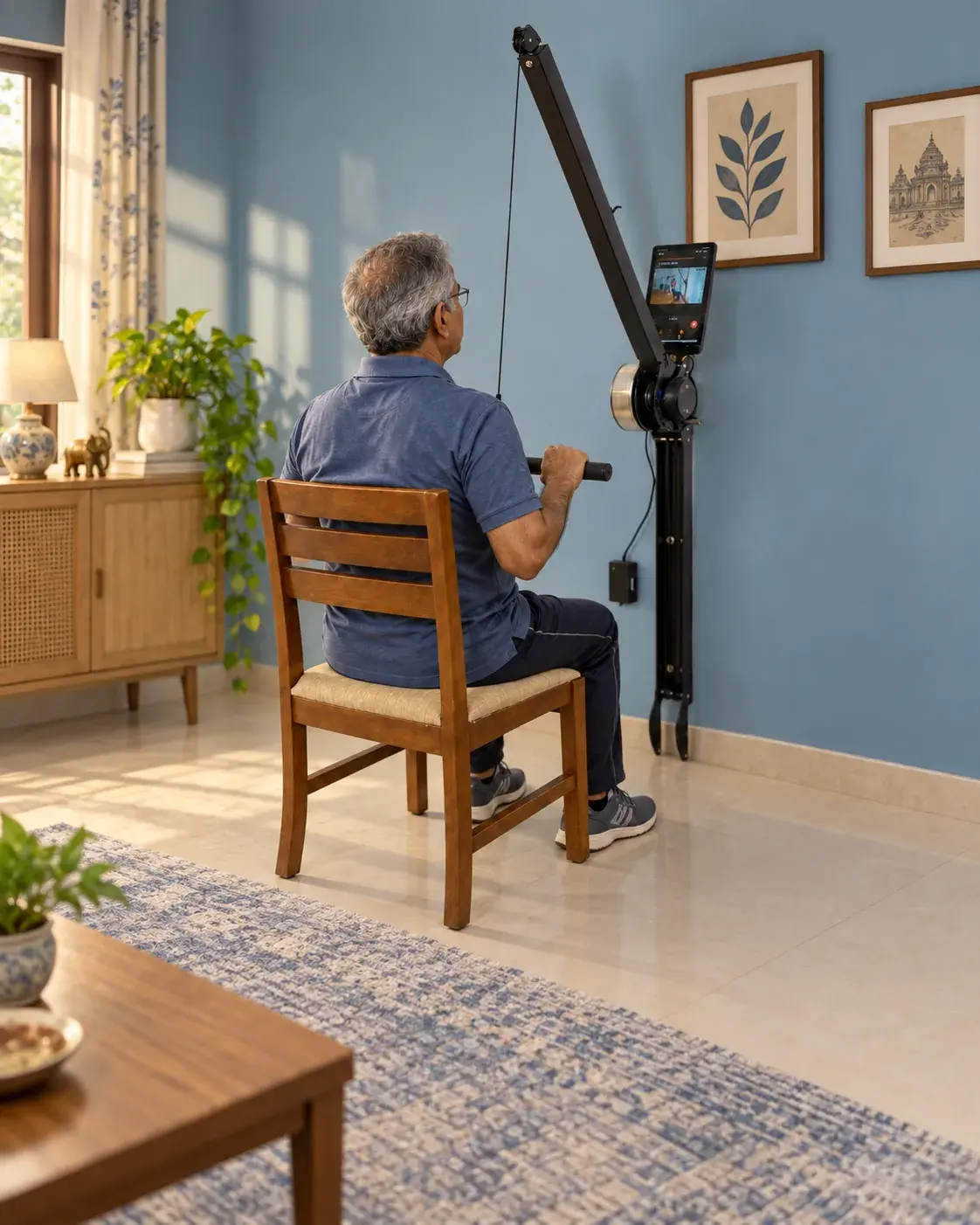
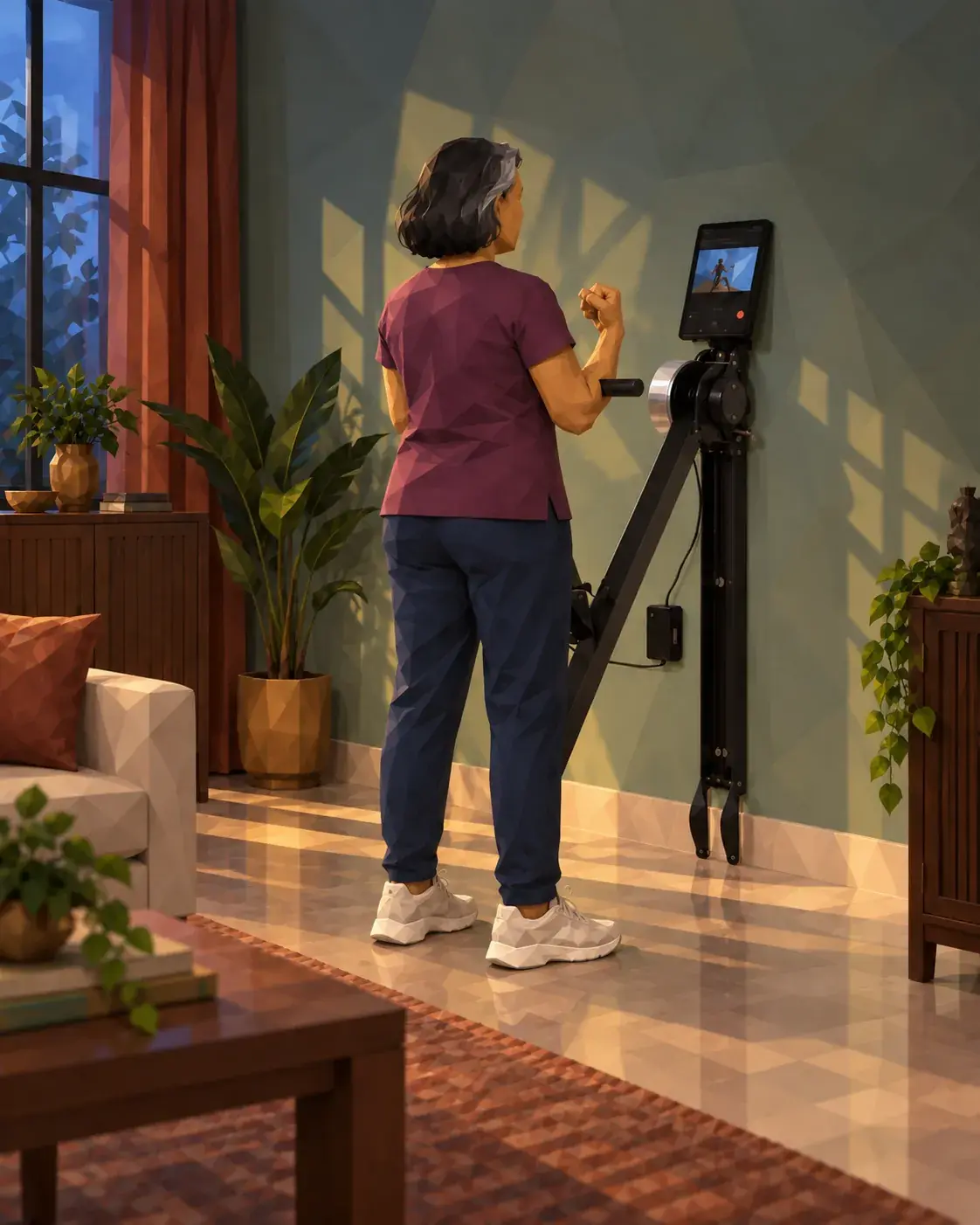
That risk is exactly what a smart home gym machine like Ferra is built to remove. It uses concentric-only resistance, so the machine resists the push but never loads the arm on the way down, taking away the phase that causes most strain-related setbacks. Resistance also adjusts automatically to current strength, so there is no risk of overloading the shoulder on a given day.
Check out Ferra and build the shoulder strength recovery exercises alone cannot finish.
Conclusion
Recovering from shoulder surgery is a process of small, steady wins rather than one big turning point. Each phase, from passive movement to active motion to real strengthening, builds on the one before it.
Stay consistent with the exercises after shoulder surgery your recovery stage allows, and the shoulder that once felt fragile will start to feel like a normal, dependable part of daily life again.
Exercises After Shoulder Surgery: Frequently Asked Questions
1. Is it normal to feel weaker on the operated side months later?
Yes. Muscles around a joint that has been in a sling for weeks lose size and strength quickly, even if the surgery itself went well. This is expected and reversible with consistent strengthening work once a therapist clears it, not a sign the surgery failed.
2. Can shoulder surgery exercises be done without a therapist present?
Early passive exercises need supervision, but many active and strengthening exercises can move to a home routine once a therapist has confirmed correct form. Machines like Ferra, which use concentric-only resistance, are designed to make unsupervised strengthening safer for older adults by removing load on the way down.
3. How long before overhead reaching feels normal again?
This varies by surgery type and individual healing, often taking three to six months for comfortable overhead reach. Rotator cuff repairs tend to take longer than simpler procedures. Consistency with prescribed exercises has more influence on this timeline than age alone.
4. Should exercises stop completely if there is some soreness?
No, mild soreness during early movement is common and different from sharp pain. The exercise should stop if pain is sharp, sudden, or worsens instead of easing with rest. When in doubt, checking with a doctor is the safer choice.
5. Is swimming a good alternative to structured shoulder exercises?
Swimming is not recommended until a surgeon confirms the repair can handle full range of motion, usually well after the early recovery phases. Structured, staged exercises come first because they build strength and control before higher-demand movement is safe.
Build everyday strength — at your pace
Explore Ferra to see how strength training fits into life after 50 — it’s not about building muscle for its own sake, but moving with confidence.

Anurag Dani is the Co-Founder of Ferra, a company dedicated to redefining healthy ageing through strength training. Drawing from his experience building fitness and healthy ageing solutions for adults, he writes about healthy ageing to help readers stay strong and independent as they age.