Why do the knees start aching during simple daily movements?
Climbing stairs, getting up from a chair, or walking to the kitchen can start feeling painful when the knees are not getting enough support from the surrounding muscles.
In many cases, knee pain is a sign that the muscles around the knee have weakened. The joint then starts doing more work than it should.
That is where the right knee exercises for seniors can help.
The Hidden Reason Knee Pain Gets Worse With Age
After 50, muscle mass naturally begins to decline. This affects the quadriceps and hamstrings most clearly because these muscles support and protect the knee joint.
When these muscles weaken:
- Stairs feel harder on the knees
- Squats become more uncomfortable
- Walking places more pressure on the joint
- The knee absorbs more impact with every step
Research on hip pain exercises shows a similar pattern. Pain in major joints often comes from reduced muscle support, not only from the joint itself. The knee works the same way. Strengthening the muscles around it gradually shifts pressure away from the joint and can help reduce daily aches.
6 Exercises Seniors With Knee Pain Should Avoid
Before starting any routine, it helps to know what makes knee pain worse.
Avoid movements like:
- Deep squats
- Full lunges
- Stair-climbing workouts
- Running
- Jumping
- High-impact exercises
These movements can put too much stress on a knee joint that is already under strain.
If you also have lower back stiffness, follow the same rule. Start with low-range, controlled movements. Stop any exercise that causes sharp or worsening pain.
6 Knee Exercises for Seniors That Reduce Pain Over Time
1. Seated Leg Extensions

Sit upright in a sturdy chair with feet flat on the floor. Slowly straighten one leg until it’s parallel to the floor, hold for three seconds, then lower. Repeat 10 times per leg. This targets the quadriceps directly, with no knee stress on the way up or down.
2. Mini Wall Squats

Stand with your back against a wall, feet about shoulder-width apart. Slide down just a few inches, as if beginning to sit, then hold for five seconds and rise slowly. This builds functional leg strength within a safe, limited range.
3. Straight Leg Raises

Sit in a chair with one leg straightened out in front of you. Tighten the thigh muscle and hold for five seconds, then lower. 10 repetitions per leg. This strengthens the quad without bending the knee at all, making it one of the safest starting points for anyone with exercises at home as their only option.
4. Standing Hamstring Curls

Hold the back of a chair for balance. Stand on one leg and slowly bend the other knee, bringing the heel up toward your hip. Hold for three seconds, then lower. 10 reps per side. This trains the back of the thigh, which plays a key role in knee stability while walking.
5. Calf Raises

Stand behind a chair, holding it lightly for support. Rise up onto the balls of your feet, hold for two seconds, then lower slowly. The calves absorb shock during walking and standing, and keeping them strong takes meaningful pressure off the knee.
6. Glute Bridges

Lie on your back with knees bent and feet flat on the floor. Press into your feet and lift your hips off the ground until your body forms a straight line from shoulders to knees. Hold for three seconds, lower. This strengthens the glutes and hips, which are the primary support structure behind every knee movement.
How Often Should Seniors Do Knee Strengthening Exercises?
Start with short, controlled exercises once a day. Consistency matters more than long or intense workouts. Gentle seated exercises can usually be done daily without issue.
Most people notice a meaningful reduction in knee discomfort after four to six weeks of regular practice. As many strength training equipment for seniors resources emphasize, lasting results come from consistency, not intensity.
Progress gradually. Increase repetitions before adding resistance. If an exercise causes sharp pain instead of mild effort, stop, rest, and try again another day.
Why Seniors Need Strong Legs for Knee Health
These six exercises reduce pain by rebuilding the muscle support your knees depend on. But for many seniors, knee discomfort is only part of a bigger issue. Overall leg and lower-body strength naturally declines with age, and bodyweight exercises can only provide so much resistance over time.
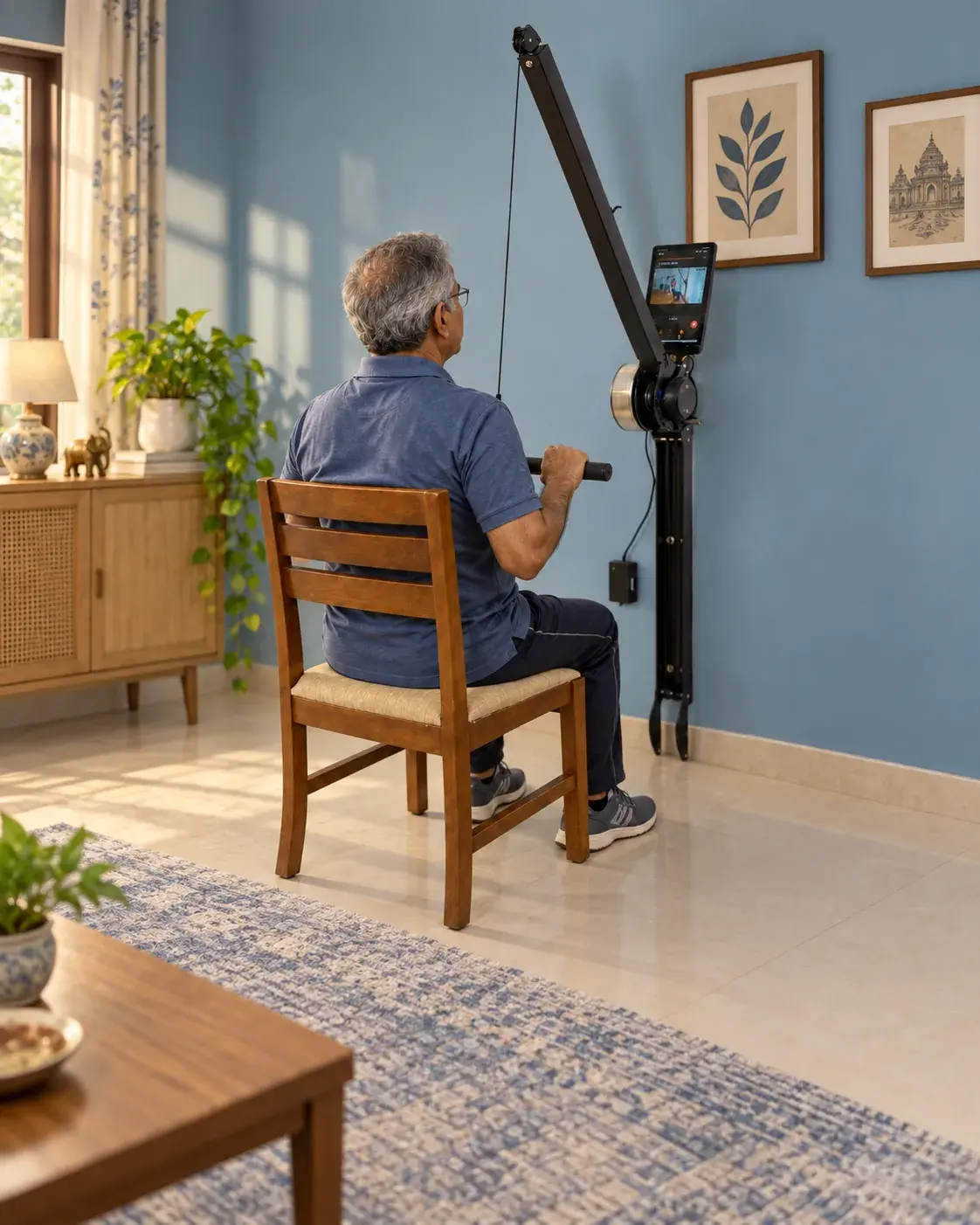
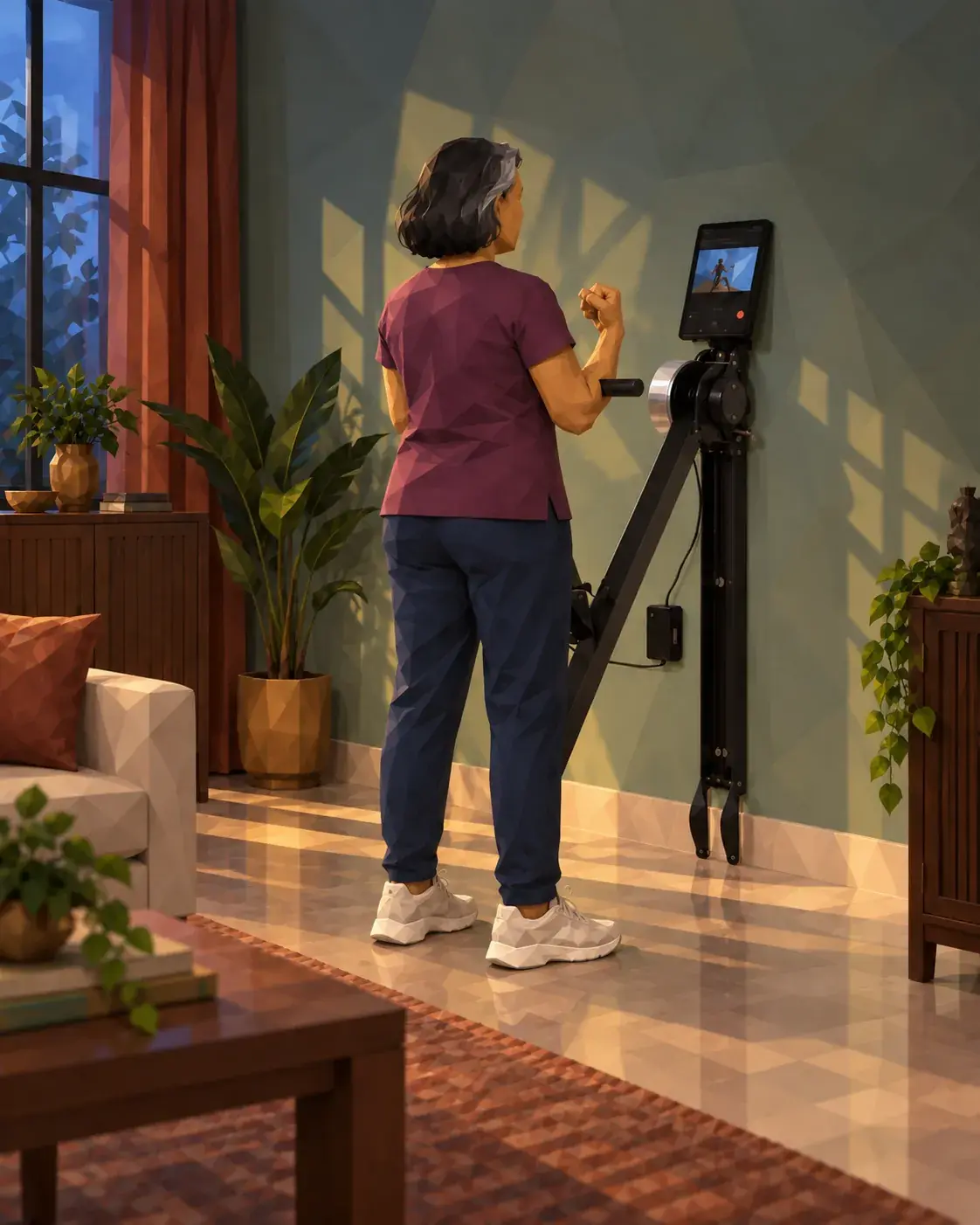
A long-term approach to strength building can help support healthier, more stable knees. Ferra, a strength training equipment for seniors, is designed with this goal in mind.
- Uses concentric-only resistance
- Removes load during the return movement
- Minimizes stress on knee joints
- Helps reduce next-day soreness
- Adjusts resistance digitally to your ability
- Lowers the risk of overloading weaker joints
By making strength training more joint-friendly, Ferra helps seniors build the leg strength needed to support balance, mobility, and knee stability. Check out Ferra and start building the strength that helps keep your knees steady.
Conclusion
Knee pain is common in older adults, but avoiding movement often makes the problem worse. The muscles around the knee need regular exercise to stay strong and support the joint. These six low-impact exercises are a safe way to get started. Begin with the ones that feel comfortable, stay consistent, and gradually build strength over time. As your leg muscles get stronger, they can better support your knees and help make everyday movement easier.
Knee Exercises for Seniors: Frequently Asked Questions
1/ Can you do these knee exercises if you have been diagnosed with osteoarthritis?
Yes, with appropriate care. Low-impact strengthening exercises are generally recommended for osteoarthritis because stronger surrounding muscles reduce the load on the joint itself. Avoid movements that cause sharp pain, and check with your doctor if you are unsure which exercises suit your specific diagnosis.
2/ How long before these exercises start reducing knee pain?
Most people notice improvement after four to six weeks of consistent practice. The early changes are often subtle, such as less stiffness in the morning or easier stair climbing, before a more noticeable reduction in pain sets in.
3/ Is it safe to exercise if your knee is swollen or inflamed?
No. If the knee is actively swollen or inflamed, rest and consult a healthcare provider first. Exercising through active inflammation can worsen the joint’s condition. Once swelling has settled, gentle strengthening can resume gradually.
4/ Do you need any equipment to do these exercises?
No. All six exercises can be done using a chair, a wall, and a flat floor. For older adults who want to add resistance as they progress, options like light ankle weights or resistance machines like Ferra can help build strength more effectively over time without joint stress.
5/ Should you feel pain during these knee exercises?
Mild effort and muscle fatigue are normal. Sharp, worsening, or joint-specific pain is not. If any exercise produces pain in the knee itself rather than in the working muscle, stop immediately and rest. Pain during an exercise is a signal to adjust, not to push through.
6/ Is walking enough to strengthen the knees, or do you need targeted exercises?
Walking supports knee health, but it primarily maintains what you already have. Targeted strengthening exercises are what rebuild muscle capacity around the joint. For seniors experiencing ongoing knee pain, walking alone is usually not sufficient to reverse the muscle weakness that’s contributing to it.
Build everyday strength — at your pace
Explore Ferra to see how strength training fits into life after 50 — it’s not about building muscle for its own sake, but moving with confidence.

Anurag Dani is the Co-Founder of Ferra, a company dedicated to redefining healthy ageing through strength training. Drawing from his experience building fitness and healthy ageing solutions for adults, he writes about healthy ageing to help readers stay strong and independent as they age.