Does morning stiffness make exercise feel impossible?
For many older adults living with arthritis, that first stretch of the day can be the hardest. The instinct is to rest the joints that hurt. But staying still is what makes arthritis worse:
- Joint fluid thickens and stops lubricating properly.
- Muscles weaken and stop protecting the joints.
- Pain increases, and daily tasks become harder.
The good news is that the right kind of movement, done consistently at home, can reduce pain and help you stay independent for longer. This article walks you through a full-body routine of arthritis exercises for seniors that requires no gym and no equipment.
Why Moving More Is the Best Thing You Can Do for Arthritic Joints
It feels counterintuitive. When a joint is painful, resting it seems sensible.
But specialists agree: regular exercise is one of the most effective non-drug treatments for arthritis. CDC research has found that physical activity can decrease arthritis pain and improve function by almost 40%.
Here is why movement helps:
- It lubricates the joints: Movement stimulates synovial fluid, the natural lubricant inside your joints. When you are inactive, this fluid thickens.
- It protects the joints: Strong muscles act as shock absorbers, reducing the load on every step.
- It reduces pain over time: Exercise increases blood flow to cartilage, delivering nutrients it needs to stay healthy.
The body is designed to move, and arthritis does not change that. The key is choosing the right type. Low-impact exercise is where effectiveness and safety meet.
Before You Begin: What Safe Arthritis Exercise Looks Like
Arthritis guidelines recommend three types of movement:
- Range-of-motion exercises: Move joints through their full natural movement. Safe to do daily.
- Strengthening exercises: Build the muscles that protect joints. Avoid targeting the same muscle group more than twice a week.
- Low-impact cardio: Walking, cycling, or swimming keep your heart strong without stressing the joints.
A few safety rules apply every session:
- Warm up first: A few minutes of gentle walking relaxes the muscles before you begin.
- Discomfort vs pain: Mild fatigue is normal, but sharp joint pain is a signal to stop.
- The two-hour rule: If pain lingers more than two hours after a session, shorten the next session.
Recommended Reading:
If arthritis is also affecting your hips, pair this with targeted hip pain exercises for seniors.
Arthritis Exercises for Seniors: A Safe Full Body Routine at Home
1. Seated Shoulder Rolls

Sit upright. Roll both shoulders forward 5 times, then backwards 5 times.
- Why it helps: loosens shoulder joints and eases upper-back tension.
2. Wall Push-Ups

Stand an arm’s length from a wall, palms flat at shoulder height. Bend your elbows to bring your chest toward the wall, then push back to the start. Do 8 to 10 reps.
- Why it helps: strengthens the chest and arms without loading the wrists.
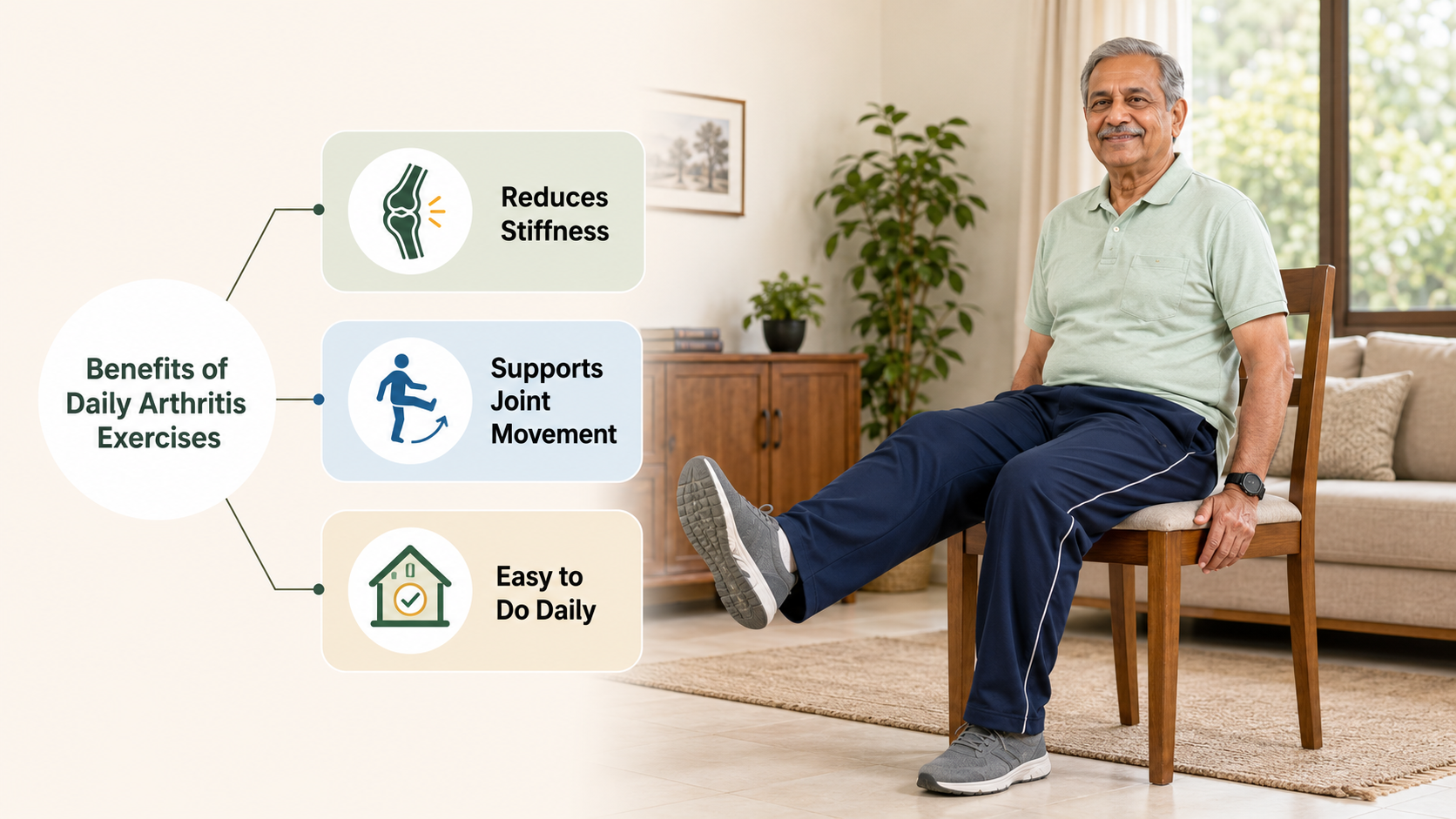
3. Seated Leg Extensions

Sit tall. Straighten one leg, hold for two seconds, and lower. Alternate for 10 reps each side.
- Why it helps: builds thigh muscles that take pressure off the knees.
4. Sit-to-Stand

Sit at the edge of a chair with feet flat on the floor. Rise to standing without using your hands, then lower yourself back down with control. Do 5 reps.
- Why it helps: trains the leg and hip muscles that make getting out of chairs easier.
5. Ankle Circles

Sit upright and extend one leg. Rotate the foot 10 times clockwise, then 10 times counterclockwise. Switch legs and repeat.
- Why it helps: improves mobility and reduces morning swelling.
6. Gentle Seated Torso Twist

Sit upright with hands resting on your thighs. Rotate your upper body to the right, hold for two seconds, then return to centre. Repeat on the left. Do 5 reps on each side.
- Why it helps: keeps the spine mobile and eases mid and lower-back stiffness.
Together, these six moves cover the joints arthritis affects most. For a broader routine, look at these exercises for seniors at home.
How Often Should You Exercise with Arthritis?
Frequency matters more than duration:
- Range-of-motion exercises: Daily, ideally in the morning.
- Strengthening exercises: Avoid targeting the same muscle group more than twice a week.
- Session length: 10 to 20 minutes when starting out.
If back stiffness is also an issue, adding lower back pain exercises on rest days helps without overloading your joints.
Arthritis Exercises for Seniors Need Consistent Strength Behind Them
These exercises work because they build the muscles that protect your joints. But how resistance is applied matters too. Traditional weights load the joints during both the lifting and lowering phases, which is precisely where strain and soreness occur.
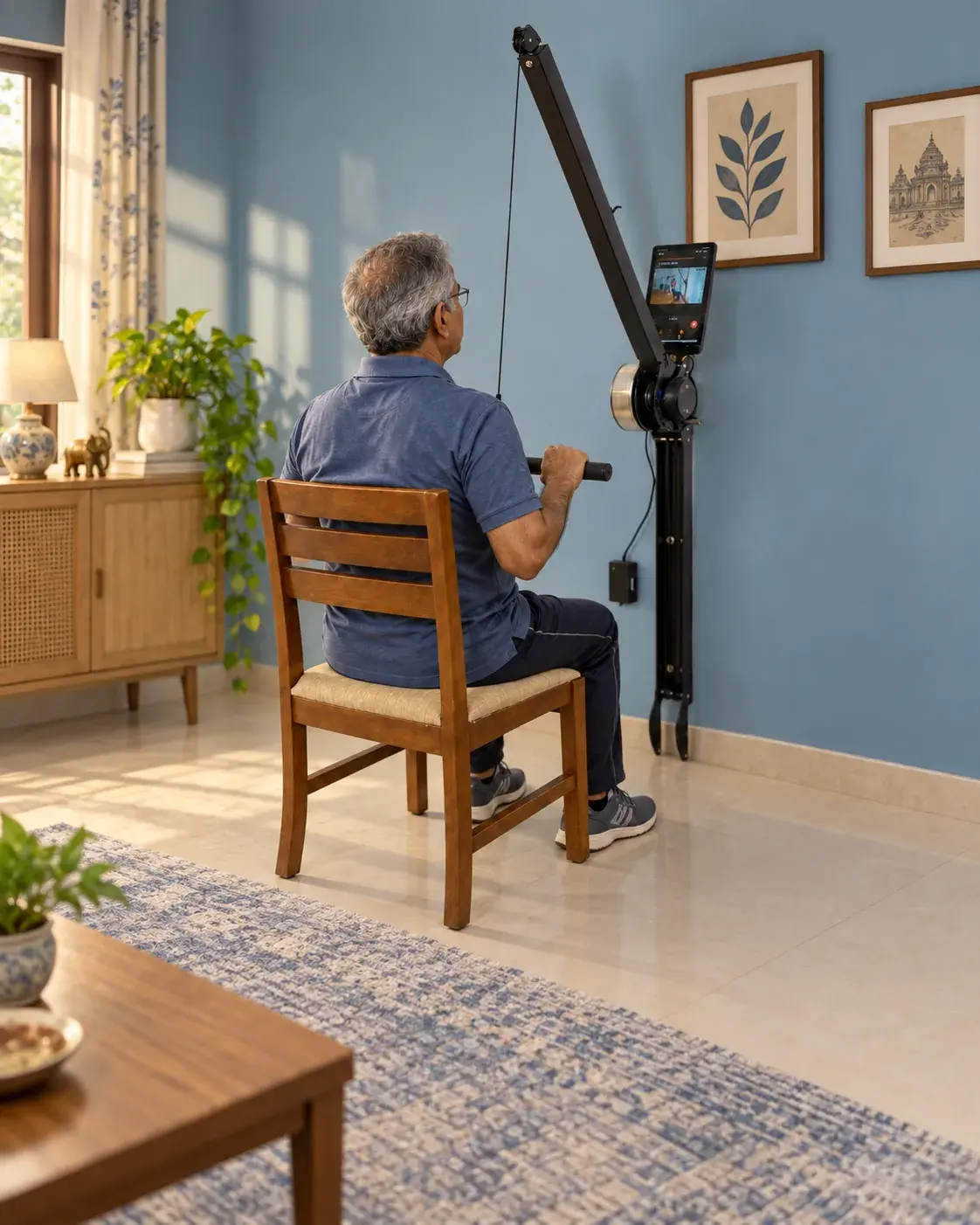
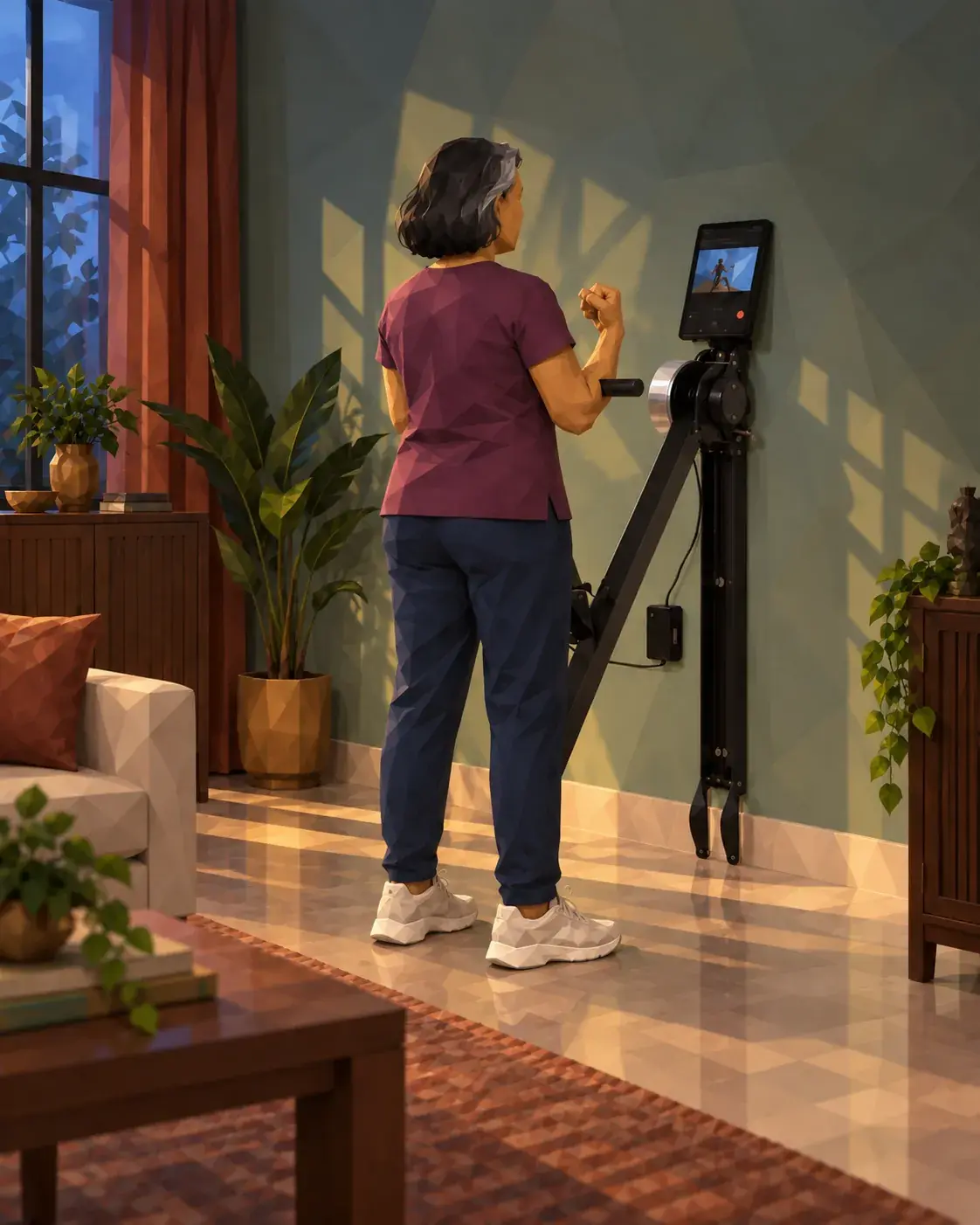
That loading pattern is what strength training equipment for seniors, like Ferra, is designed to eliminate:
- Concentric-only resistance: Our machine resists on the way up but releases load on the way down, removing the phase that causes joint strain.
- Auto-adjusting load: Resistance adapts to your strength, so there is no risk of pushing too hard.
Check out Ferra and build strength without putting your joints under strain.
Conclusion
Arthritis does not mean you stop moving. It means you move smarter. A few minutes of the right movement each day does more for your joints than long stretches of rest.
Start with one set. Five minutes. Today.
A few weeks from now, getting out of a chair will feel different than it does today.
Arthritis Exercises for Seniors: Frequently Asked Questions
1. Is daily exercise safe for people with arthritis?
It depends on the type. Range-of-motion exercises like shoulder rolls are safe daily and help with morning stiffness. Strengthening exercises need at least 48 hours of rest between sessions.
2. What should be done if an exercise causes pain during the routine?
Stop that exercise immediately. Sharp or worsening joint pain is a signal that something is off. Try a shorter range of motion, fewer reps, or check with a physiotherapist.
3. Can elderly adults with severe arthritis still do these exercises?
Yes, with modifications. Reduce the range of motion, do fewer repetitions, or stay fully seated throughout. Chair-based versions of nearly every movement here are available. Always consult a doctor first.
4. How long before these exercises start reducing pain?
Most people notice improvement in stiffness within two to four weeks of regular exercise. Significant pain reduction typically takes six to eight weeks. The key is not missing sessions early on.
5. Is special equipment needed for arthritis exercises at home?
No. The routine in this article requires only a firm chair and a wall. As strength builds, machines like Ferra, which use concentric-only resistance, are designed specifically to eliminate the soreness risk that traditional weights and resistance bands create for older adults with joint concerns. Resistance also adjusts automatically, so there is no risk of pushing too hard.
6. Is strength training safe for someone with rheumatoid arthritis?
Yes, with modifications and a doctor’s approval. Research consistently shows that resistance training reduces pain, improves function, and preserves muscle mass. Low-impact, controlled movements are preferred over heavy loading.
Build everyday strength — at your pace
Explore Ferra to see how strength training fits into life after 50 — it’s not about building muscle for its own sake, but moving with confidence.

Anurag Dani is the Co-Founder of Ferra, a company dedicated to redefining healthy ageing through strength training. Drawing from his experience building fitness and healthy ageing solutions for adults, he writes about healthy ageing to help readers stay strong and independent as they age.