Does your body ache every time you try to get back to exercise?
Many Indian adults recognise this feeling when they try to return to a walk or a jog.
This is not a fitness failure. It is a signal. The body still wants to move; it just needs a different kind of movement.
That is where a low-impact cardio workout at home comes in.
- It raises your heart rate and improves circulation
- It supports heart health without stressing your joints
- It requires no gym, no equipment, and no fitness background
Five exercises are all it takes to get your body moving again, without the pain.
Why High-Impact Exercise Gets Harder With Age
As the body ages, cartilage in the joints gradually becomes thinner and less able to absorb shock. Recovery from micro-stress takes longer, and what once felt effortless can leave the body sore for days.
Running, skipping, and jumping add significant force to the knees, hips, and ankles. For many Indian adults who have been sedentary for a period or are managing early joint discomfort, these movements carry real risk. Not because they are old, but because the body has not been conditioned for that kind of load.
Low-impact movement keeps at least one foot on the ground at all times. There are no jarring landings. The cardiovascular benefit is the same:
- Heart rate goes up
- Circulation improves
- Stress on joints stays low
That distinction matters more than most people realise when they are deciding whether to start.
What Makes a Workout Low-Impact?
Low impact does not mean low effort. It simply refers to how movement contacts the ground. All of these count:
- Marching in place
- Stepping side to side
- Chair-based movements
- Indoor cycling on a stationary bike
None of these requires jumping or high-speed footwork. The goal is simply to raise your heart rate to a level where you can still speak a sentence but feel your breathing pick up, and sustain that for 15 to 30 minutes.
For Indian adults starting exercise after a long break, even 10 minutes done consistently is a good start.
5 Low-Impact Cardio Moves for Better Fitness at Home
1. Seated Marching

Sit upright on a firm chair with both feet flat on the floor. Lift your right knee toward your chest, lower it, then lift your left. Keep your back straight and your pace steady. Do this for 45 seconds. It raises the heart rate gently while engaging the hip flexors and core, with no standing balance required.
2. Step Touch

Stand with your feet together and arms relaxed at your sides. Step your right foot out to the side, bring your left foot to meet it, then step left and bring the right foot in. Add a small arm swing for more effort. Continue for 45 seconds. This lateral movement works the legs and glutes while keeping both feet close to the ground throughout.
3. Standing March with Arm Swing

Stand tall with feet hip-width apart. Lift alternating knees to about waist height while swinging the opposite arm forward. Keep your core gently engaged and your posture upright. March for 45 seconds. The arm swing increases cardiovascular effort without adding any impact to the lower body.
4. Heel-to-Toe Indoor Walk

Find a clear stretch of about 4 to 6 metres in your home. Walk slowly, making sure your heel touches the ground before the rest of your foot with each step. Turn and walk back. Continue for 45 seconds. This improves ankle stability and balance coordination. Both tend to weaken first when cardio is paused for long periods.
5. Chair Sit-to-Stand

Sit at the front edge of a sturdy chair with feet flat and hip-width apart. Cross your arms over your chest or rest them on your thighs. Lean slightly forward from the hips, stand up slowly, then sit back down with control. Do 10 repetitions. Of all five movements, this one is the most functional. It directly trains your legs for the daily task of getting up from low surfaces.
Recommended Reading:
Strength at home starts with small, repeatable movements. Pair this cardio routine with a few exercises for seniors at home to round out your week.
Why Cardio and Strength Training Both Matter as You Age
Cardio improves the heart, supports circulation, and builds stamina. But it does not address the muscle loss that quietly accumulates with age, which is why stairs feel harder, bags feel heavier, and balance feels less reliable than it used to. That requires dedicated resistance work alongside your cardio routine.
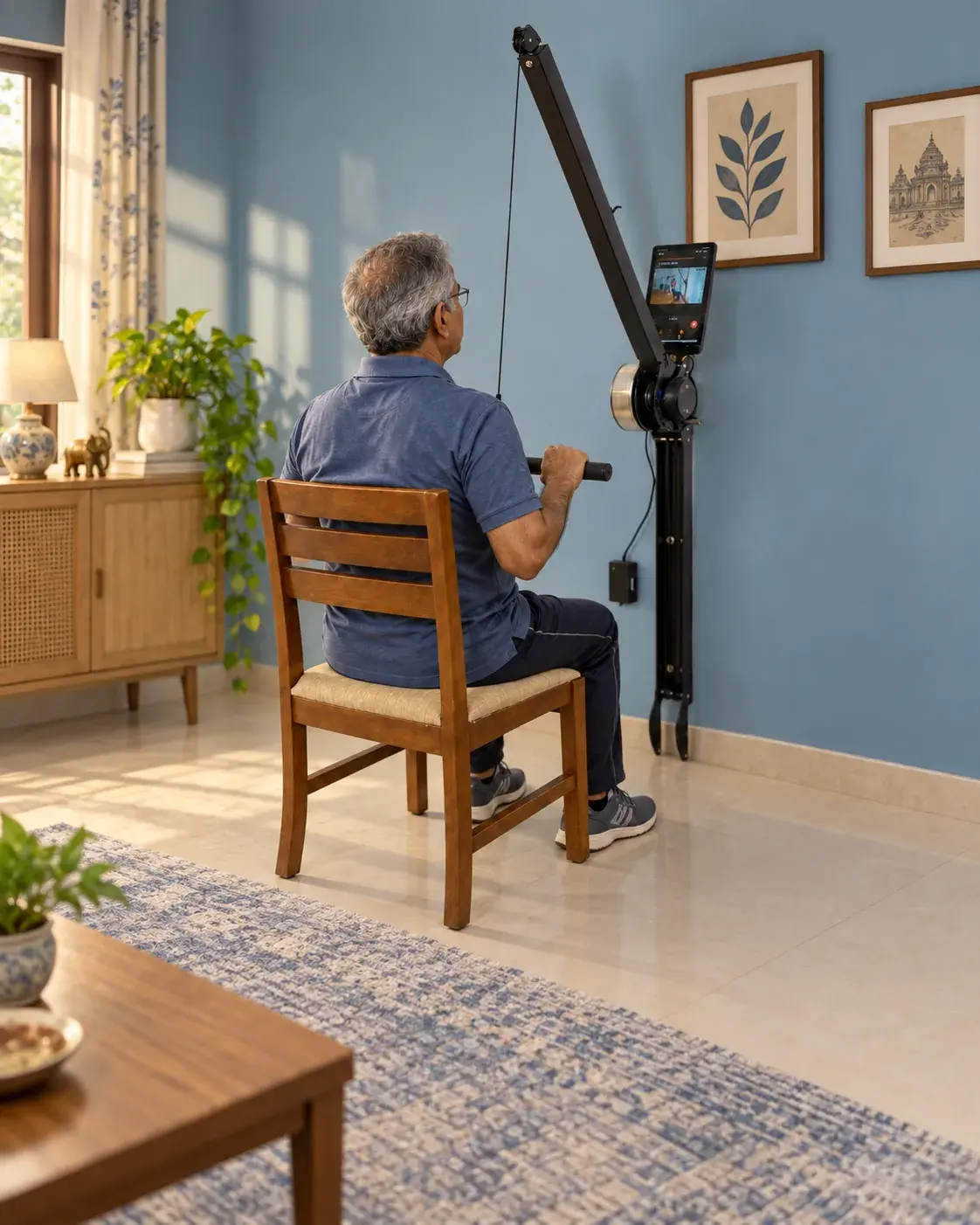
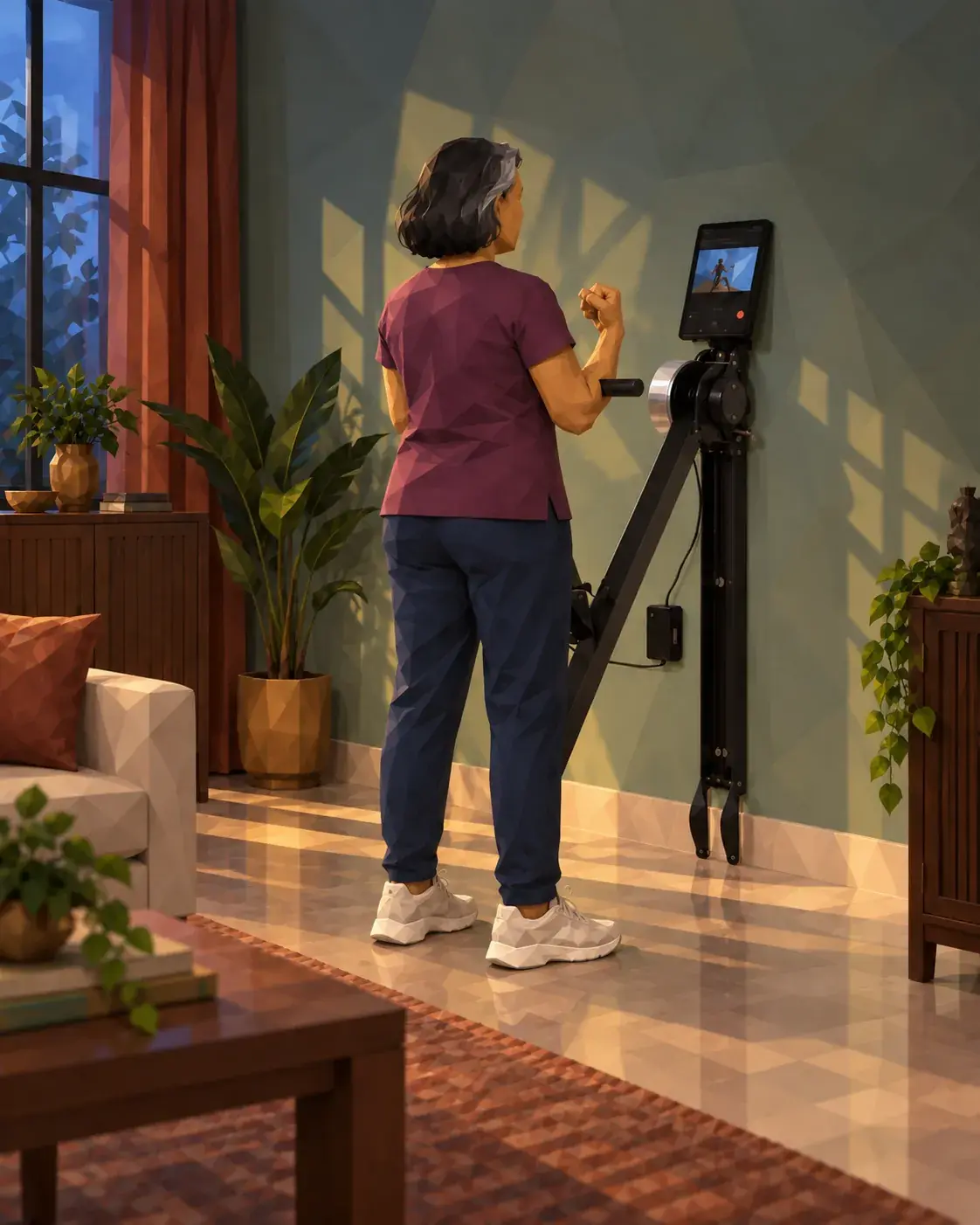
This is where strength training equipment for seniors, like Ferra, becomes useful. Here is what makes it different:
- Ferra uses concentric-only resistance, meaning it gives resistance only when you push, pull, or lift, not during the lowering phase where most soreness and joint stress occurs.
- It adjusts resistance based on your current strength level, so the workout stays challenging without putting too much load on the body.
- This makes strength training feel manageable for older adults who want to build strength without feeling strained after every session.
Check out Ferra to see how it can support your strength training alongside your cardio routine.
Conclusion
Low impact does not mean low value. The five exercises above, done consistently over weeks, will:
- Improve your cardiovascular fitness
- Support joint health
- Make daily movement feel noticeably easier
The key is to keep the entry point small and manageable. Ten minutes is enough to begin. Two rounds are enough to start. The body responds to regular effort, not to occasional bursts of intensity.
A few weeks from now, climbing a flight of stairs or walking across a market without stopping to catch your breath will feel like the natural result of something small you chose to do every day.
Low Impact Cardio Workout at Home: Frequently Asked Questions
1. How many days a week should seniors do a low-impact cardio workout at home?
Daily movement is the goal. Start with three days if returning after a long break, and build toward moving every day as the routine becomes comfortable.
2. Is low-impact cardio enough on its own to stay fit as a senior?
No. Cardio supports heart health and stamina, but does not address muscle loss. Regular resistance training gives the body what cardio alone cannot.
3. What should you do if your knees feel uncomfortable during these exercises?
Start with seated marching or sit-to-stand first. Avoid locking the knee straight, and stop if you feel sharp or worsening pain.
4. Can low-impact cardio help with weight management?
Yes. Regular moderate-intensity cardio burns calories and improves metabolic function over time. Low-impact routines are more sustainable because they can be repeated without recovery days between sessions.
5. How long before results show from doing this regularly?
Most adults notice improved stamina and slightly easier daily movement within two to three weeks of consistent effort. Pairing cardio with Ferra, which uses concentric-only resistance, can accelerate results by rebuilding the muscle tissue that supports every movement you make.
Build everyday strength — at your pace
Explore Ferra to see how strength training fits into life after 50 — it’s not about building muscle for its own sake, but moving with confidence.

Anurag Dani is the Co-Founder of Ferra, a company dedicated to redefining healthy ageing through strength training. Drawing from his experience building fitness and healthy ageing solutions for adults, he writes about healthy ageing to help readers stay strong and independent as they age.