Does your back feel stiff the moment you get out of bed?
Or does it tighten up after sitting for an hour? For seniors (55+), this is one of the most common daily complaints, and it tends to get worse when the back is left still.
After 55, the spinal discs gradually lose moisture, muscles lose elasticity, and the ligaments that hold the spine together become less flexible. The result is a back that takes longer to loosen up and tires more easily. The good news is that consistent stretching can slow this cycle significantly. The five back stretching exercises for seniors below are safe, take under 15 minutes, and require no gym equipment.
Why the Back Gets Tighter After 55
The spine is built for movement, but age-related changes make that movement harder to maintain.
- Disc dehydration: Spinal discs lose fluid over time, reducing their ability to absorb shock and allow free movement between vertebrae.
- Muscle stiffness: Back muscles lose elasticity as a result of changes in muscle tissue and the nervous system, making the spine feel rigid after periods of rest.
- Ligament thickening: Ligaments around the spine can thicken and lose their elasticity with age, which reduces spinal mobility and can compress nearby nerves.
- Inactivity: Sitting for long stretches, whether at work or at home, accelerates the tightening cycle.
Stiffness accelerates when the back is left still, which is exactly why a short daily stretch routine makes a meaningful difference.
5 Back Stretching Exercises for Seniors to Do Daily
These five stretches cover the lower back, mid-back, and hips, the three areas most affected by age-related tension. A quick reference before you begin:
| Stretch | Target Area | Position | Hold Time |
| Knee-to-Chest | Lower back | Lying down | 30 sec each side |
| Seated Spinal Twist | Mid-back | Chair | 20 sec each side |
| Cat-Cow | Full spine | Hands and knees | 10 reps |
| Child’s Pose | Lower back + hips | Floor | 30 sec |
| Standing Back Extension | Lower back | Standing | 10 reps |
1. Knee-to-Chest Stretch
Lie on your back on a firm surface with both knees bent and feet flat on the floor. Bring one knee slowly toward your chest and hold it there with both hands just below the kneecap. Hold for 30 seconds, then switch sides. This decompresses the lower lumbar joints and relieves the inward curvature of the spine that builds up with prolonged sitting.

2. Seated Spinal Twist
Sit upright in a sturdy chair with feet flat on the floor. Cross your arms and rest your hands on opposite shoulders. Slowly rotate your upper body to the right, keeping your hips facing forward. Hold for 20 seconds, then rotate left. Repeat 3 times per side. This targets the mid-back muscles that stiffen from hours of sitting in one position.

Recommended Reading: If this stretch brings up tension in the lower back specifically, these lower back pain exercises for seniors address that area in more detail.
3. Cat-Cow Stretch
Start on your hands and knees with your back in a neutral, flat position. Slowly round your back upward toward the ceiling (cat), dropping your head down. Then gently let your back dip toward the floor (cow), lifting your head slightly. Move between the two positions at a slow, steady pace for 10 repetitions. This mobilises the full length of the spine and loosens the small muscles that run alongside each vertebra.

4. Child’s Pose
Kneel on a mat and sit back toward your heels. Stretch your arms forward on the floor, lowering your chest gently toward your thighs. Hold for 30 seconds, breathing slowly. If getting to the floor is difficult, skip this one. The other four stretches provide adequate lower back coverage without it.

5. Standing Back Extension
Stand with feet hip-width apart and place both hands on your lower back, fingers pointing downward. Gently arch backwards, looking slightly upward, then return to upright. Repeat 10 times slowly. This counteracts the forward-flexed posture that builds up after long hours of sitting or bending.

Done together, these five back stretching exercises for seniors cover the lower back, mid-back, and hips, the three zones where age-related tension concentrates most.
How to Stretch Safely Without Aggravating the Back
Not all discomfort during stretching means something is wrong but not all of it should be ignored either.
- Dull tension is normal. A gentle pulling sensation means the stretch is working. Sharp, stabbing, or shooting pain is a signal to stop.
- Never bounce. Slow, held stretches are safer and more effective for older adults than dynamic or bouncing movements.
- Best timing: Morning after waking, or immediately after a long period of sitting. The back responds well when it has been slightly warmed by light movement first.
- Floor alternatives exist. If getting down to the floor is difficult, the seated spinal twist and standing back extension alone cover the essential range. You can also find additional exercises for seniors at home that follow the same floor-optional approach.
The goal is consistent, pain-free movement, not pushing range. A stretch done gently every day is worth more than an aggressive one done once a week.
Back Stretching Exercises for Seniors Depend on Muscle Strength Too
Stretching relieves existing tension, but it does not address the underlying muscle weakness that makes the back vulnerable in the first place. When the back and core muscles are weak, the spine carries more load than it should with every movement, and tension returns faster no matter how regularly you stretch.
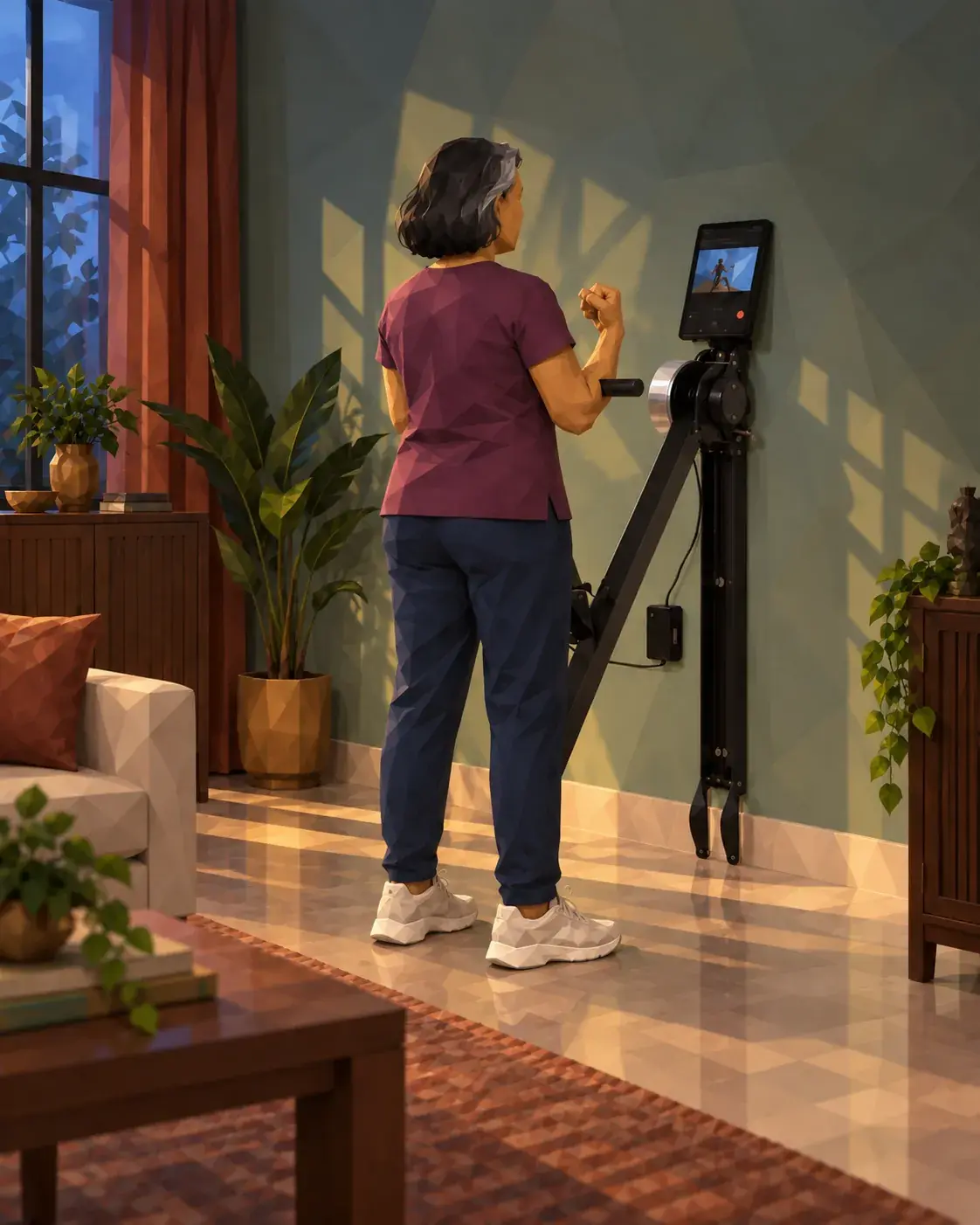
That muscle foundation is what strength training equipment for seniors like Ferra is built to address. It uses concentric-only resistance, which means the machine resists your effort but never loads you on the way down, removing the phase of exercise that causes joint strain and soreness. The resistance adjusts automatically to your current strength level, so there is no risk of overloading.
Check out Ferra and build the back-supporting strength that keeps tension from returning.
Conclusion
Back stiffness after 55 is common, but it is not something you simply have to accept. The structures that support the spine respond well to consistent, gentle movement. Stretching keeps the joints mobile, the muscles pliable, and the back more comfortable through the day.
The routine above is short enough to do daily without rearranging your schedule. Start with the stretches that feel most accessible and add the others as you get comfortable. For those who sit for long periods, the seated twist and standing extension alone can make a noticeable difference within a few weeks. You can also pair these with back exercises designed for desk workers for a more complete daily routine.
A few weeks of showing up consistently, and the back that greeted you with stiffness every morning starts greeting you differently.
Back Stretching Exercises for Seniors: Frequently Asked Questions
Are back stretching exercises safe for seniors with osteoporosis?
Yes, with some modifications. Gentle stretches like the knee-to-chest and seated spinal twist are generally safe, but forward-bending movements that round the upper spine should be avoided if you have osteoporosis, as they can increase fracture risk in the vertebrae. Always check with your doctor before starting a new routine.
How long should seniors hold each back stretch?
Most back stretches are most effective when held for 20 to 30 seconds. Holding shorter than this does not give the muscle enough time to release, and holding much longer does not add significant benefit for older adults. Three repetitions per side at 20 to 30 seconds is a good working target.
Can back stretches help with sciatica pain?
They can help in some cases. Stretches that release tension in the piriformis and lower back, such as the knee-to-chest stretch, may reduce pressure on the sciatic nerve. However, sciatica has several causes and not all respond to stretching the same way. If the pain runs down the leg or worsens with stretching, consult a doctor before continuing.
Is it normal to feel soreness after stretching the back?
Mild muscle tiredness after stretching is normal, especially if you are starting a new routine. Sharp soreness or pain that worsens the next day is not, and suggests the stretches were done too aggressively. Start with shorter holds and fewer repetitions, then increase gradually over a week or two.
Should back stretching be done before or after strength training?
After is generally better. Stretching immediately before strength training can temporarily reduce the muscle’s ability to generate force. A brief warm-up of light movement followed by strength work, then a stretching routine at the end, is the sequence that works best. Machines like Ferra, which use concentric-only resistance, are a safe way for seniors (55+) to add that strength component without the soreness risk that usually comes with weight training.
Build everyday strength — at your pace
Explore Ferra to see how strength training fits into life after 50 — it’s not about building muscle for its own sake, but moving with confidence.

Anurag Dani is the Co-Founder of Ferra, a company dedicated to redefining healthy ageing through strength training. Drawing from his experience building fitness and healthy ageing solutions for adults, he writes about healthy ageing to help readers stay strong and independent as they age.