Is high blood pressure becoming harder to manage with age?
For many older adults, hypertension develops gradually and often comes with:
- Higher blood pressure readings during routine check-ups
- Reduced stamina during everyday activities
- Increased risk of heart disease and stroke
The good news is that exercise remains one of the most effective non-medication tools for managing blood pressure. The key is choosing the right type of movement and doing it consistently.
In this blog, we’ll cover the best exercises for high blood pressure in seniors and how to build a routine that supports long-term heart health.
Why Exercise Helps Lower Blood Pressure
A study published in the Journal of Human Hypertension found that regular exercise can help lower blood pressure in people with hypertension and support better heart health over time.
Exercise supports blood pressure management by:
- Improving blood vessel flexibility and blood flow
- Reducing the pressure the heart needs to pump against
- Supporting healthier cardiovascular function over time
Blood pressure rises temporarily during activity, but the long-term effect is a lower resting blood pressure when exercise is done consistently.
Recommended Reading:
For seniors managing other conditions alongside hypertension, these healthy habits for older adults can support overall health and long-term well-being.
The Best Types of Exercise for High Blood Pressure
Three types of exercise have the strongest evidence for seniors. Used together, they outperform any single approach.
| Exercise Type | BP Impact | Effort Level | Senior-Suitability |
| Aerobic (walking, cycling) | Moderate reduction in SBP and DBP | Low to moderate | High |
| Light resistance training | Strong reduction in SBP | Low to moderate | High with good form |
| Isometric holds (wall sit, handgrip) | Highest reduction in SBP and DBP | Low | Very high |
| Heavy weightlifting | Can spike BP temporarily | High | Not recommended |
1/ Aerobic Exercise
Walking, swimming, or cycling at a moderate pace for 20 to 30 minutes. Helps the heart work more efficiently and supports cardiovascular health.

2/ Light Resistance Training
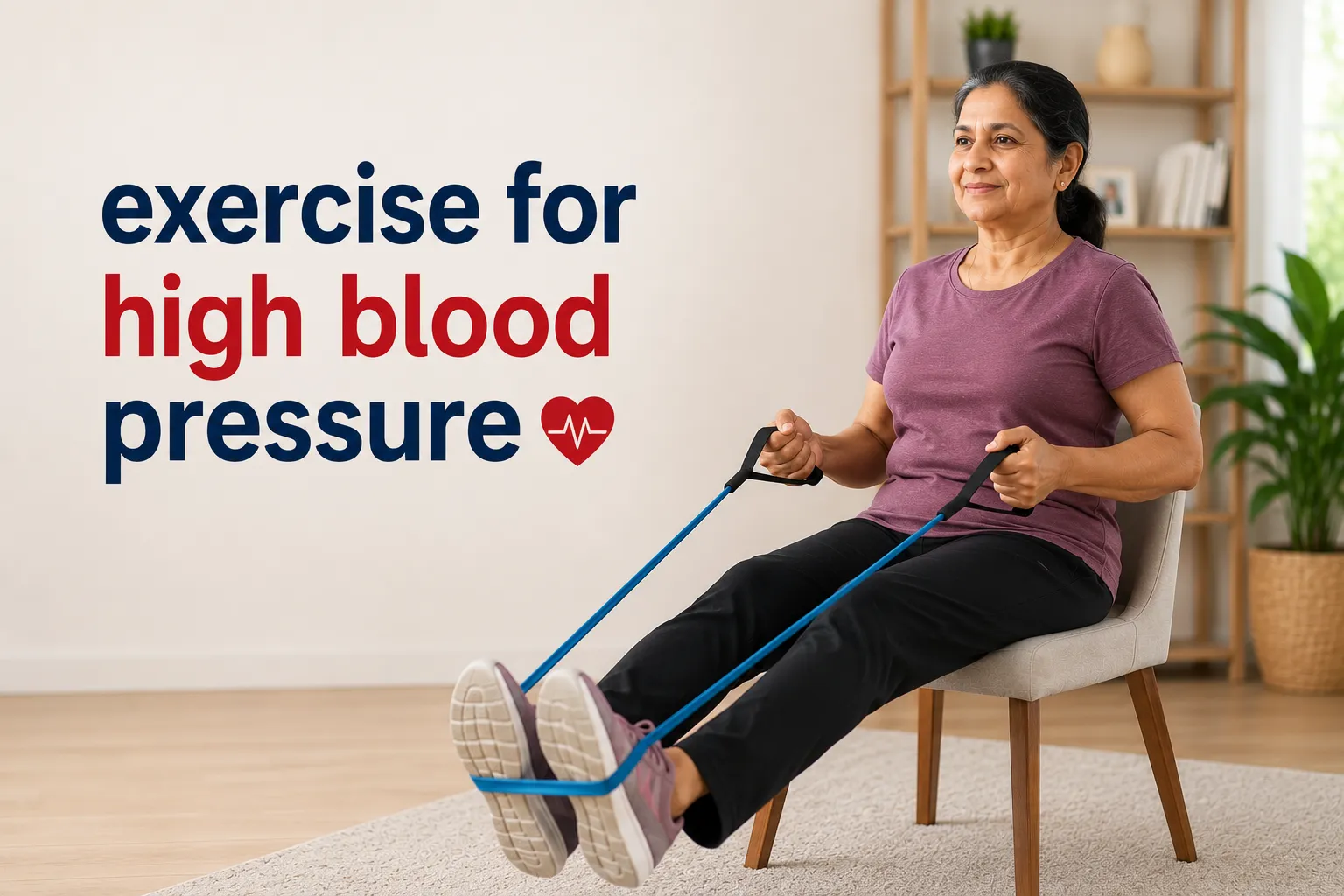
Seated rows, bicep curls, and leg exercises using light resistance. Builds strength without placing excessive stress on the joints.

3/ Isometric Exercises
Wall sits, seated handgrip holds, and calf raises. These exercises involve holding a position and can be performed safely with little to no equipment.

Combining all three produces results in both systolic and diastolic blood pressure, something aerobic exercise alone does not reliably achieve.
Recommended Reading:
If you are starting from zero, these exercises for seniors at home follow the same low-impact, consistent approach.
Exercise Safety Tips for Seniors With High Blood Pressure
Most exercises are safe at moderate intensity. A few situations warrant extra care:
- Avoid heavy overhead lifting or sudden high-intensity bursts
- Do not hold your breath during effort, as this spikes BP sharply
- Rise slowly from lying or seated positions
- Get medical clearance if your BP is currently very elevated
Stop immediately and seek attention if you notice chest pain, jaw or arm pain, dizziness, or an irregular heartbeat. Knowing these limits is what makes consistent exercise possible.
How to Make Exercise Part of Your Blood Pressure Management Plan
The blood pressure benefits of exercise reverse when you stop. Consistency matters more than duration.
A simple home routine for seniors can include:
- Warm-up (5 min): Slow walking in place, shoulder rolls, and seated neck stretches
- Core session (15 to 20 min): Aerobic movement combined with light resistance or isometric exercises
- Cool-down (5 min): Slow breathing, gentle stretches, and seated rest before standing
Starting with just 10 minutes of beginner strength training and building gradually is both safe and effective. Short daily sessions do more for resting blood pressure than long, infrequent workouts.
Exercise for High Blood Pressure Needs the Right Resistance
The challenge for many seniors with hypertension is not finding exercises. It is finding resistance training that can be done consistently without soreness or joint strain. This is where strength training equipment for seniors like Ferra can help.
Ferra uses:
- Concentric-only resistance, meaning the machine resists your effort on the way up but does not load you on the way down
- A design that removes the phase of exercise responsible for most soreness
- Automatic resistance adjustment based on your current strength level
This makes it easier to build strength consistently and stay active over time. See how Ferra helps older adults build strength without soreness.
Conclusion
Managing high blood pressure is not about finding one perfect exercise. The most effective approach combines regular movement with strength-building exercises that can be performed consistently over time.
The exercise for high blood pressure strategies covered in this guide are simple, low-impact, and suitable for most seniors. With regular practice, they can help support healthier blood pressure levels and make everyday movement feel easier and more comfortable.
Exercise for High Blood Pressure: Frequently Asked Questions
1/ How soon can exercise lower blood pressure in seniors?
Most people see measurable changes in resting blood pressure within 4 to 8 weeks of consistent exercise. Aerobic exercise tends to show results around the 10th session, while resistance training effects often appear closer to the 20th. Regularity matters far more than intensity.
2/ Is it safe to exercise if blood pressure is already high and medication is being taken?
Yes, in most cases, with a doctor’s clearance. Exercise is recommended as a complementary approach alongside medication. Some blood pressure medications affect heart rate response, so checking with a doctor about safe intensity levels before starting is a sensible step.
3/ Can breathing exercises help with high blood pressure in seniors?
Yes. Slow, controlled breathing activates the parasympathetic nervous system and can help reduce blood pressure over time. A study among older adults in India found inspiratory muscle training to be both feasible and effective for hypertension management. Breathing exercises work well on rest days or as part of a cool-down.
4/ Should blood pressure be checked before or after exercise?
Both checks are useful. Measuring blood pressure before exercise helps confirm it is safe to proceed. Checking at least 30 minutes after exercise shows how the body is recovering and whether the routine is making a positive difference over time.
5/ Is yoga enough to manage high blood pressure?
Yoga can be beneficial, but it works best as part of a broader exercise routine. The strongest results are typically seen when gentle movement, resistance training, and flexibility work are combined consistently over time.

Anurag Dani is the Co-Founder of Ferra, a company dedicated to redefining healthy ageing through strength training. Drawing from his experience building fitness and healthy ageing solutions for adults, he writes about healthy ageing to help readers stay strong and independent as they age.