Can exercise actually help when you have osteoporosis?
For many older adults with osteoporosis, slowing down feels like the safer choice. But avoiding movement is not the answer.
The right exercises for osteoporosis can help:
- Slow bone loss
- Lower fracture risk
- Maintain strength for daily movement
This does not mean pushing too hard or doing everything at once. It means knowing which movements help, which ones to avoid, and how to build a routine that fits your body right now.
How Exercise Slows Bone Loss and Reduces Fracture Risk
Bones are living tissue. When muscles pull on them during exercise, the body gets a signal to maintain and build bone strength. Without that signal, especially after menopause, bone loss can become faster.
Research shows exercise can reduce fall-related fracture risk in older adults, especially when routines include:
- Balance exercises to reduce fall risk
- Strength training to support the muscles around bones
- Resistance work to improve bone loading
- Coordination-based movement for safer walking, turning, and standing
For those already exploring exercises for seniors at home, structured resistance work can be both safe and effective. The right movement builds the body up. It does not break it down.
4 Types of Exercise That Support Bone Health
These types of movement support bone health:
1/ Weight-Bearing Exercises

These put a gentle load on bones and signal the body to strengthen them. Walking, stair climbing, and heel raises are good examples to start with.
2/ Resistance and Strength Training

These build the muscles that support and protect bones. Chair-supported squats, seated rows, lat pulldowns, wall push-ups, and bicep curls all work well here.
3/ Upper Back Exercises

Osteoporosis can cause forward rounding of the spine over time. Strengthening the upper back helps counter this and supports better posture through daily movement.
4/ Balance Exercises

These do not build bone directly, but they reduce fall risk significantly. Heel-to-toe walking and single-leg standing near a wall are safe places to start.
Recommended Reading:
Concerned about muscle loss with age? Read our blog on how to prevent muscle loss and stay stronger for longer.
3 Movements to Avoid With Osteoporosis
Certain movements put stress on bones in ways that raise fracture risk, particularly at the spine. Three types are worth avoiding:
1/ Loaded spinal flexion
Crunches, sit-ups, and forward toe touches curve the spine under load, concentrating compressive force on the vertebrae that osteoporosis weakens most. Studies have found higher rates of vertebral fractures in people who regularly did these movements.
2/ Twisting under load
Golf swings, certain yoga poses, and movements combining rotation with resistance can strain the spine in ways that are hard to control safely.
3/ High-impact activities
Jumping and running generate jarring forces through the skeleton that fragile bones may not safely handle.
This does not mean stopping movement. It means replacing these with controlled, lower-impact resistance exercises for elderly adults that load bones without sudden force.
Recommended Reading:
If lower back stiffness is already part of the picture, lower back pain exercises for seniors can help protect the spine alongside this routine.
How to Start Osteoporosis Exercises Without Hurting Yourself
- Start with bodyweight or very light resistance: Focus on form first. Keep your spine straight and supported during every movement.
- Keep sessions short. Even 5 to 10 minutes of controlled movement builds the habit. If you are just getting started with strength training, a few controlled movements are all it takes to begin.
- Stay within a pain-free range: Stop if you feel sharp pain, joint discomfort, or anything that does not feel right.
Consistency and good form matter more than lifting heavier weights. That is what builds lasting strength safely.
The Safest Strength Training Approach for Osteoporosis
Safe resistance training for osteoporosis depends on the load that is calibrated to your actual strength. Free weights carry eccentric load on the way down, which is where soreness and injury risk are highest for older joints. Most home equipment cannot remove this risk, leaving most people choosing between doing too little and risking too much.
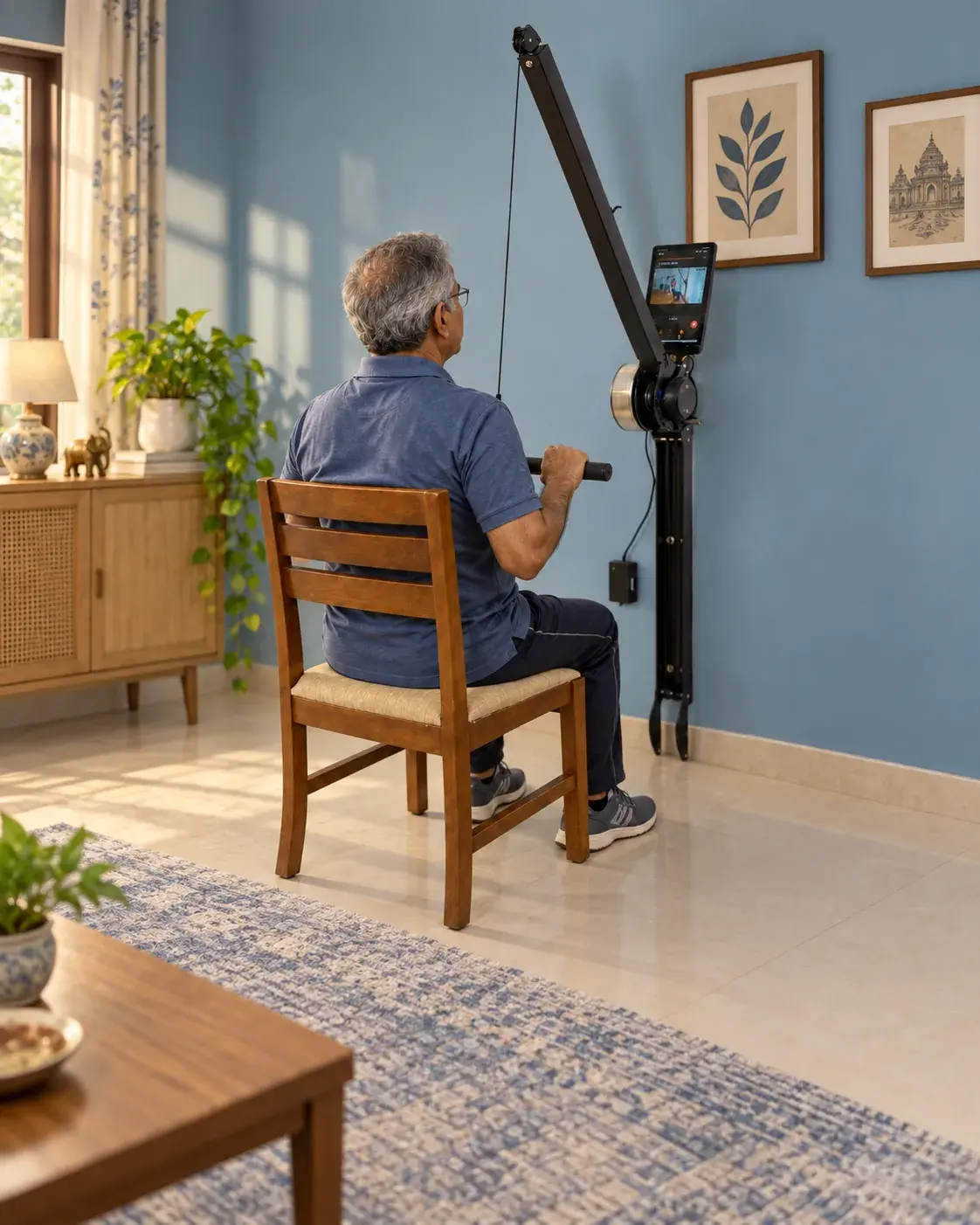
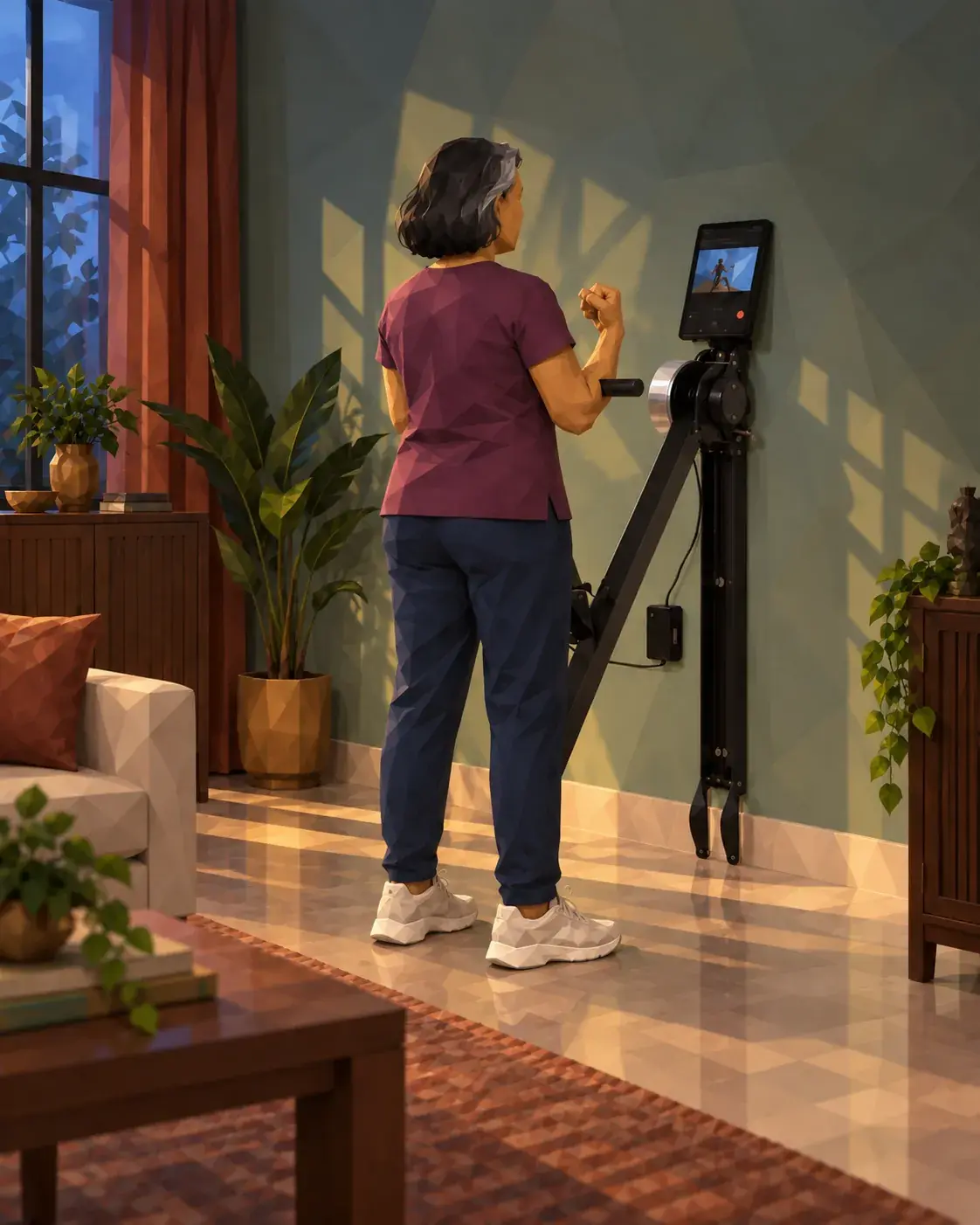
That is where strength training equipment for seniors, like Ferra, can help. Ferra uses concentric-only resistance, so you work against resistance while lifting, but the machine does not load your body on the way down. This reduces unnecessary joint strain and post-workout soreness. Its digital resistance also adjusts to your strength level, so you can build gradually without accidentally overloading your body.
Check out Ferra and start building the bone-supporting strength that keeps you moving confidently at home.
Conclusion
The right exercise, done safely and consistently, is one of the most effective ways to:
- Slow bone loss
- Reduce fall risk
- Stay independent
Start where you are and build from there. Showing up regularly, with good form, does more for bone health than any single hard session ever will. A few months from now, the goal is climbing stairs without hesitation, carrying shopping without worry, and moving through each day knowing your body can handle it.
Exercises for Osteoporosis: Frequently Asked Questions
1/ Is it safe to do strength training if you have a fracture?
Yes, but with specific modifications. Most people who have had an osteoporotic fracture can still do resistance training, provided they avoid loaded spinal flexion and twisting movements. Working with a physiotherapist to build a personalised plan is a sensible first step.
2/ How long before exercise starts to improve bone density?
Bone density changes typically take six months or more of consistent training to show up on a scan. Balance and muscle strength improvements often come sooner. Consistency over time is what drives results, not the intensity of any single session.
3/ Is walking enough on its own for osteoporosis?
Walking is beneficial and should be part of any routine, but it mainly targets the hips and lower spine. It does not load the upper body. Resistance training for the back, shoulders, and arms needs to be added separately to protect the areas that walking does not reach.
4/ Can exercises for osteoporosis also help with back pain?
Yes. Strengthening the upper back muscles directly supports the spine and can reduce the postural rounding that osteoporosis often causes. Seated rows and lat pulldowns are particularly useful for both bone health and back comfort. Machines like Ferra use concentric-only resistance, which can help older adults perform these movements at home with a lower risk of overloading.
5/ Do you need to exercise every day to see results?
Consistency is what drives results, not volume. Short, regular sessions done with good form build strength and bone health over time far more effectively than occasional intense effort. The key is showing up regularly and letting progress accumulate gradually.
Build everyday strength — at your pace
Explore Ferra to see how strength training fits into life after 50 — it’s not about building muscle for its own sake, but moving with confidence.

Anurag Dani is the Co-Founder of Ferra, a company dedicated to redefining healthy ageing through strength training. Drawing from his experience building fitness and healthy ageing solutions for adults, he writes about healthy ageing to help readers stay strong and independent as they age.