Why do your feet and ankles feel stiffer than they used to?
This stiffness rarely shows up alone. It often brings a slower stride and a growing hesitation on stairs or uneven ground, the kind of change that is easy to ignore until it starts limiting how freely you move through the day.
In this blog, we cover five simple foot and ankle stretches older adults can do at home to ease stiffness and support better mobility.
5 Foot and Ankle Stretches to Do at Home
Here is a quick reference for the full routine:
| Stretch | Position | Hold / Reps | What It Targets |
| Ankle Circles | Seated | 10 circles in each direction | Joint range of motion |
| Toe Point and Flex | Seated | 10 to 15 reps | Foot muscles, step control |
| Towel Calf Stretch | Seated | 30 seconds per side | Calf and Achilles tendon |
| Standing Calf Stretch | Standing | 20 to 30 seconds per side | Ankle dorsiflexion |
| Achilles Stretch | Standing | 20 seconds per side | Lower calf, heel area |
1/ Ankle Circles
Sit in a chair with both feet flat on the floor. Lift one foot slightly off the ground. Rotate the ankle slowly in a circle, 10 times clockwise and 10 times anti-clockwise. Switch feet and repeat. This moves the joint through its full range and improves circulation in the lower leg.

2/ Seated Toe Point and Flex
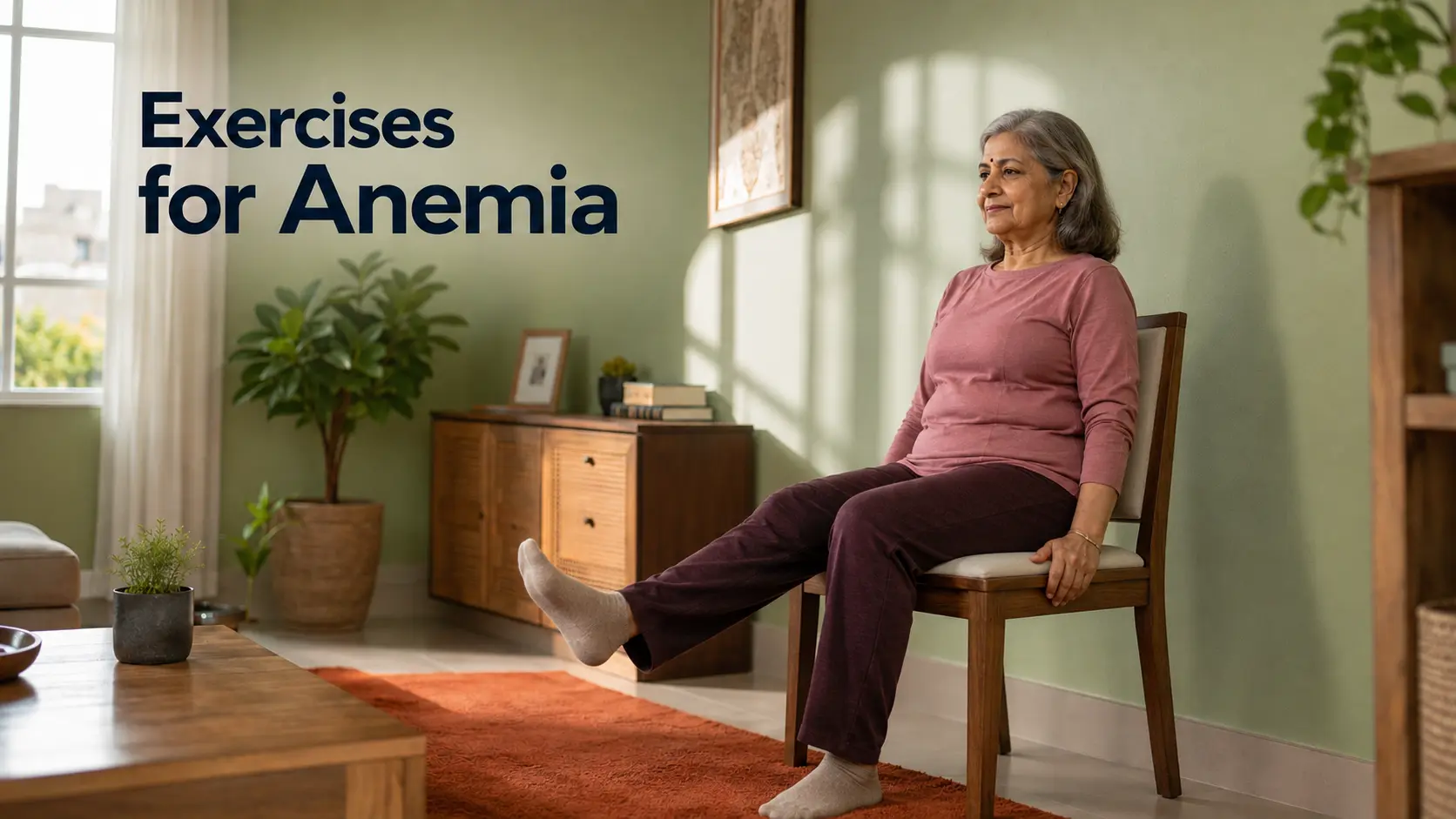
Sit upright in a chair with legs extended and heels resting on the floor. Slowly point the toes away from you as far as comfortable, hold for 3 seconds, then flex them back toward your shin. Repeat 10 to 15 times per foot. This works the muscles along the top and bottom of the foot that control how the foot lands with each step.

3/ Towel Calf Stretch
Sit on the edge of a chair and extend one leg forward. Loop a dupatta or towel around the ball of your foot and hold both ends. Gently pull the towel toward you until you feel a stretch through the back of the lower leg. Hold for 30 seconds, then switch sides. This targets the calf and Achilles tendon, which directly affects how much the ankle can flex during walking.

4/ Standing Calf Wall Stretch
Stand facing a wall with both hands resting flat against it. Step one foot back, keeping the heel firmly on the floor and the toes pointing forward. Bend the front knee slightly and lean gently toward the wall until you feel a stretch in the back calf. Hold for 20 to 30 seconds per side. This is one of the most effective stretches for improving ankle dorsiflexion range.

5/ Achilles Stretch
Stand facing a wall for support. Place one foot slightly behind the other. Bend both knees gently and lower the body a small amount, keeping the back heel on the floor. Hold for 20 seconds per side and repeat twice. This stretches the lower portion of the calf, closer to the heel, which tends to tighten significantly with age.
The seated stretches are a safe starting point for anyone with balance concerns. The two standing stretches can be added once confidence builds.

Recommended Reading:
If lower back or hip stiffness tends to show up alongside foot and ankle tightness, these lower back pain exercises address stiffness further up the chain.
How to Build This Into a Daily Habit
Consistency matters more than duration here. A few minutes of foot and ankle stretches done daily will do more over time than a longer session done once a week.
A few practical ways to make it stick:
- Morning timing: Joints are stiffest after a night of rest. Doing these stretches before you start moving sets up easier movement for the rest of the day.
- Pair with a routine: Attach the stretches to something already fixed in the day, like right after your morning chai or while sitting at the edge of the bed before standing.
- Keep it short: The five stretches above take under 10 minutes. That is a sustainable commitment.
- Know your signals: A mild pull is normal. Sharp or shooting pain is not. Stop if you feel any sudden discomfort and rest before trying again.
Flexibility gains tend to hold better when resistance training for seniors is added alongside daily stretching, since the muscles supporting the joint are being strengthened rather than just stretched.
Recommended Reading:
Not sure how to get started with a fuller home routine? These exercises for seniors at home are a practical first step.
Foot And Ankle Stretches Need a Strength Foundation
Stretching relieves tightness, but it does not address the underlying muscle weakness that makes the ankle unstable in the first place. When the calf, shin, and lower leg muscles are not strong enough, the ankle cannot support steady movement consistently, and the stiffness tends to return. What the foot and ankle actually need, alongside stretching, is consistent strength work for the muscles around the joint.
That is exactly what strength training equipment for seniors like Ferra is built to provide:
- It uses concentric-only resistance, which means the machine resists your effort but never loads you on the way down.
- This removes the phase of exercise most likely to cause joint strain or soreness.
- All movements are fully seated, so there is no balance requirement during training itself.
Check out Ferra and build the leg strength that keeps you steady on your feet.
Conclusion
Foot and ankle stiffness is not a minor inconvenience. It shapes how freely and confidently you move through every part of the day, from the first steps out of bed to a walk on uneven ground.
The stretches in this article take a few minutes and need no equipment, only regularity. A few weeks of consistent effort can turn that stiffness into movement that feels easy again.
Foot and Ankle Stretches: Frequently Asked Questions
1/ Can foot and ankle stretches help with morning stiffness?
Yes. Morning stiffness in the feet and ankles is common because the joints and tissues tighten during extended rest. A short stretch routine done before standing up, or right after waking, can ease this stiffness within a few days of consistent practice.
2/ How often should foot and ankle stretches be done?
Daily is ideal. Short daily sessions produce better results than longer sessions done occasionally. Even five to ten minutes each morning helps maintain flexibility and reduces the cumulative tightness that builds from a day of walking or sitting.
3/ Are these stretches safe for someone with diabetes?
Generally yes, though it is worth checking with a doctor first, especially if there is any nerve sensitivity or reduced sensation in the feet. People managing diabetes are advised to inspect their feet before and after stretching, avoiding any stretch that puts pressure on areas of reduced sensation.
4/ Is stretching enough to prevent falls in older adults?
Stretching alone is not sufficient. Fall prevention requires both flexibility and muscle strength working together. Machines like Ferra, which use concentric-only resistance, are designed specifically to build lower-body strength without joint strain, making them a practical complement to a daily stretch routine.
5/ How long before foot and ankle stretches show results?
Most people notice reduced morning stiffness within one to two weeks of daily practice. Meaningful improvements in ankle range of motion and walking confidence typically develop over four to six weeks of consistency.

Anurag Dani is the Co-Founder of Ferra, a company dedicated to redefining healthy ageing through strength training. Drawing from his experience building fitness and healthy ageing solutions for adults, he writes about healthy ageing to help readers stay strong and independent as they age.