Do you get up from your chair and feel a pull across the front of your hips?
That sensation is familiar to most seniors, and it tends to get more noticeable with age.
The good news:
Hip tightness is not something you simply have to live with. In most cases, it comes down to how long we sit and how little we move the hip through its natural range. In this blog, we cover five chair-based hip mobility exercises for seniors that target the right muscles and what to pair them with for results that actually last.
Why Does Hip Stiffness Get Worse With Age?
When you sit, your hip flexor muscles stay contracted for hours at a time. According to Harvard Health, prolonged sitting tightens and shortens these muscles. And because they connect to the pelvis and lower back, the stiffness spreads.
Here is what follows:
- Less movement: Less blood flow to the hip joint, giving muscles fewer signals to stay supple
- Stiffness spreads: Morning stiffness starts showing up throughout the day as the pattern compounds with age
- Back follows: Tighter hip flexors tilt the pelvis forward when you stand, which is a common driver of back discomfort
Recommended Reading:
If your lower back also bothers you, the two are often connected. Pairing hip work with lower back pain exercises can address both patterns together.
5 Seated Exercises to Loosen Tight Hips for Seniors
1. Seated Knee-to-Chest

Sit tall with feet flat on the floor. Lift one knee and wrap both hands just below the shin. Gently draw it toward your chest until you feel a stretch at the back of the hip. Hold for 20 to 30 seconds, then switch sides. Do 2 to 3 rounds on each side.
This releases the hip flexor and lower back muscles that tighten from prolonged sitting.
2. Seated Figure-Four

Sit at the edge of the chair with your back straight. Cross one ankle over the opposite knee so your leg forms a figure-4 shape. Your crossed knee should point out to the side. From there, lean gently forward from the hips, not the waist, until you feel a deep stretch in the outer hip and glute. Hold for 20 to 30 seconds, then switch sides.
This targets the piriformis muscle, which is a common source of hip and glute tightness.
3. Seated Butterfly

Sit forward in the chair with feet flat and knees wide. Place your hands on the inside of your knees and apply gentle outward pressure. Hold for 20 to 30 seconds and repeat 3 to 5 times.
This opens the inner hip and groin. Both areas tighten quickly when you spend most of the day sitting with your knees together.
4. Seated Hip March

Sit tall with feet flat on the floor. Lift one knee as high as you comfortably can, pause at the top, then lower it slowly with control. Alternate legs at a steady pace for 10 to 15 reps per side.
This activates the hip flexors through their full range rather than just stretching them. That is what helps turn flexibility into actual movement.
5. Seated Knee Drop

Sit with feet flat and hip-width apart. Slowly let one knee fall outward toward the floor, then bring it back to the centre. Keep the movement slow and controlled throughout. Do 8 to 10 reps per side.
This works the outer hip rotators. These are often the first muscles to lose range of motion in people who spend most of the day seated.
Recommended Reading:
If you are dealing with hip pain alongside the tightness, these hip pain exercises for seniors take a similar chair-friendly approach and go a step further on pain management.
How Often Should Seniors Do Hip Stretches?
Short sessions done regularly beat long sessions done rarely. Here is how to fit it into your day:
| Approach | What It Looks Like | Best For |
| Morning routine | 5 minutes before getting dressed | General stiffness on waking |
| After sitting | 3-5 stretches after 45-60 min of sitting | Desk workers, frequent sitters |
| Both | Morning + midday reset | Seniors with chronic tightness |
A study on older adults aged 67 to 80 found that a consistent stretching program performed five times a week increased flexibility by 31% over one year. For most seniors, the goal is not a single stretch session that fixes everything.
It is a small, repeatable habit that keeps the hips moving freely over time.
Recommended Reading:
If you want to explore a broader movement routine, these exercises for seniors at home follow the same principle of short, manageable sessions built for everyday life.
Why Stretching Alone Is Not Enough for Hip Mobility
Stretching relieves the tightness, but it does not address the underlying weakness. The muscles that stabilise the hip joint need to be strong enough to hold the mobility you are building. Without that, the tightness tends to return.
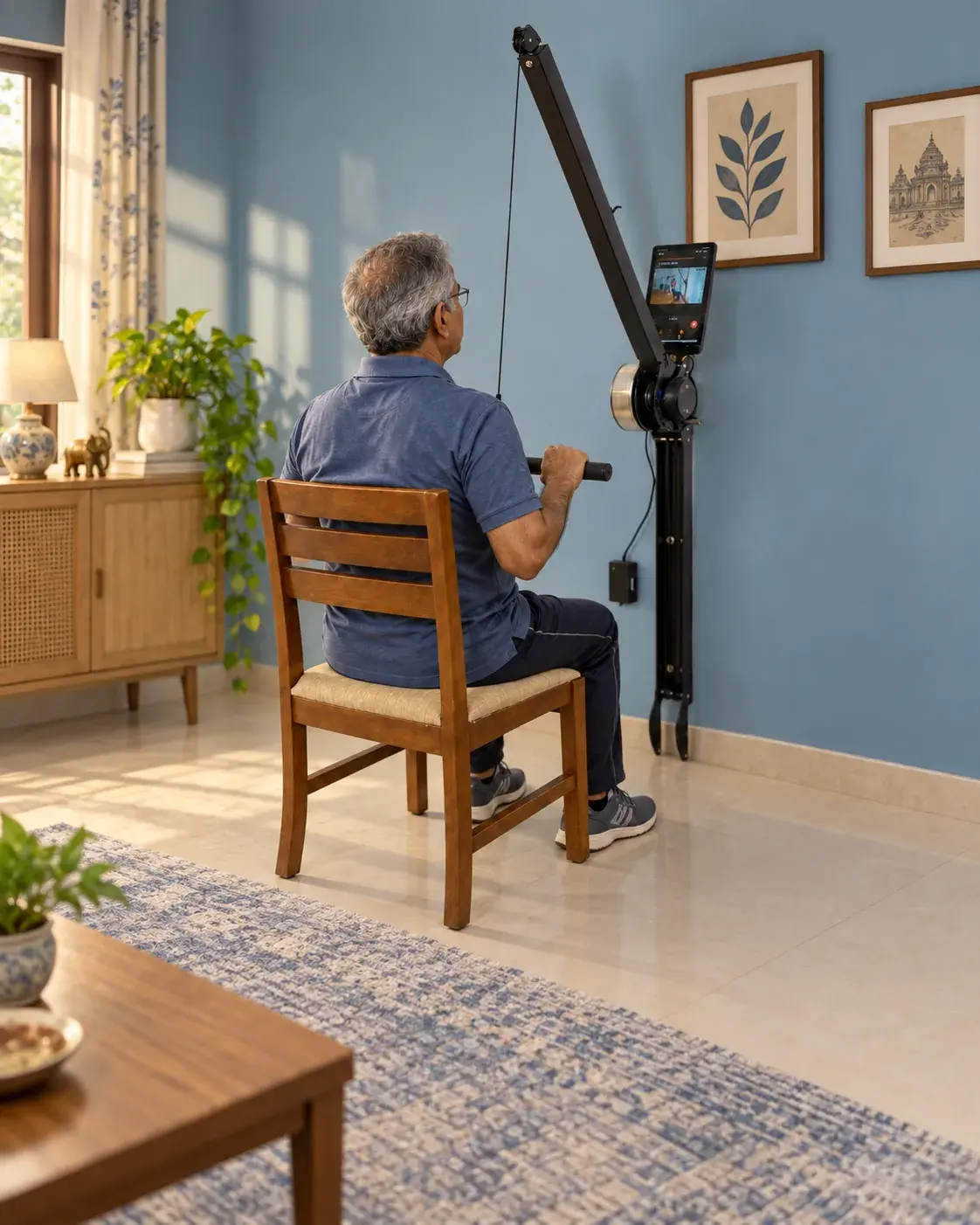
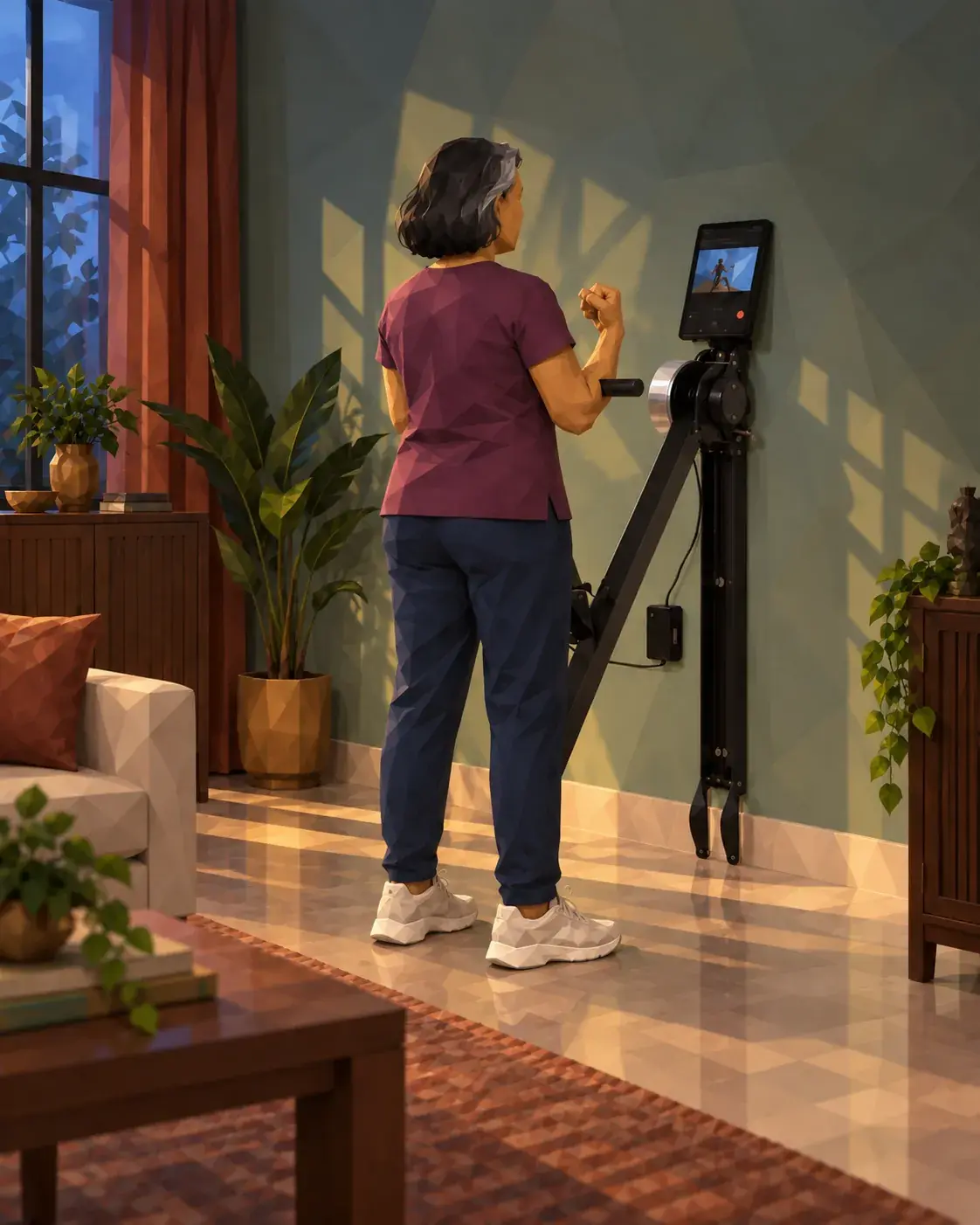
That muscle foundation is what strength training equipment for seniors, like Ferra, is built to develop. Here is how it works:
- Concentric-only resistance: The machine resists your effort but does not load you on the way down, removing the phase most likely to cause joint soreness
- Automatic resistance adjustment: It adapts to your current strength level, so there is no guesswork involved
- Built for older joints: Every part of the design reduces injury risk without reducing results
Building strength around your hips is what turns a daily stretch into lasting mobility. That is exactly what Ferra is designed for. Try Ferra today and move without the stiffness holding you back.
Conclusion
Hip tightness is one of the most manageable discomforts of a sedentary life.
The stretches here are simple enough to do from any chair. Gentle enough to do every day. Specific enough to address the muscles that actually cause the problem. Start with two or three after long periods of sitting. A few weeks in, getting up from a chair will feel easier. Climbing stairs, walking on uneven ground, all of it starts to feel more natural.
Hip Mobility Exercises for Seniors: Frequently Asked Questions
1. Can seated stretches really improve hip mobility, or is floor work necessary?
Yes. Seated stretches are genuinely effective for hip mobility. Floor-based stretches can allow a deeper range, but for older adults with balance concerns or knee discomfort, chair-based versions of the same stretches produce comparable results when done consistently.
2. Do hips clicking or popping during stretches mean something is wrong?
Not necessarily. A painless click or pop during a hip stretch is usually just gas releasing from the joint and is harmless. If the clicking comes with sharp pain or a catching sensation, stop and consult a physiotherapist before continuing.
3. Are these stretches safe after a hip replacement?
Consult your surgeon or physiotherapist first, especially for the figure-four stretch, which involves hip rotation. Many people post-replacement can do seated hip work, but the angle restrictions depend on 2 things: the type of implant and how long ago the procedure was.
4. Will stretching alone keep hips strong and mobile long term?
No. Stretching improves flexibility but does not build the muscle strength needed to support the joint over time. Pairing regular stretching with resistance training, such as Ferra’s concentric-only home system, addresses both sides of hip health: flexibility and strength.
5. How do you know if hip tightness is something more serious?
Watch for 3 signs:
- Sharp or persistent pain
- Pain that wakes you at night
- Visible swelling around the joint
If any of these are present, get assessed by a doctor. Most hip tightness in otherwise healthy adults is muscular and responds well to regular movement.
Build everyday strength — at your pace
Explore Ferra to see how strength training fits into life after 50 — it’s not about building muscle for its own sake, but moving with confidence.

Anurag Dani is the Co-Founder of Ferra, a company dedicated to redefining healthy ageing through strength training. Drawing from his experience building fitness and healthy ageing solutions for adults, he writes about healthy ageing to help readers stay strong and independent as they age.