Do your knees feel less stable than they used to? None of this happens because the joint itself is failing. In most cases, it is a muscle problem. The thighs, hamstrings, and calves lose mass and strength over the decades, and when they weaken, the knee absorbs a load it was never meant to carry alone.
That shows up in small, everyday ways:
- Stairs that now need a second thought, or a hand on the railing that never used to be there.
- A quiet hesitation before certain movements, just in case the knee gives way.
- Walks or errands that used to feel automatic now feeling more effortful.
These knee strengthening exercises for seniors are designed to rebuild the muscle support the knee depends on, so stairs, walks, and daily movement feel steady again. They are simple, low-impact movements that can be done at home without any equipment.
Why Knee Strength Matters With Age
The knee is a load-sharing joint. Strong muscles around it absorb the impact of every step, squat, and stair. When those muscles weaken, that load transfers directly onto the cartilage and joint tissue.
A few things drive this decline:
- Muscle loss with age, which accelerates noticeably from the 60s onwards, hitting the muscles around the knee early.
- Reduced activity, since less movement means less stimulus to maintain the strength those muscles already have.
- Nutritional gaps, particularly low vitamin D and calcium, both common across Indian adults and essential for joint health.
- Old injuries, where past knee or ligament strain resurfaces years later because the surrounding muscle was never fully rebuilt.
According to a community-based study published in the Indian Journal of Orthopaedics, the overall prevalence of knee osteoarthritis in India is 28.7%, with age identified as one of the strongest associated factors. The muscle weakness that precedes it often starts much earlier, which is why strengthening those muscles is the most practical way to reduce joint load at home.
7 Knee Strengthening Exercises for Seniors
1. Seated Knee Extension

Sit tall in a sturdy chair with both feet flat on the floor. Slowly straighten one leg in front of you and hold for 3 seconds. Lower it back down with control. Complete 10 repetitions on each leg for 2 sets.
This exercise targets the quadriceps, the muscle group that plays a major role in supporting the knee during walking, standing, and climbing stairs.
2. Wall Squat

Stand with your back against a wall, feet shoulder-width apart and slightly forward. Slowly slide down until your knees reach a comfortable angle, without going deeper than 90 degrees. Hold for 5 seconds, then return to the starting position. Complete 8 to 10 repetitions.
This movement closely mimics sitting down and standing up while strengthening the thighs and glutes.
3. Straight Leg Raise

Lie on your back with one knee bent and the other leg straight. Tighten the thigh muscle of the straight leg and lift it until it reaches the height of the bent knee. Hold for 2 seconds, then lower slowly. Complete 10 repetitions on each side.
This exercise strengthens the quadriceps without requiring the knee to bend, making it a useful option when the joint feels sore.
4. Calf Raise

Stand behind a sturdy chair and lightly hold the back for balance. Slowly rise onto your toes, hold for 2 seconds, and lower back down. Complete 12 to 15 repetitions.
Strong calf muscles help absorb impact during walking and reduce the amount of force that travels through the knee with every step.
Recommended Reading:
If you experience lower back stiffness during standing exercises, pairing this routine with lower back pain exercises can help keep the entire lower body moving well together.
5. Hamstring Curl

Stand behind a chair and hold it for support. Slowly bend one knee, bringing your heel toward your lower back. Hold for 2 seconds, then lower with control. Complete 10 repetitions on each side.
The hamstrings at the back of the thigh play an important role in knee stability and are often overlooked compared to the quadriceps.
6. Glute Bridge

Lie on your back with both knees bent and feet flat on the floor. Press through your heels and lift your hips until your body forms a straight line from your shoulders to your knees. Hold for 3 seconds, then lower slowly. Complete 10 repetitions.
Strong glutes help reduce the strain that travels through the knee during everyday movements such as walking and climbing stairs. For adults dealing with hip discomfort alongside knee weakness, these hip pain exercises can help improve strength and mobility in the joint directly above the knee.
7. Step-Up

Stand in front of a low step or a thick book. Step up with one foot, bring the other foot up to meet it, then step back down. Complete 8 repetitions leading with each leg.
This functional exercise closely mirrors stair climbing, which makes it one of the most direct ways to rebuild confidence on stairs.
Together, these seven knee strengthening exercises for seniors strengthen the muscles at the front, back, and sides of the knee. Because they include seated, standing, and floor-based movements, most seniors can find a comfortable starting point and progress from there.
How to Progress Without Overloading the Knee
Progress should come from small, gradual changes, not from adding new exercises every week. Once a movement feels easy for two full sets without discomfort, that is the signal to advance, not before:
- Add 2 to 3 repetitions per set before adding new sets.
- Hold the peak of each movement 1 to 2 seconds longer.
- Slow the lowering phase down, since control matters more than speed.
- Only increase difficulty once form stays steady through every rep.
Overloading usually shows up as next-day soreness that lingers past 48 hours, or discomfort that starts earlier in a set than it used to. Both are signs to hold at the current level for another week rather than push forward.
When to Stop or Modify a Knee Exercise
Sharp, sudden pain is the clearest signal to stop, as is swelling within a few hours of training or pain that changes how you walk afterward. None of these are normal, and pushing through them sets recovery back rather than speeding it up.
Modification is usually enough for milder issues:
- Reduce the range of motion on the movement.
- Use a wall or chair for extra support.
- Drop to fewer reps until the joint settles.
- Start with Seated Knee Extension or Straight Leg Raise if the knee feels sore, since neither requires the joint to bend under load.
Consult your doctor before starting if you have a recent injury, surgery, or severe arthritis, and anytime swelling or sharp pain persists beyond a day or two.
Knee Strengthening Exercises for Seniors Need Consistent Resistance
Bodyweight exercises like these are a strong starting point. But for adults who have not trained in years, bodyweight alone has a ceiling, particularly when it comes to rebuilding meaningful muscle mass around the knee.
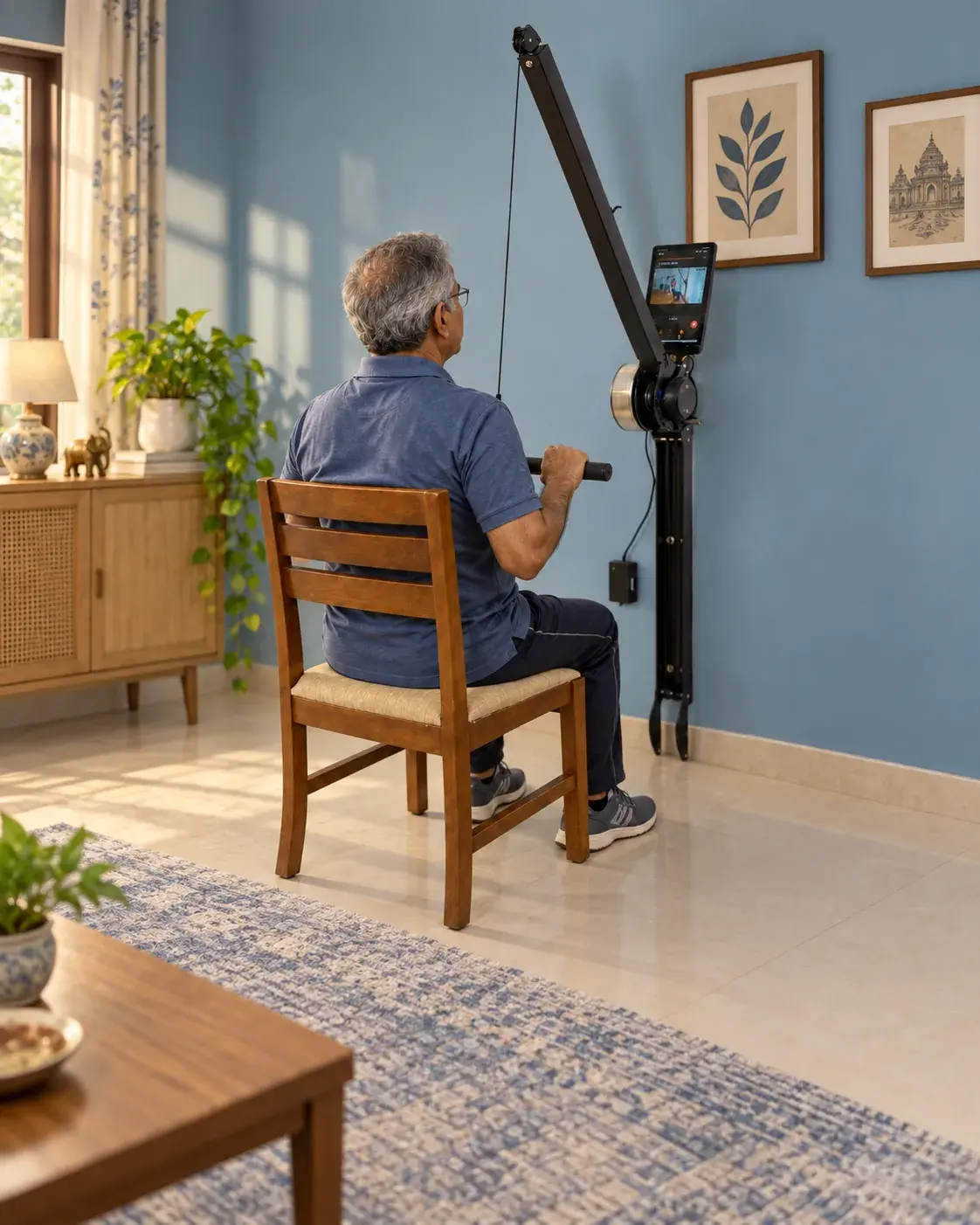
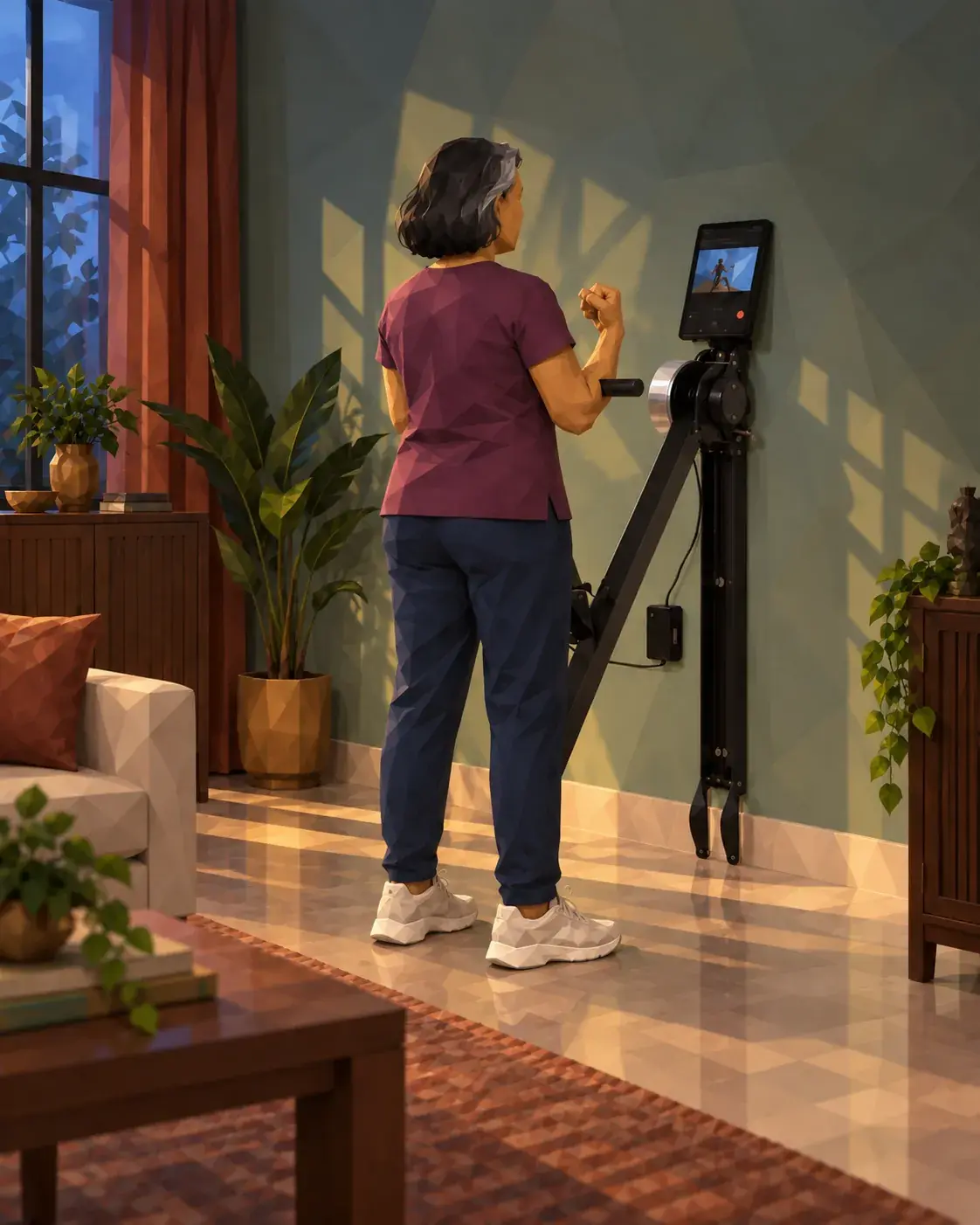
This is the gap that strength training equipment for seniors, like Ferra, is built to address. It uses concentric-only resistance, loading you during the lifting phase while avoiding load on the way down. The lowering phase is often what causes joint strain and next-day soreness in conventional training. The resistance also adjusts automatically to your current strength level, so there is no guesswork about how much is too much.
Check out Ferra and build the knee-supporting strength that makes daily movement easier.
Conclusion
The knee does not weaken on its own. The muscles around it do. The good news is that muscle strength can be rebuilt with consistent training.
Start with a few exercises that suit your current ability, stay consistent, and progress gradually. Small improvements today can make everyday movement feel easier tomorrow.
Knee Strengthening Exercises for Seniors: Frequently Asked Questions
1/ How Often Should Older Adults Do Knee-Strengthening Work?
Consistency matters more than any specific number of sessions. Most seniors do well training the knee-supporting muscles on a regular, non-consecutive schedule, giving the muscles time to recover between sessions. As the exercises feel easier, reps or hold times can be increased before adding another session.
2/ Are Knee Strengthening Exercises Safe for Seniors With Pain?
In most cases, yes, with the right modifications. Low-impact exercises that strengthen the muscles around the knee are commonly recommended because they help reduce stress on the joint rather than add to it. Anyone with moderate to severe arthritis, recent swelling, or a recent injury should consult a doctor or physiotherapist before starting.
3/ What if Stairs Already Feel Difficult?
Start with the seated and floor-based exercises in this list before moving to Step-Ups. Seated Knee Extension and Straight Leg Raise build the quadriceps strength stairs depend on without requiring the joint to bear weight, which makes them a safer starting point when stairs already feel unstable.
4/ Is Walking Enough to Strengthen the Knees?
Walking supports overall knee health and helps keep the joint mobile, but it does not build the targeted muscle strength the knee needs. Resistance exercises for the quadriceps and hamstrings are important for reducing joint load. Walking and strengthening exercises work best together.
5/ How Long Does It Take to Improve Knee Strength?
Most people notice better stability and less discomfort within 4 to 6 weeks of consistent exercise. Visible strength gains may take longer, and consistency matters more than intensity. Machines like Ferra can also help maintain the right level of resistance as strength improves.
Build everyday strength — at your pace
Explore Ferra to see how strength training fits into life after 50 — it’s not about building muscle for its own sake, but moving with confidence.

Anurag Dani is the Co-Founder of Ferra, a company dedicated to redefining healthy ageing through strength training. Drawing from his experience building fitness and healthy ageing solutions for adults, he writes about healthy ageing to help readers stay strong and independent as they age.