Blogs
5 Stretching Exercises Before Bedtime for Better Mobility | 2026

You get into bed tired enough to fall asleep in minutes, but your hips are still tight, your shoulders feel locked up, and your lower back carries a dull ache from sitting most of the day. This is where stretching exercises before bedtime make the biggest difference, since falling asleep tense shapes how your body feels the moment you try to get up the next morning.
Overnight stillness gives stiffness room to settle in, and it usually shows up in a few predictable places:
- Hips that feel locked after standing up in the morning
- A dull ache across the lower back after lying still for hours
- Shoulders and neck that stay tense even after a full night’s sleep
- Legs that feel heavy or stiff during the first few steps out of bed
A short bedtime stretching routine interrupts that cycle. It loosens these tight areas while your body is already winding down, so you spend less time fighting stiffness the next morning
Why Bedtime Stretching Helps
Stretching before bed works because it targets the exact muscles that tighten during long stretches of sitting or standing. Holding that improved range of motion right before sleep means your body carries less tension into the next day.
Without it, hip flexors, hamstrings, and the lower back stay shortened from the day’s posture, and blood flow to these muscles slows further overnight. This stiffness compounds with age, partly because muscle mass naturally declines over time, a process covered in more detail in preventing muscle loss.
A short routine of stretching exercises before bedtime breaks this pattern before it compounds, bringing blood flow back to tight areas and gently lengthening shortened muscles. Done consistently, this makes morning stiffness noticeably less severe.
5 Stretching Exercises Before Bedtime for Seniors
1. Neck Side Stretch

Sit or stand tall with your shoulders relaxed. Tilt your right ear toward your right shoulder until you feel a gentle stretch along the side of your neck. Hold for 15 to 20 seconds, then switch sides. This releases tension that builds up in the neck from looking down at screens during the day.
2. Shoulder Roll

Sit or stand with your arms relaxed at your sides. Roll both shoulders backward in a slow circular motion, five times, then reverse and roll forward five times. This loosens the shoulder joints and eases tightness that builds up from hunching forward during the day.
3. Knee-to-Chest Stretch

Lie on your back, legs extended. Pull one knee toward your chest, holding it gently with both hands while the other leg stays flat. Hold for 20 to 30 seconds, then switch legs. This relaxes the lower back and hips
Recommended Reading:
If hip tightness is something you deal with regularly, these hip pain exercises for seniors cover additional moves that pair well with a bedtime routine.
4. Supine Spinal Twist

Lie on your back with knees bent and feet flat. Slowly lower both knees to one side while keeping your shoulders pressed down, hold for 15 to 20 seconds, then return to centre and repeat on the other side. This restores spinal mobility and eases stiffness between the shoulder blades.
5. Standing Calf Stretch

Stand facing a wall with both hands flat against it. Step one foot back, keeping it straight with the heel on the floor, then bend your front knee and lean gently toward the wall until you feel a stretch in your calf. Hold for 20 to 30 seconds, then switch sides. This loosens calf muscles that tighten from a day of walking or standing.
These five moves cover the areas that tighten most from a day of sitting, standing, or screen time, and doing them in sequence takes under ten minutes before you turn off the light.
Recommended Reading:
If you want a fuller routine beyond bedtime, exercises for seniors at home is a good place to start without needing a gym.
The Right Way to Stretch Before Bed So It Actually Works
Getting the technique right matters as much as picking the correct stretches.
- Stretch once you are winding down, not right after a meal.
- Hold each stretch steadily. Do not bounce or force the movement.
- Breathe slowly and evenly through each hold, rather than holding your breath.
- Stop short of pain. A gentle pull is normal; sharp discomfort means ease off.
Stretching slowly and without force is what makes the routine work for muscles and joints that need a gentler approach with age.
Older Adults and Desk Workers Feel the Difference Most
Bedtime stretching helps almost anyone who sits for long stretches during the day, but some people notice the difference more than others.
Older adults tend to benefit the most, since joints naturally lose some range of motion with age and muscles take longer to loosen once tight, especially those also managing lower back pain exercises. Desk workers who sit most of the day notice a clear difference too, particularly in the hips and lower back.
The routine stays the same across these groups. What changes is how much relief each person notices, and for older adults managing everyday stiffness, that difference tends to be the most noticeable of all.
Stretching Exercises Before Bedtime Still Need a Strength Foundation
Stretching keeps muscles loose and joints moving through their full range, but it does not build the muscle strength that holds that range in place during the day. Flexibility fades again within hours once you are back to sitting or standing without support, especially as muscle mass naturally declines with age. What actually holds mobility gains in place is the strength around each joint, not the stretch itself.
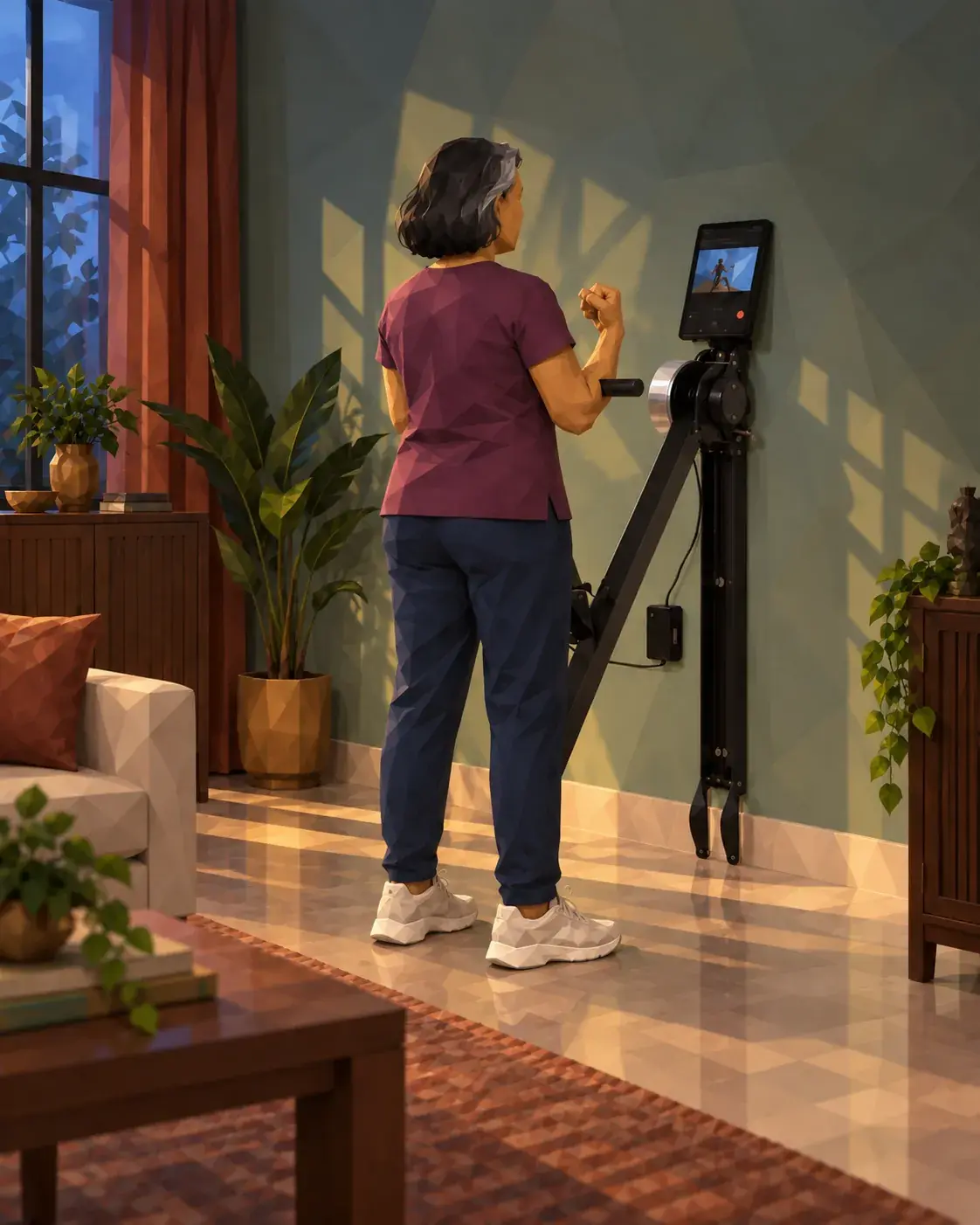
That strength is what strength training equipment for seniors like Ferra is built to add. It uses concentric-only resistance, so the machine resists your effort on the way up but applies no load on the way down, removing the phase of exercise most likely to cause soreness or joint strain. The resistance also adjusts automatically to your current strength level, so there is no risk of lifting more than your body is ready for.
Check out Ferra and see how resistance training for seniors can keep your body loose and steady, not just at bedtime, but throughout the day.
Conclusion
A bedtime stretching routine is one of the simplest habits you can build into your evening, and the effects show up almost immediately in how your body feels the next morning. Stiffness that once slowed your first few steps out of bed starts to ease, simply because you gave those muscles a few minutes of attention before sleep.
Slow, controlled stretches done consistently do more for your body than an aggressive routine done occasionally. A few weeks of this simple habit, and getting out of bed each morning starts to feel less like something to brace for and more like the natural start to your day.
Frequently Asked Questions About Stretching Exercises Before Bedtime
1. Are bedtime stretches good for older adults?
Yes. Bedtime stretches are particularly useful for older adults, since joints naturally lose some range of motion with age and muscles take longer to loosen once they tighten. A gentle nightly routine helps offset that stiffness before it settles in overnight and supports better circulation to muscles that stay inactive during rest.
2. Can bedtime stretches help with arthritis-related stiffness?
Yes, in most cases. Gentle stretching before bed helps maintain joint mobility and can ease some arthritis-related stiffness, since movement helps distribute the fluid that lubricates joints. Keep each stretch slow and stop short of sharp pain. If a joint feels unusually swollen, check with a doctor first.
3. How long should a before-bed stretching routine be?
Five to ten minutes is usually enough, covering the hips, lower back, neck, and shoulders. Longer sessions are not necessary for stretching to be effective. What matters more than duration is doing it consistently every night rather than occasionally for longer stretches.
4. How long before bedtime stretching reduces morning stiffness?
Most people notice a difference within two to three weeks of a consistent bedtime stretching routine. The change is gradual, showing up first as slightly easier first steps out of bed. For stiffness that does not improve with stretching alone, pairing it with strength training equipment for seniors like Ferra can address the muscle weakness that stretching alone cannot fix.
5. Should bedtime stretching feel uncomfortable?
No. A gentle pulling sensation is normal, but bedtime stretching should never cause sharp or shooting pain. If a stretch feels uncomfortable beyond mild tension, ease off the range of motion rather than pushing through it.
Build everyday strength — at your pace
Explore Ferra to see how strength training fits into life after 50 — it’s not about building muscle for its own sake, but moving with confidence.

Anurag Dani is the Co-Founder of Ferra, a company dedicated to redefining healthy ageing through strength training. Drawing from his experience building fitness and healthy ageing solutions for adults, he writes about healthy ageing to help readers stay strong and independent as they age.