Ever wonder why standing up from a low sofa feels harder than it used to?
It’s not just you. Leg strength fades quietly with age, and movements that once felt automatic now take real effort. Simple things like:
- Getting off the toilet
- Stepping out of a car
- Rising from a chair
The front squat trains exactly that movement pattern, which is why it is worth learning properly from the start. In this blog, we will walk you through how to do front squats correctly, the mistakes that cause most of the strain, and how to build up from your very first rep
How to Do Front Squats at Home (Step by Step)
If you have access to a barbell and a squat rack, this is the traditional way to learn the front squat. Start with the bar completely empty. Getting comfortable with the movement matters more than lifting any weight at this stage.
1/ Set Up the Bar
Set the barbell on the rack at roughly shoulder height. Step in close, cross your arms over the top of the bar, and rest them across the front of your shoulders, not on your neck or wrists. Lift your elbows so your upper arms are close to parallel with the floor. This creates a stable shelf for the bar to sit on.

2/ Unrack and Get Into Position
Stand up to lift the bar off the rack, then take one or two steps back. Set your feet shoulder-width apart with your toes turned slightly outward. Keep your elbows high and your chest lifted. This is your starting position for every rep.
3/ Lower Into the Squat
- Push your hips back first, then let your knees bend, as if lowering toward a chair behind you.
- Keep your elbows up and your chest lifted throughout, since a dropping chest is what causes most of the strain in this lift.
- Lower only as far as feels controlled, ideally no deeper than 90 degrees at the knee.
- Keep your heels pressed firmly into the floor the entire time.

4/ Stand Back Up
Press through your heels and drive your hips forward to return to standing, keeping the chest up rather than letting it fall as you rise. That single down-and-up motion is one repetition. With the empty bar, aim for 5 to 8 reps and focus entirely on form.
Once that feels steady and controlled, add a small amount of weight, the smallest plates available, and repeat the same rep range. Add a little more only once the current weight feels fully comfortable. There is no need to rush this step.
| What You Should Feel | What to Watch Out For |
| Thighs and glutes working | Knees caving inward |
| Mild core engagement | Heels rising off the floor |
| Controlled movement down and up | Chest collapsing forward |
| Steady breathing throughout | Sharp pain in knees or lower back |

A quick note on safety:
The barbell version is best learned with a squat rack and, ideally, a trainer or spotter the first few times, since racking and unracking the bar safely takes its own practice. If a rack is not available, the goblet squat using a dumbbell gives you nearly identical form benefits without that setup.
Recommended Reading:
If a barbell setup is not something you have at home, these exercises for seniors at home cover other safe, no-equipment movements that build the same strength.
Common Front Squat Mistakes That Cause Strain
Most discomfort people experience during squats comes from avoidable form errors, not the exercise itself. These are the four most common ones.
- Heels rising off the floor: This shifts the load onto the knees and throws off your balance. Press your heels firmly down before you even begin to lower.
- Chest dropping forward: Once the chest falls, the lower back takes over. Keep your eyes forward and your chin level to hold the torso upright.
- Going too deep too soon: Depth without control is counterproductive. Start with a partial squat and build range of motion gradually over several sessions.
- Knees drifting inward: Your knees should track in the same direction as your toes throughout the movement. If they drift inward, widen your stance slightly or focus on pushing your knees gently outward as you lower.
These corrections matter most early on, since the body tends to settle into whatever pattern it learns first. Consistent practice is what corrects these patterns, since the front squat is a skill that improves with repetition rather than intensity.
Recommended Reading:
For more on getting the basics right before adding any load, this piece on beginner strength training for older adults covers how early form correction shapes long-term results.
How to Do Front Squats With the Right Resistance
Bodyweight squats build a foundation, but adding resistance is what drives meaningful strength gains over time. Too little, and the muscles are not challenged. Too much, especially on the way down, and the risk of strain goes up.
- Traditional weights apply a fixed load throughout the movement, including on the way down.
- That lowering phase is where most joint stress and post-exercise soreness comes from, and it can easily interrupt a new squat habit.
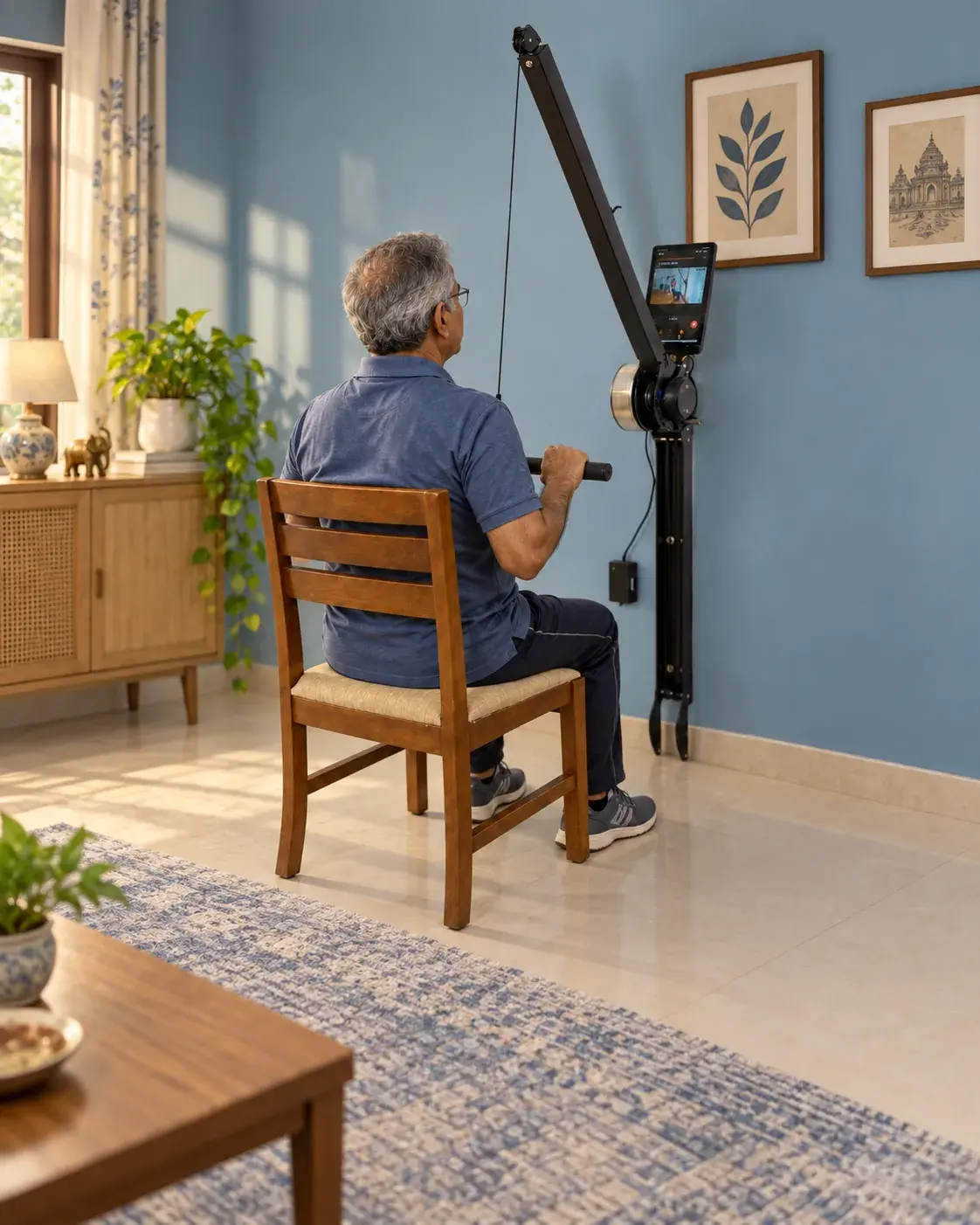
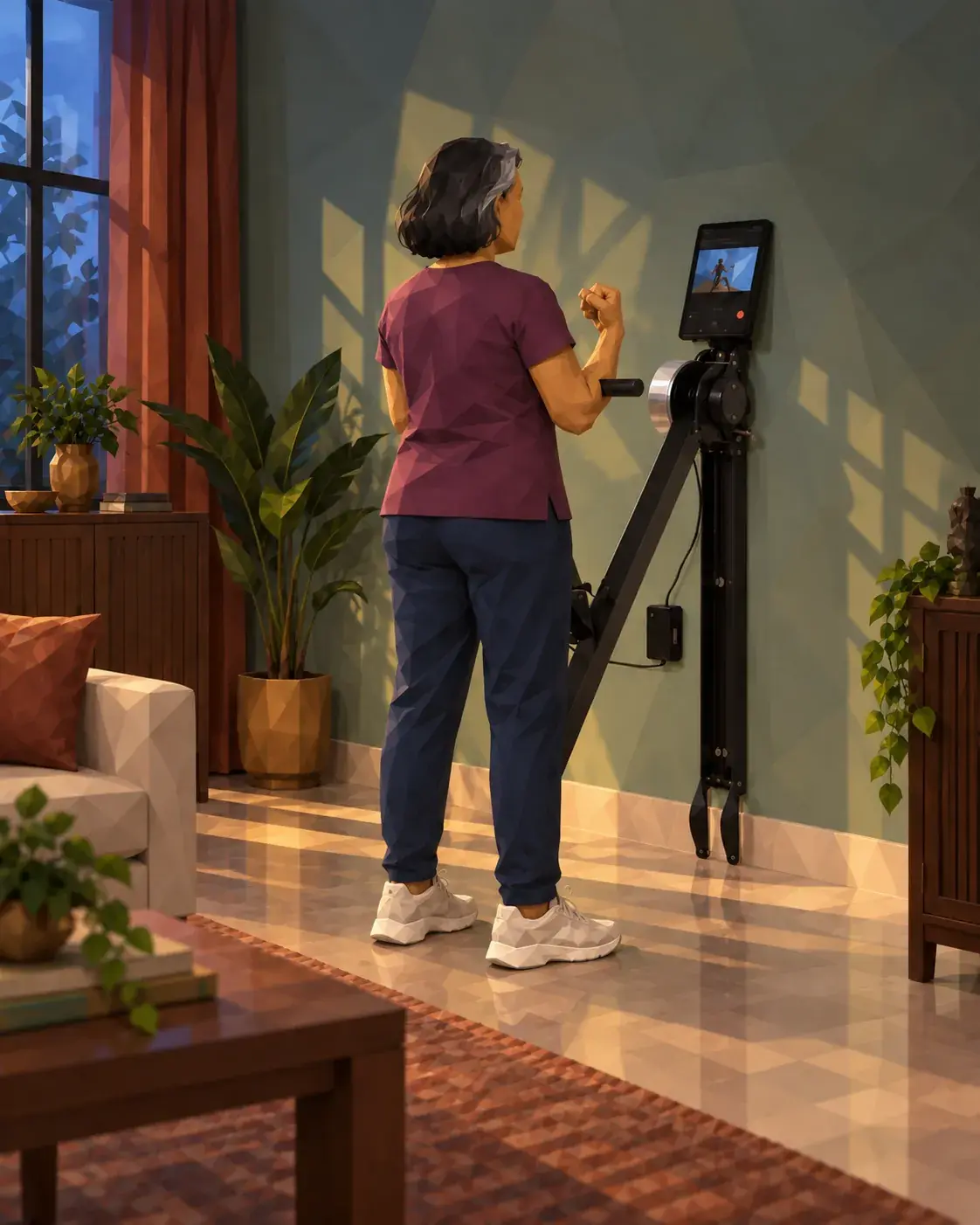
That tension is what strength training equipment for seniors, like Ferra, is built around. Ferra uses concentric-only resistance: it resists your effort on the way up but does not load the joints on the way down. The front squat is one of Ferra’s seven core exercises, and resistance adjusts automatically to your strength level, so there is no guesswork about how much to lift.
Check out Ferra and build the leg strength that makes everyday movement feel easier.
Conclusion
The front squat does not need a specific fitness level, just good form and a light start.
What it needs most is consistency. The muscles behind standing up and climbing stairs only get stronger with regular effort, not occasional sessions. Stick with it for a few weeks, and you’ll notice everyday movements becoming easier, from standing up to climbing stairs and walking longer without fatigue.
How to Do Front Squats: Frequently Asked Questions
1/ Is the front squat safe for people with knee pain?
Yes, with the right modifications. The front squat places less compressive force on the knee than a back squat, according to biomechanics research. A shallow depth combined with heels pressed firmly into the floor reduces strain further. Sharp pain, rather than mild muscle effort, is a signal to reduce the range of motion or check with a physiotherapist before continuing.
2/ How is a goblet squat different from a front squat?
A goblet squat is a variation of the front squat. Both use a front-loaded position that keeps the torso upright. The main difference is that a goblet squat uses a single weight held at the chest, which makes it easier to set up at home without a barbell or rack. For older adults without access to a squat rack, the goblet squat is often the more practical way to load the front squat movement.
3/ How long before front squats improve daily movement?
Most people notice a difference in everyday activities like standing from a chair or climbing stairs within three to four weeks of regular practice. The timeline depends on starting strength levels and consistency. Machines like Ferra, which use concentric-only resistance, can shorten this timeline by allowing safe daily training without the soreness that typically interrupts a new routine.
4/ Should front squats be done every day?
Yes, light to moderate front squats can be done daily, particularly with bodyweight or low resistance. Unlike heavy barbell training, which requires recovery time between sessions, a controlled, lightly loaded front squat does not cause the kind of muscle damage that needs rest. Daily consistency matters more than occasional high intensity.
5/ What if the front squat feels uncomfortable in the wrists or shoulders?
This is common with the barbell front rack position, where the bar rests across the shoulders and is held with the wrists. Switching to a goblet squat removes this issue entirely, since the weight is held at the chest with both hands instead of racked on the shoulders. This delivers the same lower body benefit without the wrist or shoulder strain

Anurag Dani is the Co-Founder of Ferra, a company dedicated to redefining healthy ageing through strength training. Drawing from his experience building fitness and healthy ageing solutions for adults, he writes about healthy ageing to help readers stay strong and independent as they age.