Why do the first ten minutes out of bed feel like the hardest part of the day?
For many seniors and older adults, it comes down to a few familiar trouble spots:
- Hips that feel locked until you have taken a few steps
- Knees that need a minute before they bend comfortably
- A lower back that stays tight until you are upright
Morning stretches in bed for seniors are built for exactly this window, the few minutes between waking up and standing up. This is not a workout, and it does not need to be. It is a mobility starting point: a way to ease joints and muscles into movement before they have to carry any weight at all.
Why Morning Stiffness Happens
A few things make this more noticeable with age:
- Joints naturally produce less synovial fluid over time
- Muscles around the spine and hips tighten overnight
- Circulation slows during long periods without movement
Moving gently before standing gives the fluid time to recirculate and lets muscles wake up gradually, which is what makes the first few steps of the day feel far less stiff
5 Gentle In-Bed Stretches for Seniors
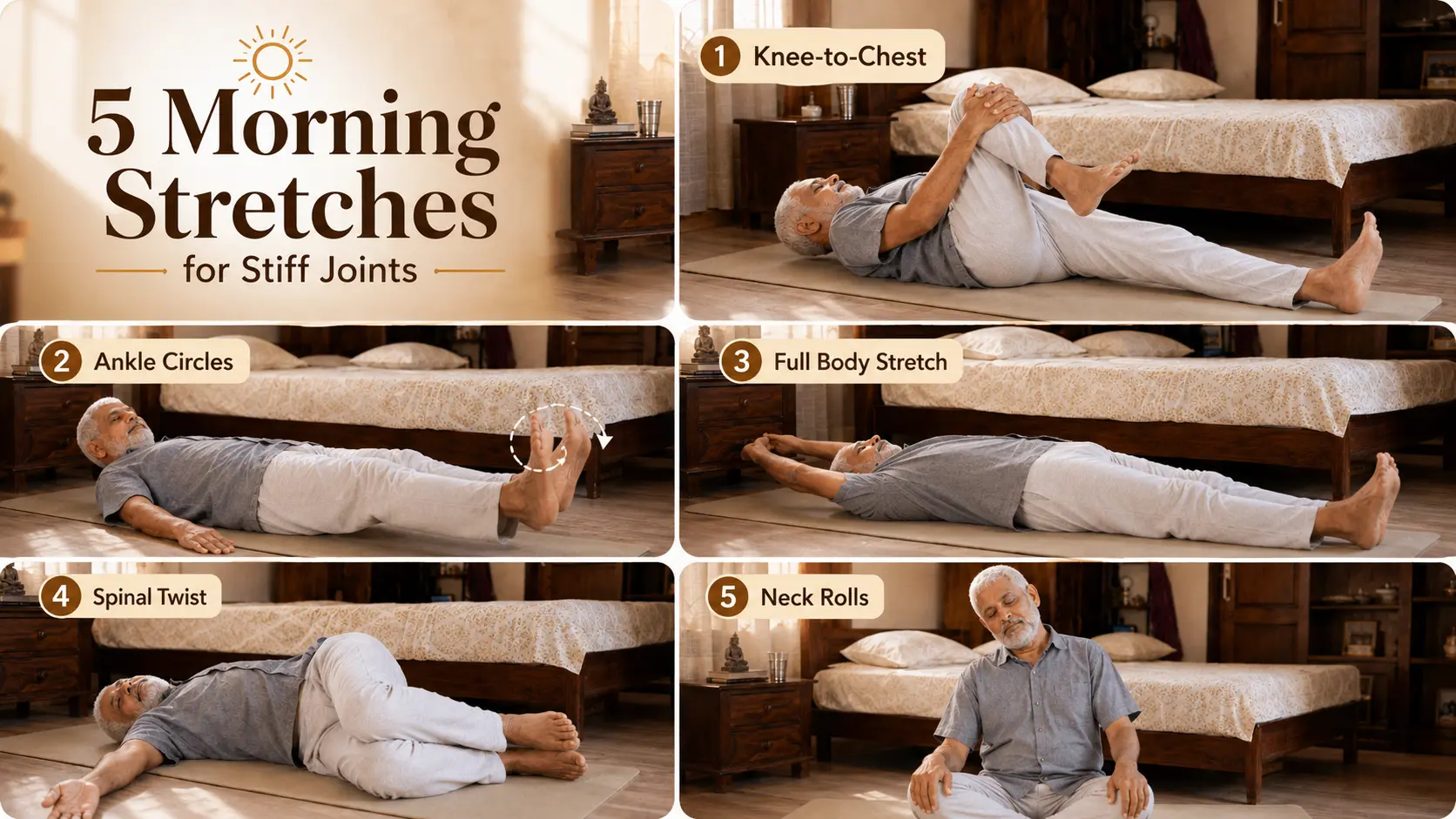
1/ Knee-to-Chest Stretch

Lie on your back with both legs extended. Slowly pull one knee toward your chest and hold it with both hands. Hold for 20 to 30 seconds, then switch sides. This relaxes the lower back muscles and eases hip stiffness.
Recommended Reading:
If lower back tension is a regular issue, pairing this with lower back pain exercises can help address the stiffness more consistently.
2/ Ankle Circles

Lie on your back with legs extended. Rotate both ankles in slow circles, 10 times clockwise and 10 times counter-clockwise. This gets blood moving through the feet and calves before you put any weight on them.
3/ Full Body Stretch

Still on your back, extend both arms overhead and stretch from fingertips to toes. Hold for a slow count of five and repeat three times. This gently decompresses the spine and wakes up the shoulders after hours in one position.
4/ Supine Spinal Twist

Lie on your back with knees bent and feet flat. Slowly lower both knees to one side while keeping your shoulders pressed down. Hold for 15 to 20 seconds, return to centre, then repeat on the other side. This works the outer hips and mid back.
Recommended Reading:
If hip tightness is a regular concern alongside back stiffness, hip pain exercises for seniors can complement this stretch well.
5/ Seated Neck and Shoulder Rolls

Sit on the edge of the bed with feet flat on the floor. Roll your shoulders backward five times, then forward five times. Follow with a gentle neck tilt toward each shoulder, holding for 10 seconds on each side. This releases tension that builds up in the neck overnight.
These five stretches cover the joints most commonly stiff after sleep and take under 10 minutes to complete.
Recommended Reading:
For stiffness that reaches beyond the joints covered here, these range of motion exercises for elderly follow the same slow, low-impact approach and are easy to build into any morning.
Who Should Move From Stretching Into Strength Work
Stretching eases stiffness in the moment, but it does not change why the stiffness keeps coming back. When the muscles supporting the hips, spine, and knees are weak, joints end up absorbing more load than they should.
This shows up as a pattern worth paying attention to:
- Stiffness returns by the next morning no matter how consistent the stretching is
- The same joints feel tight even on days when the routine was done fully
- Stretching helps in the moment but the underlying tightness never fully resolves
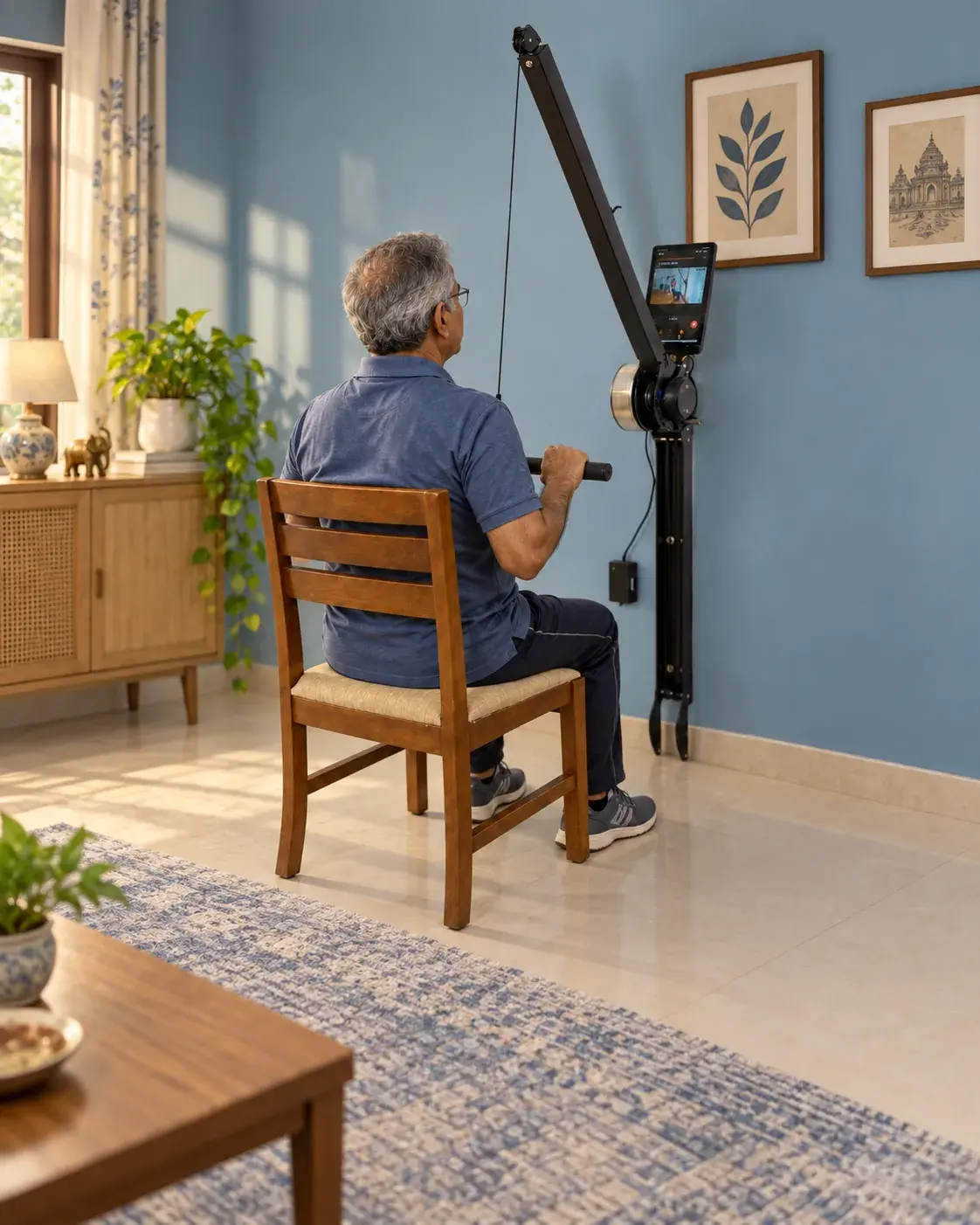
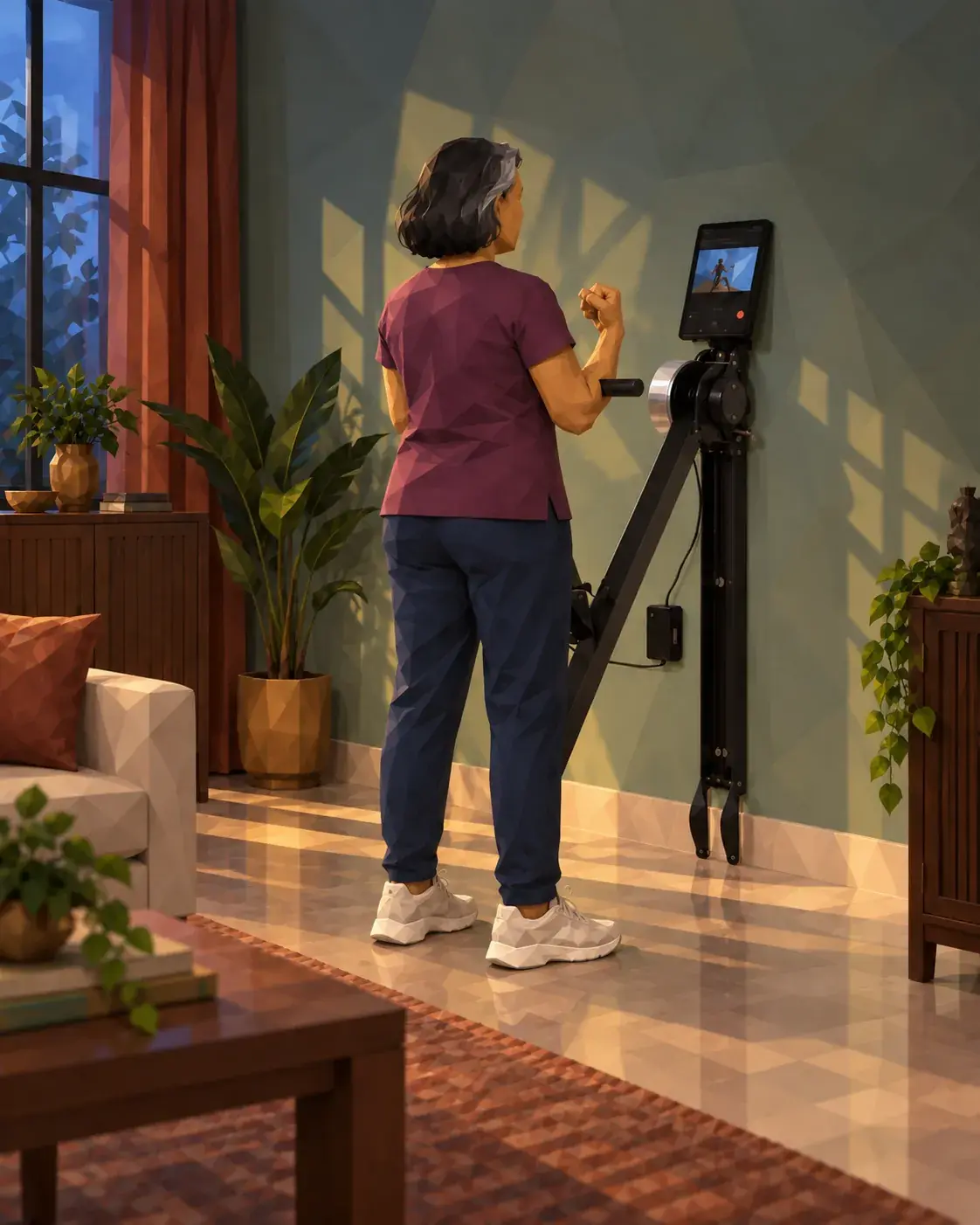
For seniors seeing this pattern, it usually means the muscles around the joint need more support, not more flexibility work. That is what strength training equipment for seniors like Ferra is built for, adding muscle support safely without loading the joints on the way down.
Building a Daily Morning Stretching Habit
Do these stretches before getting up, not after. The window right after waking is when muscles are warm but not yet bearing weight, which is exactly when gentle movement works best.
A few things make the habit easier to keep:
- Start with three stretches if all five feels like too much on a slow morning
- Consistency matters more than completing the full set every single day
- Pair the routine with something you already do, like reaching for water, so it becomes automatic
A short routine done daily adds up faster than a longer one done occasionally. That consistency is what determines whether mornings keep improving or plateau after the first week
Start the Day Without the Stiffness
Morning stiffness is not something to just push through. It is the body asking for a few minutes of movement before it is asked to bear weight.
These stretches use nothing more than the bed you are already in, and they take less time than making a cup of tea. Done consistently, they make the first steps of the day noticeably easier.
Give it two to three weeks, and getting out of bed will start to feel like a normal transition again, not something to brace for.
Morning Stretches in Bed for Seniors: Frequently Asked Questions
1. Are morning stretches in bed safe for seniors?
Yes, when done slowly and without forcing any position. These stretches are low-impact and gentle enough for most seniors, including those managing joint stiffness or arthritis. Anyone with a specific joint condition or recent injury should check with their doctor before starting, and for seniors ready to build on this with structured strength support, options like Ferra add that layer safely alongside stretching.
2. How long should this routine take?
The full routine takes under 10 minutes. Each stretch is held for 15 to 30 seconds, so even doing all five in sequence fits comfortably into the time before getting out of bed. On slower mornings, three stretches done well is a reasonable substitute for all five.
3. What if an older adult feels pain while stretching?
Stop the stretch immediately if it causes sharp or sudden pain. Mild tightness easing into a stretch is normal, but pain is not something to push through. If discomfort continues across several mornings, it is worth checking in with a doctor or physiotherapist before continuing the routine.
4. Do older adults need any equipment for these stretches?
No. Every stretch in this routine uses only the bed and, for the last one, a seated edge with feet flat on the floor. No mats, bands, or props are required, which makes this an easy routine to start without any setup or cost.
Build everyday strength — at your pace
Explore Ferra to see how strength training fits into life after 50 — it’s not about building muscle for its own sake, but moving with confidence.

Anurag Dani is the Co-Founder of Ferra, a company dedicated to redefining healthy ageing through strength training. Drawing from his experience building fitness and healthy ageing solutions for adults, he writes about healthy ageing to help readers stay strong and independent as they age.